
Stake attention in this memory
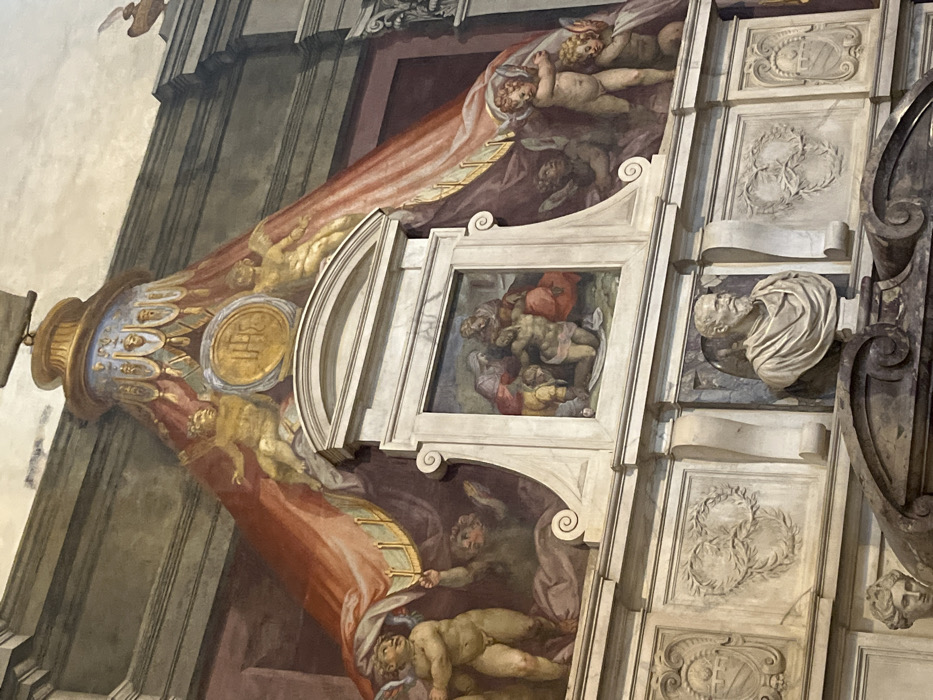
This image displays a segment of a vast fresco painting integrated with architectural and sculptural elements, likely found within a monumental building in Florence, Italy. The upward-angled perspective emphasizes the grandeur of the artwork. A central painted feature dominates the left side: a large, ornate, tapering architectural form, possibly a candelabrum or pedestal, richly decorated with gilded patterns and blue segments containing small, framed portraits or symbols. Prominently featured on this element is a golden circular motif displaying the "IHS" Christogram, typically standing for "Jesus, Savior of Men." Surrounding this central structure and within broader narrative compositions are numerous muscular, nude or semi-draped male figures, alongside several cherubs or putti. These figures are depicted in various dynamic poses, some seemingly interacting with or supporting the central element, while others populate dramatic scenes. To the right, the painted surface transitions into architectural paneling featuring relief sculpture. A white marble bust of an older, bearded man with classical drapery is visible, appearing to project from the wall. Below the bust, there are carved decorative panels, one adorned with multiple wreaths. Further to the right, a darker, intricately carved architectural fixture is partially visible. Specific narrative scenes are discernible within the fresco. In the upper right section, cherubic figures intermingle with larger male figures. Below this, a framed panel shows several figures in various postures of struggle or repose, including one draped in red. Another scene below features additional figures, one nude and reclining, another reaching or pulling. The artwork utilizes a vibrant color palette of warm reds, oranges, golds, and blues for the fresco, which contrasts with the lighter tones of the marble and stone architectural features. The dynamic poses, detailed musculature, and classical influences are characteristic of High Renaissance or Mannerist styles. The "IHS" monogram clearly indicates a religious context for this impressive composition.
No transactions found