Stake attention in this memory
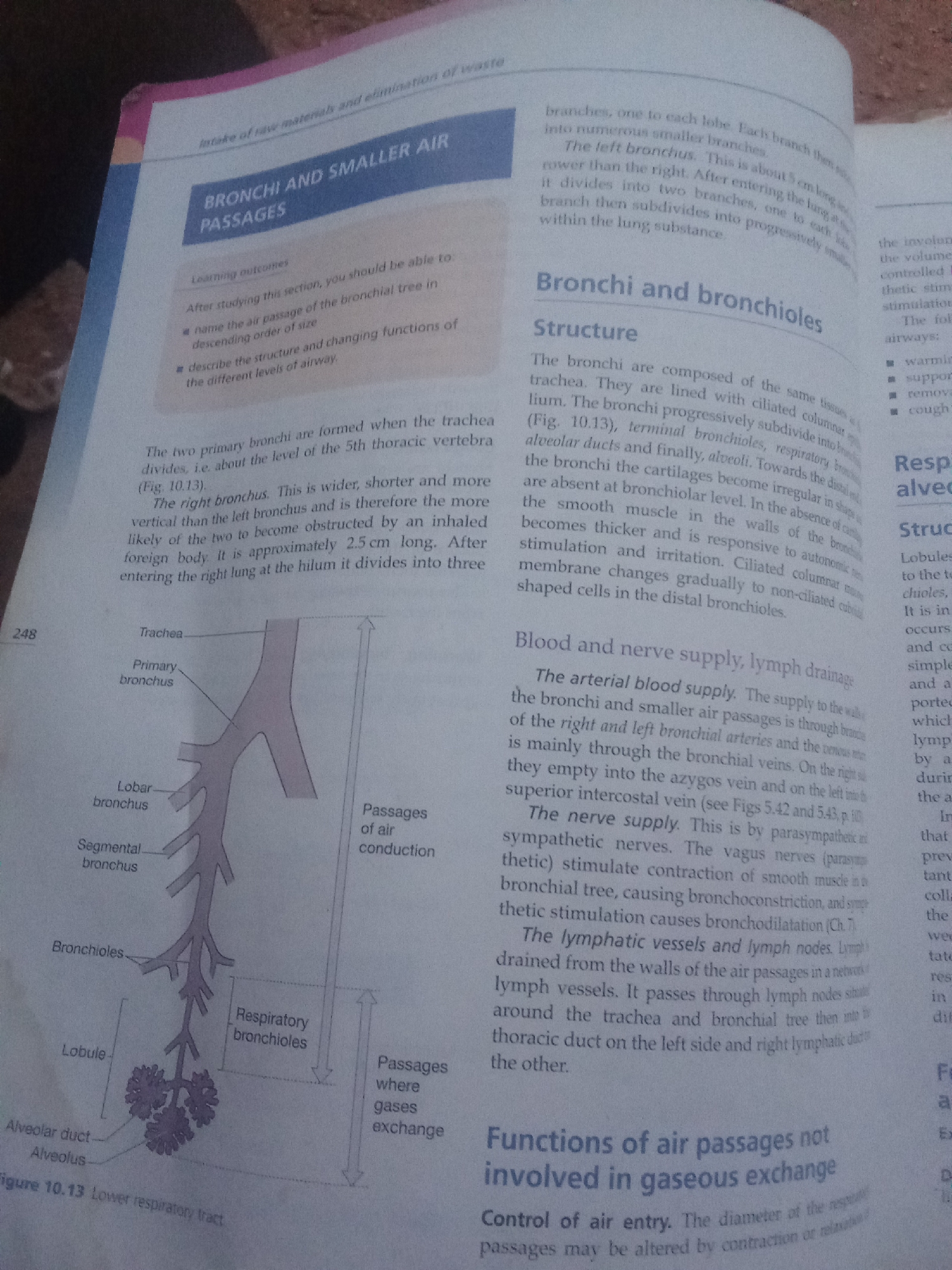
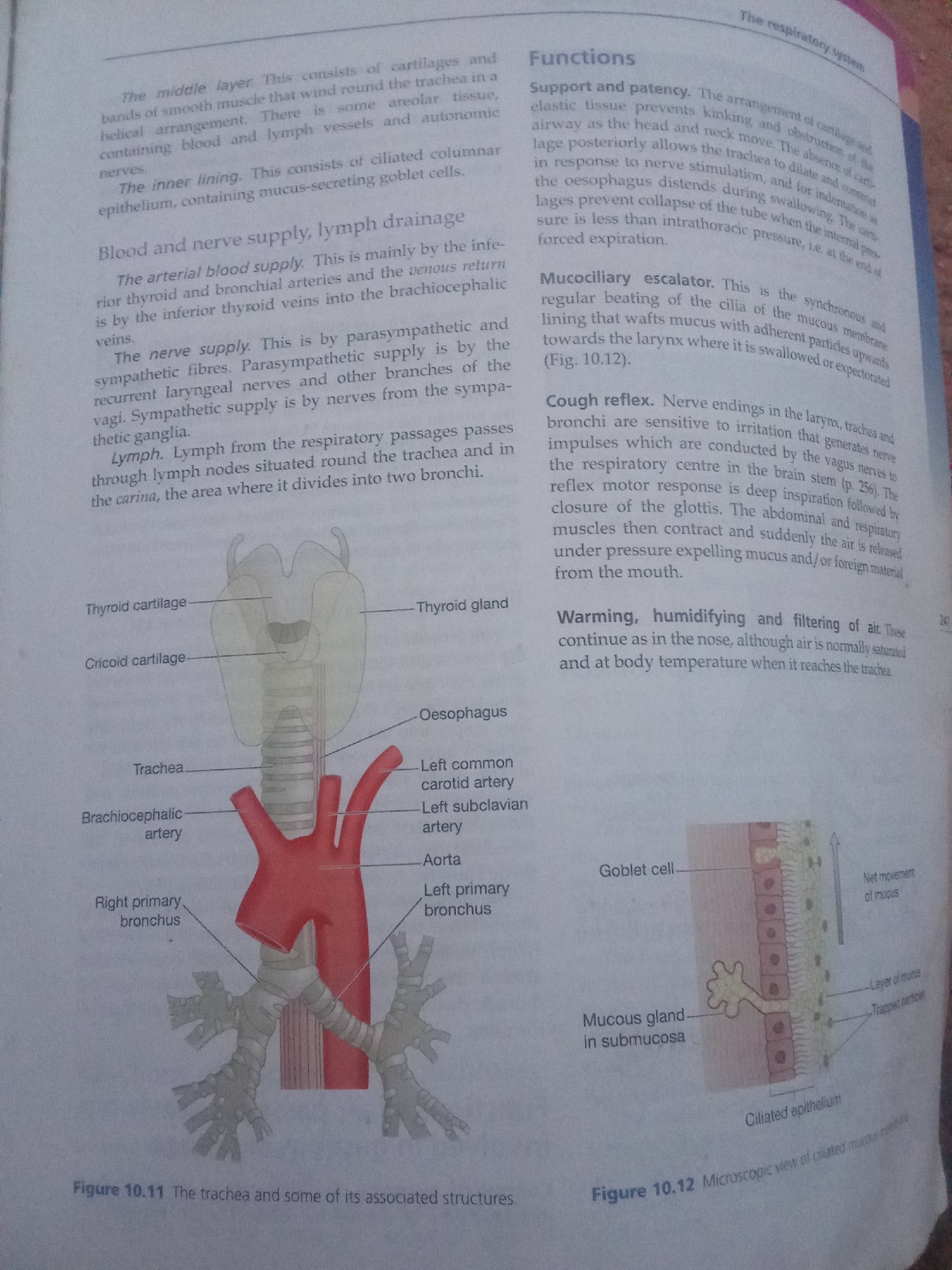
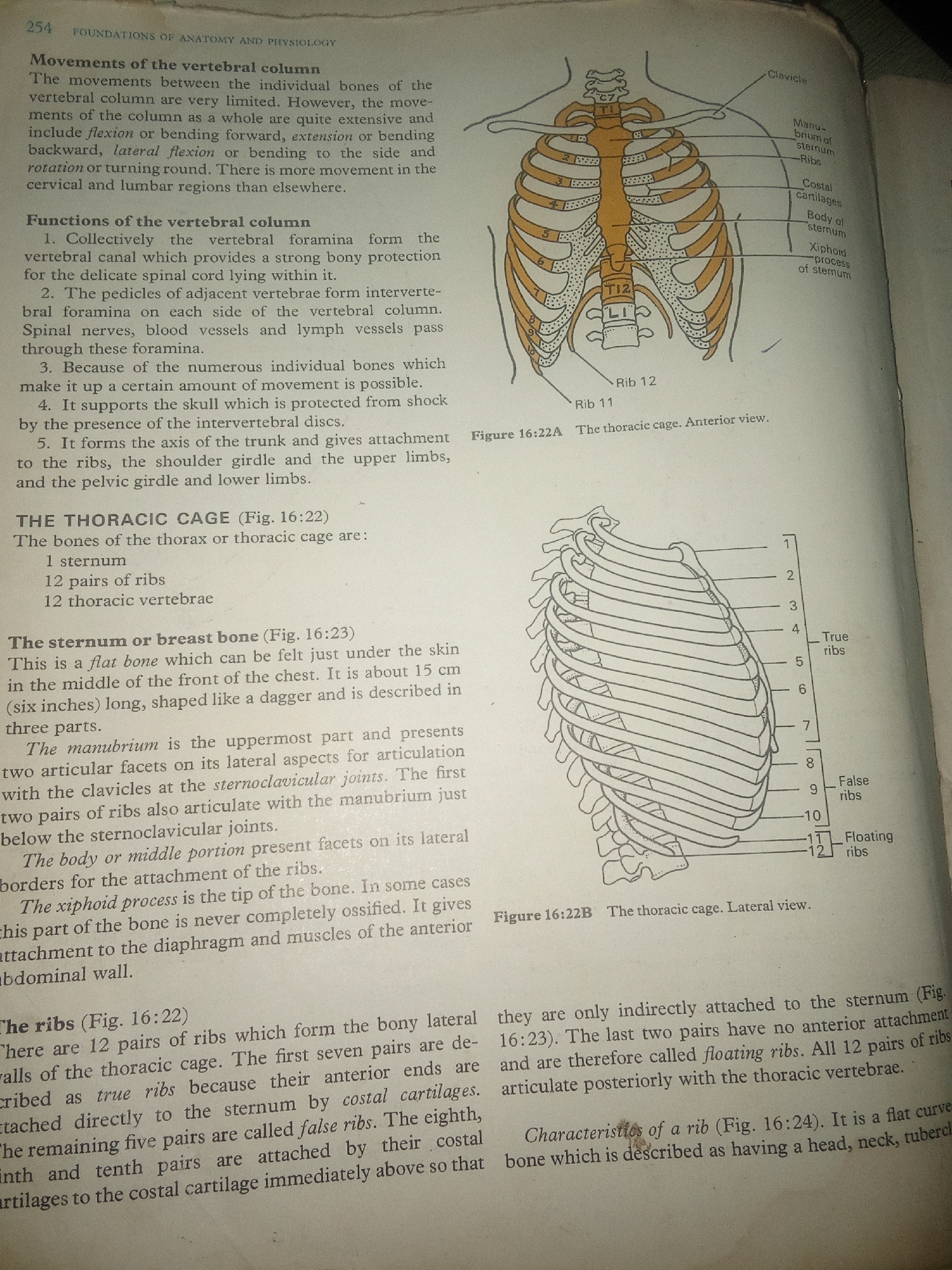
The image is a page from a textbook, likely on anatomy or physiology. It contains text and diagrams related to the human rib cage and vertebral column. **Textual Content:** * **Section 1:** Discusses "Movements of the vertebral column," stating that movements are limited but include flexion, extension, lateral flexion, and rotation. It notes more movement in cervical and lumbar regions. * **Section 2:** Outlines "Functions of the vertebral column," listing five points: 1. Forms the vertebral canal for spinal cord protection. 2. Pedicles of vertebrae form intervertebral foramina for spinal nerves, blood vessels, and lymph vessels. 3. Allows movement due to the number of individual bones. 4. Supports the skull, protecting it from shock. 5. Forms the axis of the trunk, attaching to ribs, shoulder girdle, upper limbs, pelvic girdle, and lower limbs. * **Section 3:** Titled "THE THORACIC CAGE (Fig. 16:22)," it lists the components: 1 sternum, 12 pairs of ribs, and 12 thoracic vertebrae. * **Section 4:** Titled "The sternum or breast bone (Fig. 16:23)," it describes it as a flat bone, about 15 cm long, shaped like a dagger, with three parts: manubrium, body, and xiphoid process. It details articulations of the manubrium and the body. * **Section 5:** Titled "The ribs (Fig. 16:22)," it explains there are 12 pairs of ribs. The first seven pairs are "true ribs" attached directly to the sternum by costal cartilages. The remaining five pairs are "false ribs." The eighth, ninth, and tenth pairs are indirectly attached by costal cartilages. The last two pairs are "floating ribs" with no anterior attachment. * **Section 6:** Briefly mentions "Characteristics of a rib (Fig. 16:24)." **Diagrams:** * **Figure 16:22A:** An anterior view of the thoracic cage, showing the sternum, ribs labeled numerically, clavicle, and thoracic vertebrae (T12, L1). Labels include "Clavicle," "Manubrium of sternum," "Ribs," "Costal cartilages," "Body of sternum," "Xiphoid process of sternum," "Rib 11," and "Rib 12." * **Figure 16:22B:** A lateral view of the thoracic cage, illustrating the curvature of the ribs and indicating "True ribs," "False ribs," and "Floating ribs" with corresponding numbers. **Location Information:** The provided image and context do not contain any information about the city of Jalingo, Nigeria, or any specific geographical location. Therefore, no details regarding this location can be included in the description.
Loading AttnAds…
No transactions found