
Sign in
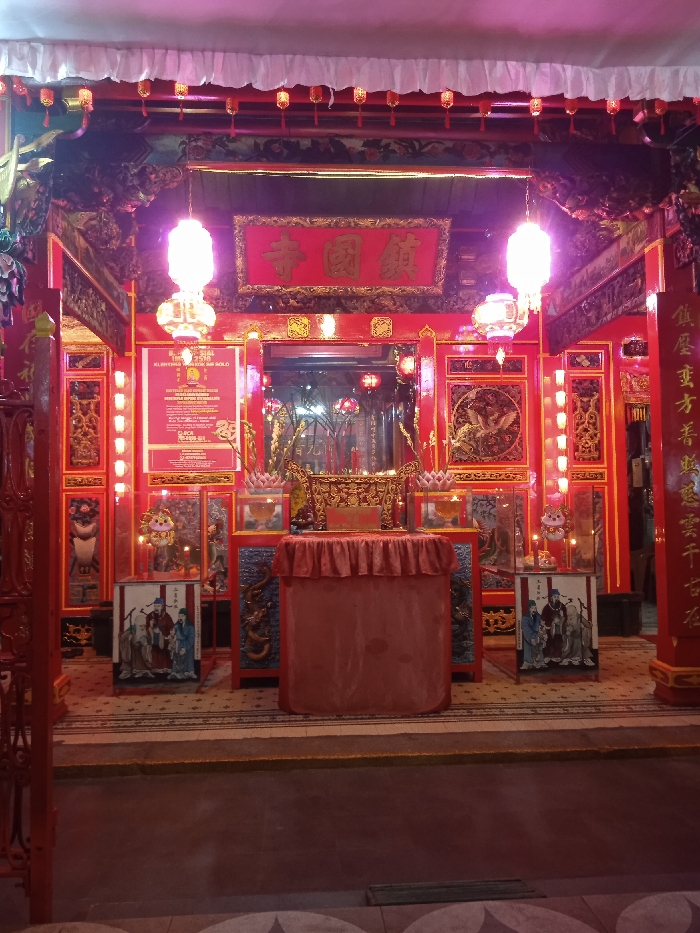
This image captures the vibrant and ornate interior of a Chinese temple or shrine, likely a "Klenteng" given the context of Surakarta, Indonesia. The dominant colors are rich red and gold, creating a celebratory and reverent atmosphere.

In the center, a prominent altar is covered with a red ruffled cloth, upon which a golden censer or incense burner holds what appear to be burning incense sticks, suggesting an ongoing ritual or offering. On either side of the altar area, small, illuminated "Maneki-neko" (lucky cat) figures are visible. Two framed pictures depicting figures in traditional Chinese attire are placed on the floor to the left and right of the central table.

The back wall features elaborate red panels with intricate golden carvings, possibly depicting mythical creatures like a phoenix on the right. Numerous small red lanterns hang from the ceiling, and two larger, brightly glowing lanterns are suspended, casting a purplish light over the scene. The architecture includes sturdy red pillars with detailed decorations.

Visible text includes a large red plaque above the main altar with Chinese characters, which appear to read "國國寺" (Guoguo Temple or National Temple). To the left, a red informational sign in Indonesian is affixed, containing text such as "KLENTENG" (identifying it as a Chinese temple), "Harian umum" (general daily), and "BANK BCA No. Rek." (Bank BCA Account Number), likely for donations or temple information. Vertical Chinese characters are also visible on the red pillar on the far right.

The scene is well-lit by artificial lights, suggesting it could be evening or an interior space designed to be dimly lit with dramatic accents. No people are present, allowing the focus to remain on the intricate details and traditional setup of the temple. The floor is tiled with a subtle pattern.
FM-eHoFi1

Jan 28, 2025, 12:20 PM

Surakarta, Indonesia

Stake attention in this memory

This image captures the vibrant and ornate interior of a Chinese temple or shrine, likely a "Klenteng" given the context of Surakarta, Indonesia. The dominant colors are rich red and gold, creating a celebratory and reverent atmosphere. In the center, a prominent altar is covered with a red ruffled cloth, upon which a golden censer or incense burner holds what appear to be burning incense sticks, suggesting an ongoing ritual or offering. On either side of the altar area, small, illuminated "Maneki-neko" (lucky cat) figures are visible. Two framed pictures depicting figures in traditional Chinese attire are placed on the floor to the left and right of the central table. The back wall features elaborate red panels with intricate golden carvings, possibly depicting mythical creatures like a phoenix on the right. Numerous small red lanterns hang from the ceiling, and two larger, brightly glowing lanterns are suspended, casting a purplish light over the scene. The architecture includes sturdy red pillars with detailed decorations. Visible text includes a large red plaque above the main altar with Chinese characters, which appear to read "國國寺" (Guoguo Temple or National Temple). To the left, a red informational sign in Indonesian is affixed, containing text such as "KLENTENG" (identifying it as a Chinese temple), "Harian umum" (general daily), and "BANK BCA No. Rek." (Bank BCA Account Number), likely for donations or temple information. Vertical Chinese characters are also visible on the red pillar on the far right. The scene is well-lit by artificial lights, suggesting it could be evening or an interior space designed to be dimly lit with dramatic accents. No people are present, allowing the focus to remain on the intricate details and traditional setup of the temple. The floor is tiled with a subtle pattern.

Loading AttnAds…

transactions
revenues
stakers
Earliest
Latest
Highest stake

No transactions found

More from this user

More from Surakarta

FM-eHoFi1

Jan 28, 2025, 12:20 PM

Surakarta, Indonesia

Licensed under Creative Commons Attribution 4.0 International License. You are free to share and adapt this content with proper attribution.