
Sign in
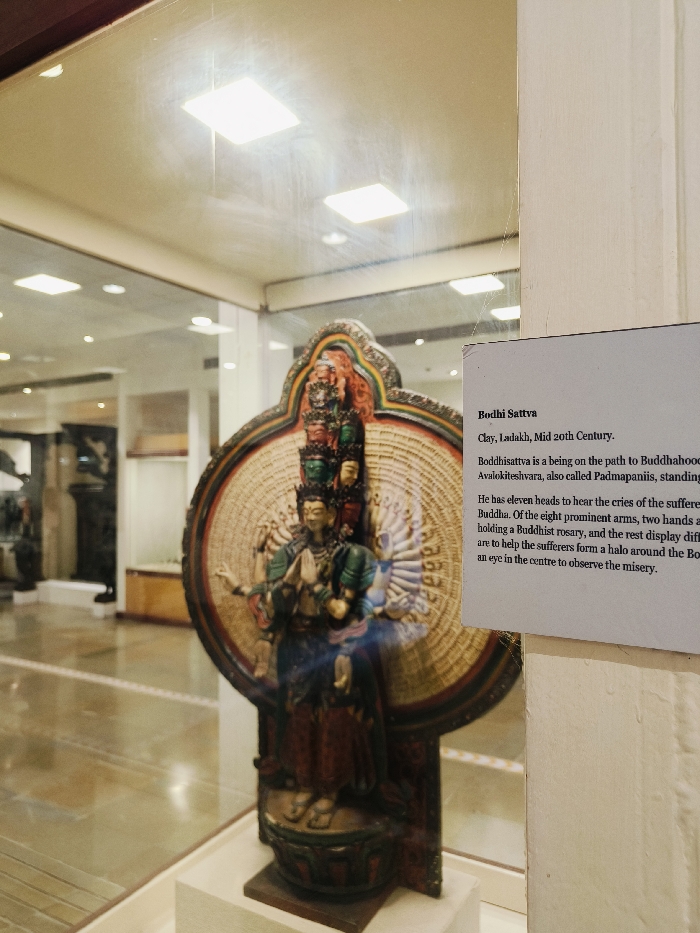
The image captures a detailed statue of a Bodhisattva, identified as Avalokiteshvara, also known as Padmapani, displayed in a museum or gallery in New Delhi, India. The statue, made of clay from Ladakh and dating to the mid-20th Century, is presented within a clear glass display case.

The Bodhisattva stands prominently, characterized by multiple heads—eleven in total—designed to hear the cries of the suffering. It also features numerous arms, eight of which are prominent. Two hands are depicted holding a Buddhist rosary, while the remaining arms display different mudras or objects, intended to help sufferers. An eye is visible in the center, symbolizing observation of misery. A large, circular, halo-like structure, possibly a mandala or aureole, frames the Bodhisattva's back. The figure is intricately painted with shades of green, blue, and red on its garments and various heads.

The setting is an indoor, well-lit space, with bright square ceiling lights visible as reflections on the glass display case and the surrounding environment. The background shows glimpses of other exhibits and architectural elements of the museum. To the right of the statue, a white descriptive placard provides information about the artifact.

The text on the placard reads:
"Bodhi Sattva
Clay, Ladakh, Mid 20th Century.
Boddhisattva is a being on the path to Buddhahood.
Avalokiteshvara, also called Padmapani, standing.
He has eleven heads to hear the cries of the sufferers
Buddha. Of the eight prominent arms, two hands are
holding a Buddhist rosary, and the rest display differently
are to help the sufferers form a halo around the Bodhisattva
an eye in the centre to observe the misery."
FM-v457R2

Jan 21, 2025, 11:02 AM

New Delhi, India

Stake attention in this memory

The image captures a detailed statue of a Bodhisattva, identified as Avalokiteshvara, also known as Padmapani, displayed in a museum or gallery in New Delhi, India. The statue, made of clay from Ladakh and dating to the mid-20th Century, is presented within a clear glass display case. The Bodhisattva stands prominently, characterized by multiple heads—eleven in total—designed to hear the cries of the suffering. It also features numerous arms, eight of which are prominent. Two hands are depicted holding a Buddhist rosary, while the remaining arms display different mudras or objects, intended to help sufferers. An eye is visible in the center, symbolizing observation of misery. A large, circular, halo-like structure, possibly a mandala or aureole, frames the Bodhisattva's back. The figure is intricately painted with shades of green, blue, and red on its garments and various heads. The setting is an indoor, well-lit space, with bright square ceiling lights visible as reflections on the glass display case and the surrounding environment. The background shows glimpses of other exhibits and architectural elements of the museum. To the right of the statue, a white descriptive placard provides information about the artifact. The text on the placard reads: "Bodhi Sattva Clay, Ladakh, Mid 20th Century. Boddhisattva is a being on the path to Buddhahood. Avalokiteshvara, also called Padmapani, standing. He has eleven heads to hear the cries of the sufferers Buddha. Of the eight prominent arms, two hands are holding a Buddhist rosary, and the rest display differently are to help the sufferers form a halo around the Bodhisattva an eye in the centre to observe the misery."

transactions
revenues
stakers
Earliest
Latest
Highest stake

No transactions found

More from this user

More from New Delhi

FM-v457R2

Jan 21, 2025, 11:02 AM

New Delhi, India

Licensed under Creative Commons Attribution 4.0 International License. You are free to share and adapt this content with proper attribution.