
Stake attention in this memory
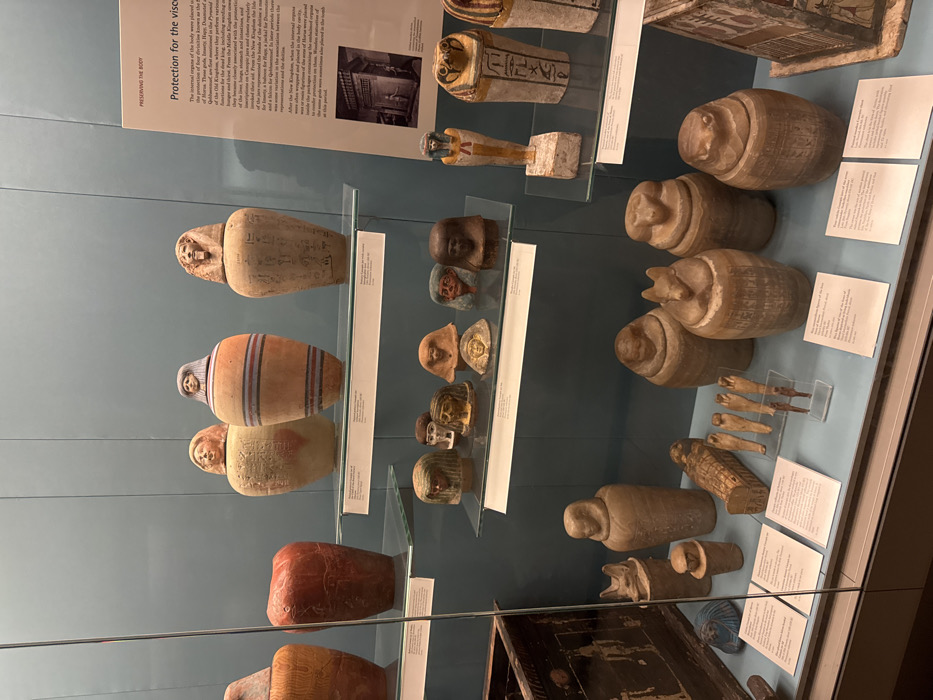
This image captures an indoor museum display showcasing a collection of ancient Egyptian funerary artifacts, likely from a museum in London, United Kingdom. The photograph is rotated 90 degrees counter-clockwise; described upright, the display features multiple glass shelves against a plain light blue background wall. The primary subjects are canopic jars, used to store internal organs during mummification. These jars exhibit diverse styles: some are light-colored, inscribed with hieroglyphs, and topped with human heads, while others feature animal heads such as baboons, jackals, and falcons. Also displayed are various smaller busts and heads, some painted with intricate details, as well as several mummiform figures, likely ushabtis. The artifacts appear to be crafted from materials like stone, ceramic, and possibly wood, reflecting different periods and artistic styles of ancient Egypt. A prominent white informational sign is visible at the top left (when upright). Its main titles read "PRESERVING THE BODY" and "Protection for the viscera". The visible text below explains the ancient Egyptian practice of placing internal organs into canopic jars, referencing the Old Kingdom and the specific organs involved like lungs and stomach. Smaller white labels accompany individual artifacts, likely offering specific details, though their text is mostly unreadable. The setting is clearly a professionally curated museum exhibition, illuminated by artificial lighting, presenting these historical items for public viewing.
Loading AttnAds…
No transactions found