
Sign in
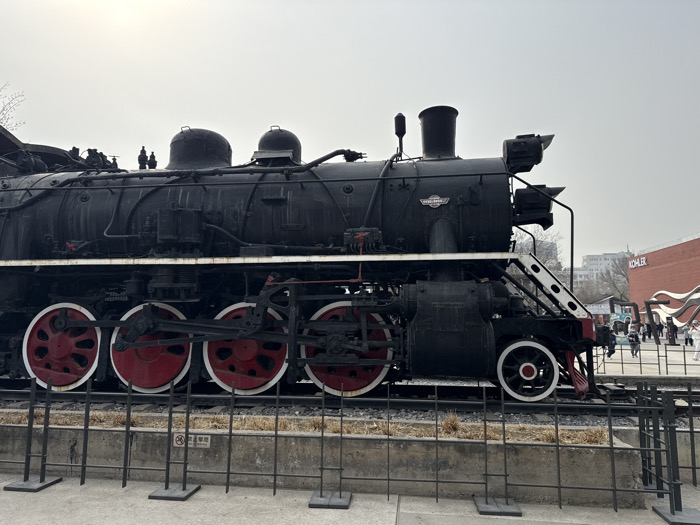
The image depicts a black steam locomotive displayed as a static exhibit on railway tracks within an urban outdoor setting. The location is Chaoyang District, China, specifically identifiable as part of the 798 Art Zone due to the characteristic architecture and commercial branding.

The locomotive, painted in a matte black finish, occupies the central and left portions of the frame, facing right. It features large red driving wheels with white rims and smaller black-and-white front pilot truck wheels. Prominent components include a tall smokestack, two domed structures (likely a steam dome and a sand dome) on the boiler, and visible external piping and connecting rods. A circular emblem is affixed to the side of the boiler, partially obscured. The locomotive shows signs of weathering but is maintained for public display.

In the foreground, a concrete path runs parallel to the tracks. A series of black metal barriers with square bases separates the viewer's immediate space from the locomotive. A white sign with red Chinese characters, incorporating a "No Smoking" symbol, is visible on a concrete block behind these barriers. The locomotive rests on two sets of tracks embedded in a gravel bed.

The background on the right features a large, brick-red building with a distinct architectural facade, characterized by wave-like or ribbon-like elements. The word "KOHLER" is visibly displayed in white on the building's side. Several individuals are present in the open area in front of this building, appearing to walk or stand, but their specific actions and interactions are indistinct due to distance. Further in the background, additional modern buildings are visible. The sky is overcast and light gray, indicating a cloudy day. Sparse, bare tree branches are visible against the sky on the left.
Mr.Wang

Mar 21, 2026, 7:05 AM

Chaoyang District, China

Stake attention in this memory

Nostalgia
Power
History
Awe
Somber

The image depicts a black steam locomotive displayed as a static exhibit on railway tracks within an urban outdoor setting. The location is Chaoyang District, China, specifically identifiable as part of the 798 Art Zone due to the characteristic architecture and commercial branding. The locomotive, painted in a matte black finish, occupies the central and left portions of the frame, facing right. It features large red driving wheels with white rims and smaller black-and-white front pilot truck wheels. Prominent components include a tall smokestack, two domed structures (likely a steam dome and a sand dome) on the boiler, and visible external piping and connecting rods. A circular emblem is affixed to the side of the boiler, partially obscured. The locomotive shows signs of weathering but is maintained for public display. In the foreground, a concrete path runs parallel to the tracks. A series of black metal barriers with square bases separates the viewer's immediate space from the locomotive. A white sign with red Chinese characters, incorporating a "No Smoking" symbol, is visible on a concrete block behind these barriers. The locomotive rests on two sets of tracks embedded in a gravel bed. The background on the right features a large, brick-red building with a distinct architectural facade, characterized by wave-like or ribbon-like elements. The word "KOHLER" is visibly displayed in white on the building's side. Several individuals are present in the open area in front of this building, appearing to walk or stand, but their specific actions and interactions are indistinct due to distance. Further in the background, additional modern buildings are visible. The sky is overcast and light gray, indicating a cloudy day. Sparse, bare tree branches are visible against the sky on the left.

Loading AttnAds…

transactions
revenues
stakers
Earliest
Latest
Highest stake

No transactions found

More from this user

More from Chaoyang District

Mr.Wang

Mar 21, 2026, 7:05 AM

Chaoyang District, China

Licensed under Creative Commons Attribution 4.0 International License. You are free to share and adapt this content with proper attribution.