
Stake attention in this memory
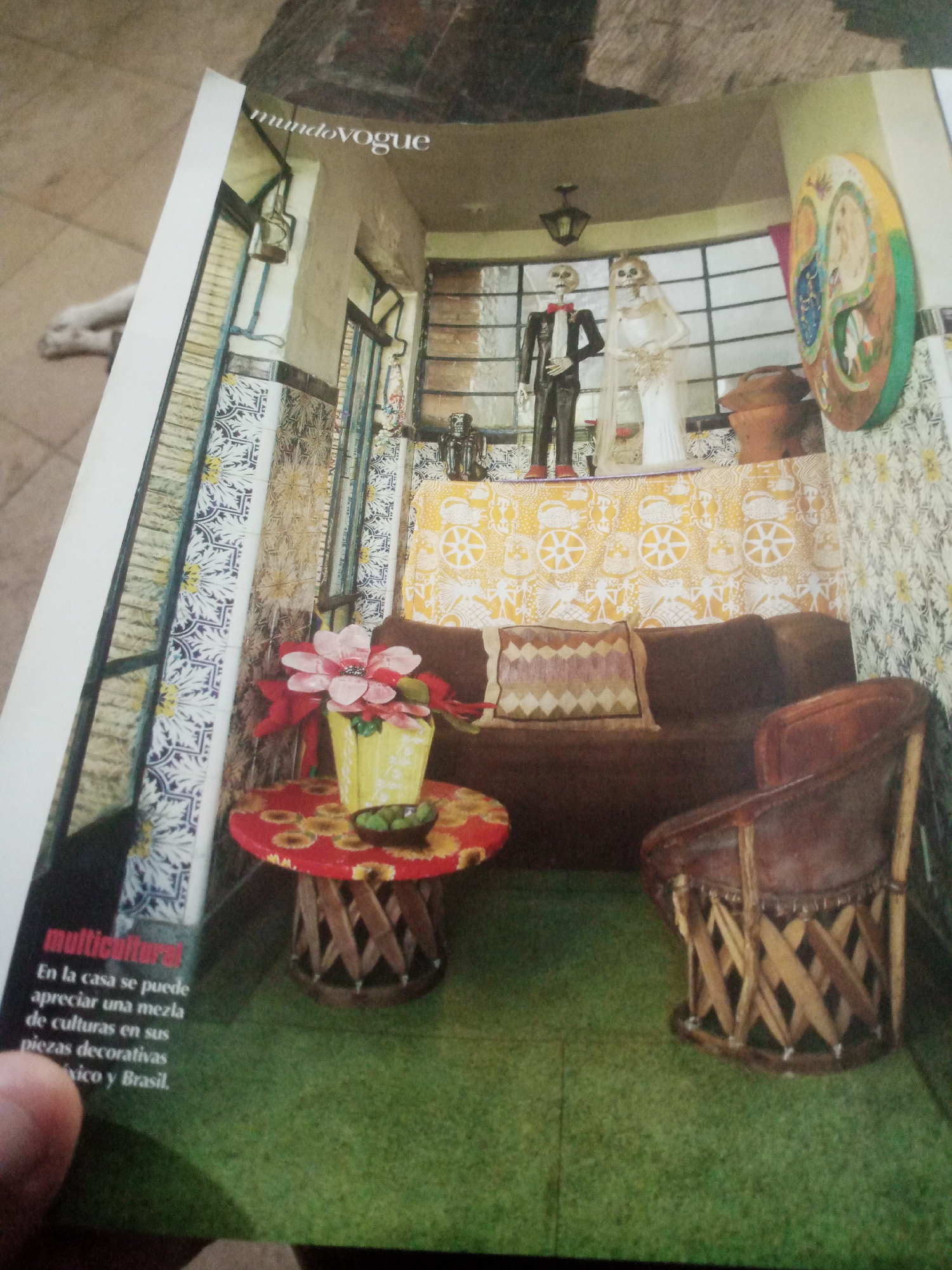
This media file depicts a vignette or diorama staged in a room with a vibrant and multicultural aesthetic. The primary subjects are two skeleton figures dressed as a bride and groom, likely representing a Day of the Dead theme. The bride wears a white gown and veil, while the groom is in a black tuxedo with a red bowtie. The setting appears to be an indoor room, possibly a decorated display area. The walls are adorned with colorful, patterned tiles, reminiscent of Mexican or Latin American design. A patterned yellow fabric with white motifs, possibly depicting cartwheels and figures, serves as a backdrop behind the skeleton couple. In the foreground, a dark brown sofa is visible, with a decorative pillow featuring a geometric diamond pattern in earthy tones. To the left, a small, round table with a red surface and a yellow floral design sits on a green, textured surface that resembles Astroturf. On the table, a yellow vase holds a large pink and red artificial flower and a small bowl of green olives. To the right of the sofa is a rustic-style leather armchair with a woven wooden base. A circular, decorative piece with colorful artwork, possibly a mandala or a traditional folk art element, is mounted on the wall to the right. A hanging lantern is visible near the ceiling in the background. The visible text on the image includes "mundovogue" in a stylized font at the top and a Spanish caption at the bottom left: "multiculturas / En la casa se puede / apreciar una mezla / de culturas en sus / piezas decorativas / éxico y Brasil." This suggests the display is intended to showcase a blend of cultures, specifically from Mexico and Brazil, and that the image is from a publication called "mundovogue." There are no explicit cues about the time of day or weather, but the interior setting suggests it is not an outdoor scene. The overall emotion evoked by the display is one of celebration and cultural appreciation, with a touch of whimsy due to the skeleton figures. The location context provided (Santa Ana, Venezuela) suggests the origin or context of the publication, but not necessarily the setting of the diorama itself, which strongly points to Mexican cultural influences.
Loading AttnAds…
No transactions found