Sign in
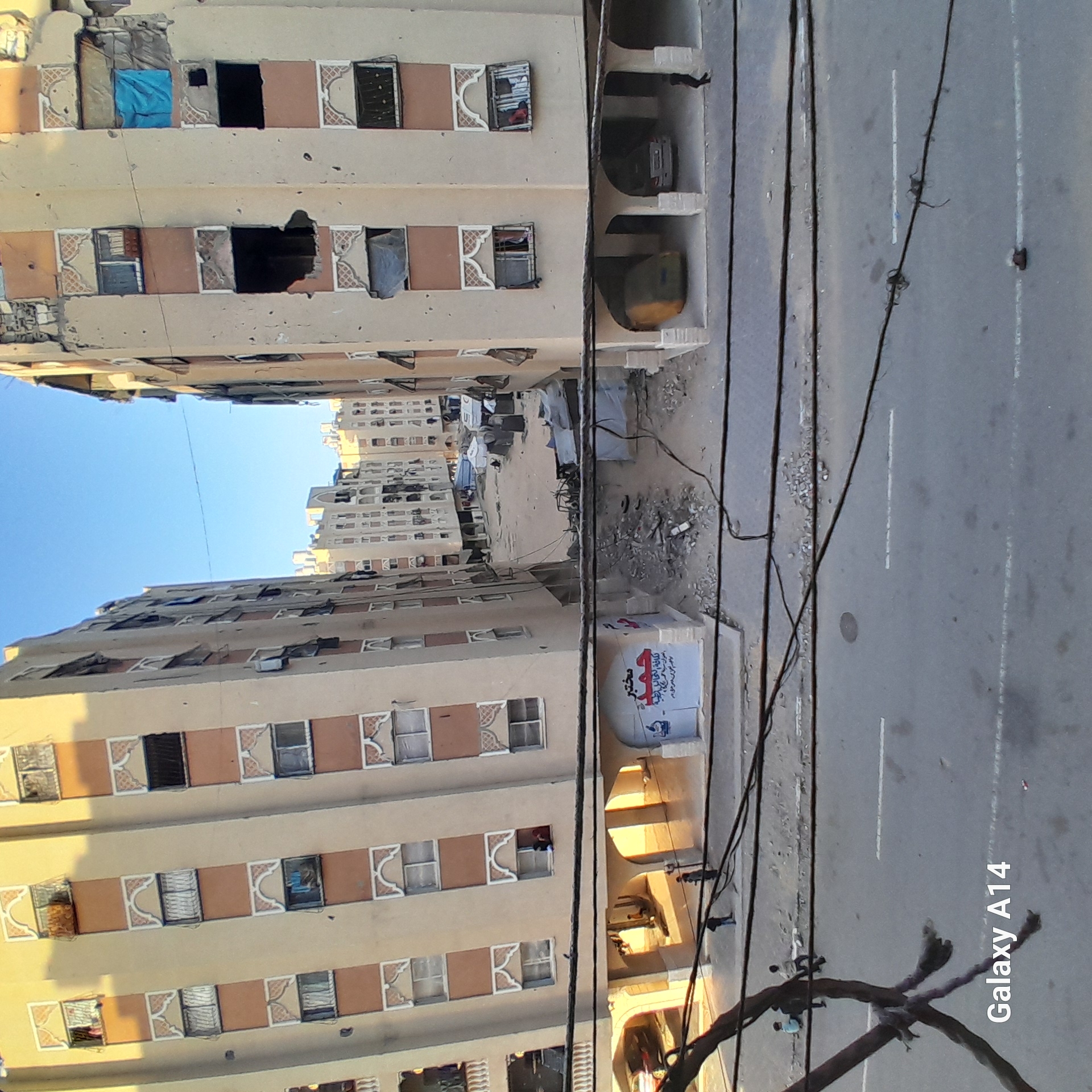
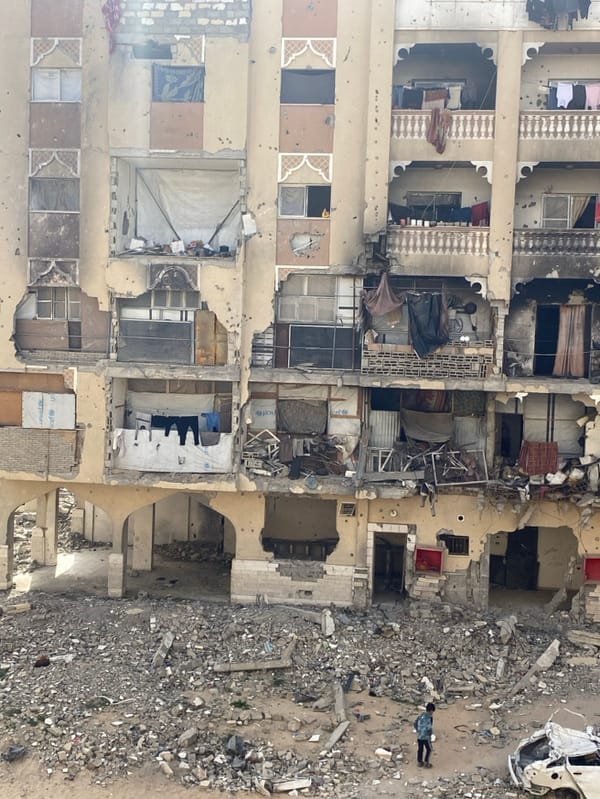
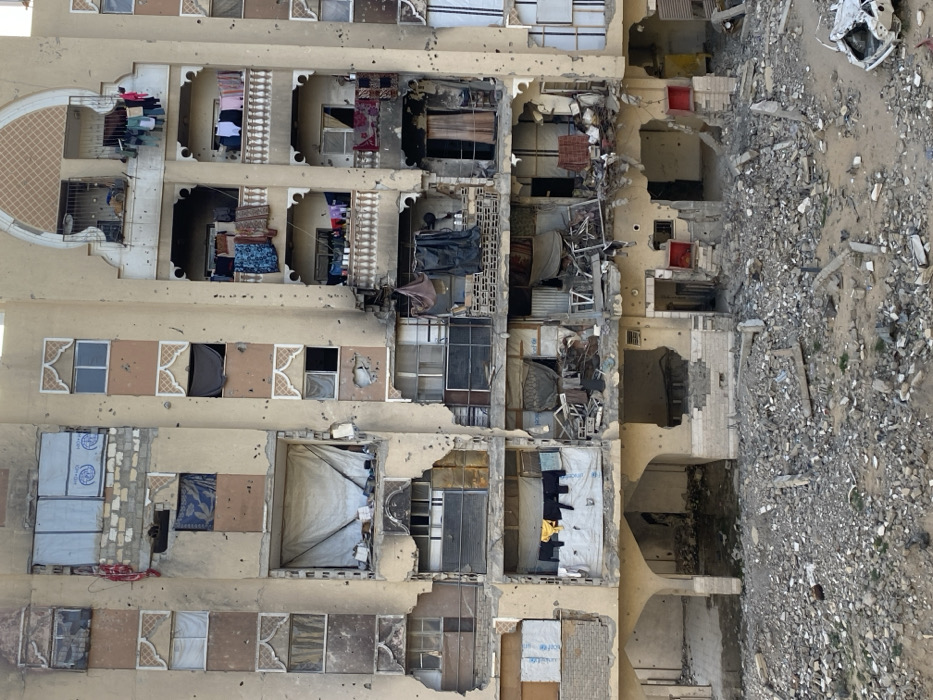
The image displays a severely damaged multi-story residential building, likely an apartment complex, adjacent to a wide expanse of rubble and debris. The image is oriented such that the building appears to lie horizontally, but it depicts a vertical structure with multiple floors.

The building, constructed of light beige or tan concrete, exhibits extensive damage, particularly to its exterior and upper floors. The facade is riddled with numerous small, dark holes consistent with bullet impacts or shrapnel. Many windows are broken or missing entirely, leaving gaping openings into the interior. Some windows retain their frames, while others are boarded up or covered with makeshift materials like tarps. Architectural details include arched openings and decorative patterns around some window frames and balconies, suggesting a previous residential aesthetic.

On several upper floors, balconies and exposed window areas show signs of recent human activity or habitation. Laundry, including shirts, pants, and blankets of various colors, is visible hanging on lines or railings. This contrast of domestic items with the surrounding destruction is stark. Exposed interiors reveal glimpses of household items, such as patterned carpets and what appear to be furniture fragments. Satellite dishes are affixed to the exterior walls in multiple locations.

As one moves down the building's visible structure (from top to bottom in the upright orientation), the damage appears more severe in certain sections. Large portions of walls are completely blown out, exposing entire rooms. Some openings are covered with white or blue tarps, likely for temporary shelter or privacy. On several blue panels used to cover openings, text is visible. Specifically, the word "UNICEF" is clearly discernible, along with the organization's full name, "United Nations Children's Fund," and its logo, suggesting the use of humanitarian aid materials.

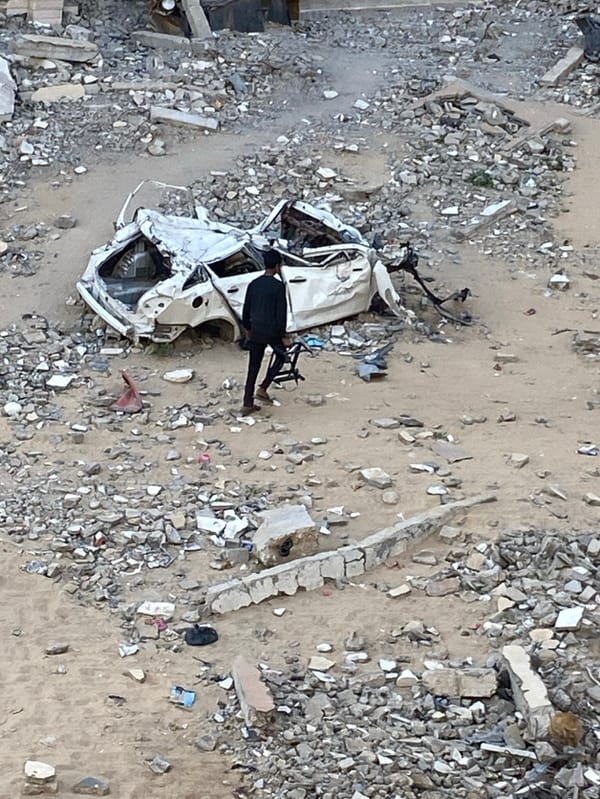
To the right of the main building, another structure appears to have suffered catastrophic collapse or is part of a heavily damaged adjacent complex. This area is a dense mass of pulverized concrete, twisted metal, and assorted debris. Further to the right, the ground stretches out, completely covered in a thick layer of gray and brown rubble, indicating a widespread area of destruction. Amidst this rubble, particularly in the upper right portion of the original (upright) image, lies the mangled and destroyed frame of a white or light-colored vehicle, possibly a car.

The overall scene conveys a sense of devastation and hardship, likely the aftermath of conflict or a major disaster. The daylight conditions suggest a clear sky, highlighting the grim reality of the damaged environment.
NERMEEN SALEH

Feb 17, 2026, 2:35 PM

Khan Yunis, Palestinian Territory

Stake attention in this memory

Devastation
Sorrow
Loss
Resilience
Despair

The image displays a severely damaged multi-story residential building, likely an apartment complex, adjacent to a wide expanse of rubble and debris. The image is oriented such that the building appears to lie horizontally, but it depicts a vertical structure with multiple floors. The building, constructed of light beige or tan concrete, exhibits extensive damage, particularly to its exterior and upper floors. The facade is riddled with numerous small, dark holes consistent with bullet impacts or shrapnel. Many windows are broken or missing entirely, leaving gaping openings into the interior. Some windows retain their frames, while others are boarded up or covered with makeshift materials like tarps. Architectural details include arched openings and decorative patterns around some window frames and balconies, suggesting a previous residential aesthetic. On several upper floors, balconies and exposed window areas show signs of recent human activity or habitation. Laundry, including shirts, pants, and blankets of various colors, is visible hanging on lines or railings. This contrast of domestic items with the surrounding destruction is stark. Exposed interiors reveal glimpses of household items, such as patterned carpets and what appear to be furniture fragments. Satellite dishes are affixed to the exterior walls in multiple locations. As one moves down the building's visible structure (from top to bottom in the upright orientation), the damage appears more severe in certain sections. Large portions of walls are completely blown out, exposing entire rooms. Some openings are covered with white or blue tarps, likely for temporary shelter or privacy. On several blue panels used to cover openings, text is visible. Specifically, the word "UNICEF" is clearly discernible, along with the organization's full name, "United Nations Children's Fund," and its logo, suggesting the use of humanitarian aid materials. To the right of the main building, another structure appears to have suffered catastrophic collapse or is part of a heavily damaged adjacent complex. This area is a dense mass of pulverized concrete, twisted metal, and assorted debris. Further to the right, the ground stretches out, completely covered in a thick layer of gray and brown rubble, indicating a widespread area of destruction. Amidst this rubble, particularly in the upper right portion of the original (upright) image, lies the mangled and destroyed frame of a white or light-colored vehicle, possibly a car. The overall scene conveys a sense of devastation and hardship, likely the aftermath of conflict or a major disaster. The daylight conditions suggest a clear sky, highlighting the grim reality of the damaged environment.

Loading AttnAds…

transactions
revenues
stakers
Earliest
Latest
Highest stake

No transactions found

More from this user

More from Khan Yunis

NERMEEN SALEH

Feb 17, 2026, 2:35 PM

Khan Yunis, Palestinian Territory

Licensed under Creative Commons Attribution 4.0 International License. You are free to share and adapt this content with proper attribution.