
Stake attention in this memory
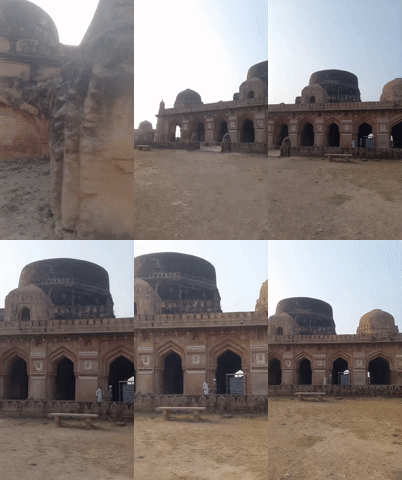
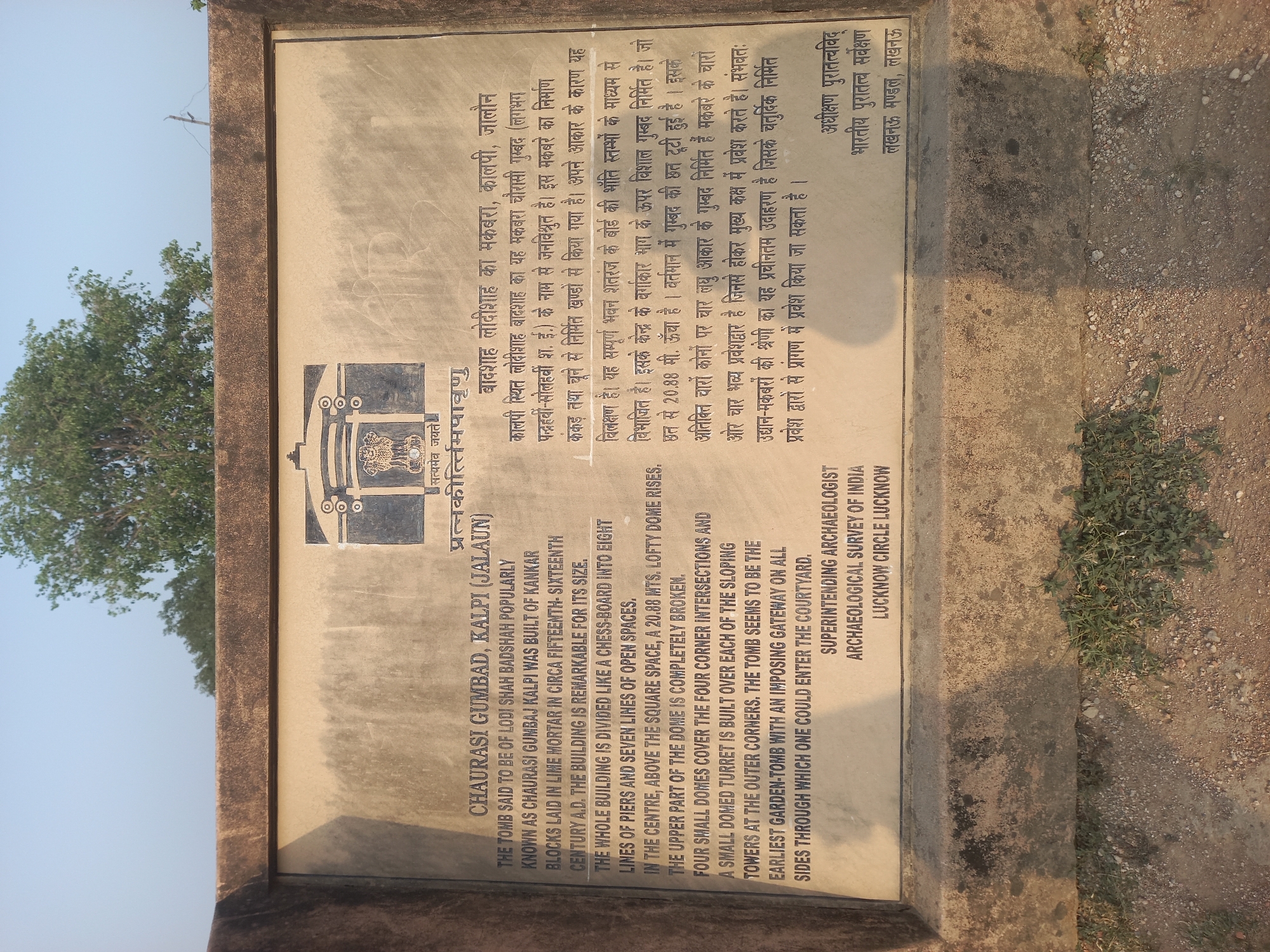
The image depicts a stone informational sign with text in both English and Hindi. The sign describes the Chaurasi Gumbad, located in Kalpi (Jalaun), India. The English portion of the text states: The tomb is said to be of Lodi Shah Badshah popularly known as Chaurasi Gumbaj Kalpi was built of Kankar blocks laid in lime mortar in circa fifteenth-sixteenth century A.D. The building is remarkable for its size. The whole building is divided like a chess board into eight lines of piers and seven lines of open spaces. In the centre, above the square space, a 20.88 mts. lofty dome rises. The upper part of the dome is completely broken. Four small domes cover the four corner intersections and a small domed turret is built over each of the sloping towers at the outer corners. The tomb seems to be the earliest garden-tomb with an imposing gateway on all sides through which one could enter the courtyard. The sign also indicates that the Superintending Archeologist of the Archeological Survey of India, Lucknow Circle Lucknow, put the sign together. Above the text is the emblem of India, and the entire sign is set in a stone frame. A tree is visible in the upper left corner, suggesting an outdoor environment, and gravel is on the ground to the right side of the sign.
Loading AttnAds…
No transactions found