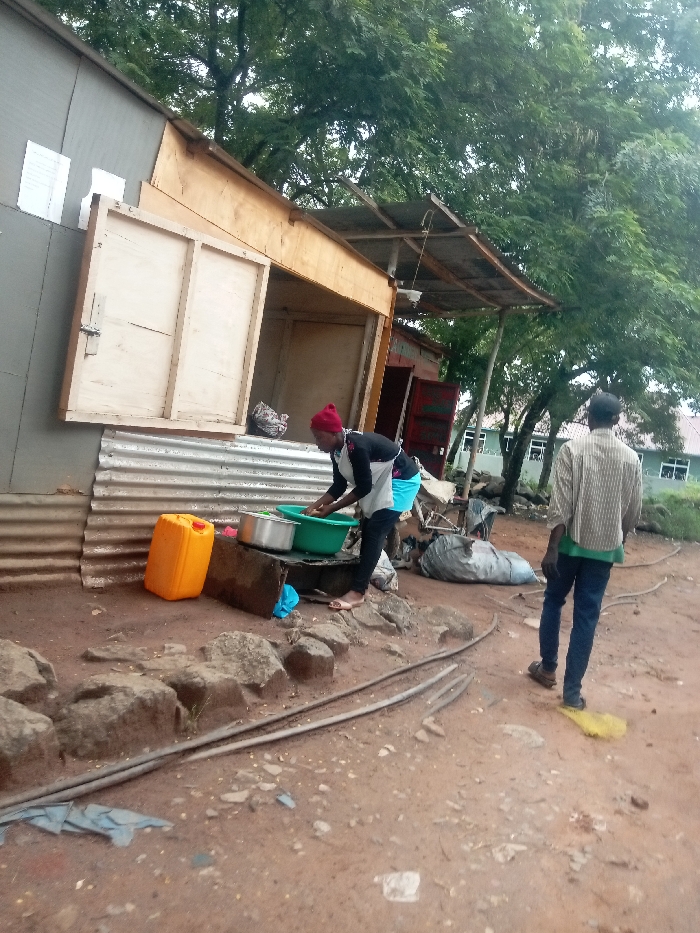
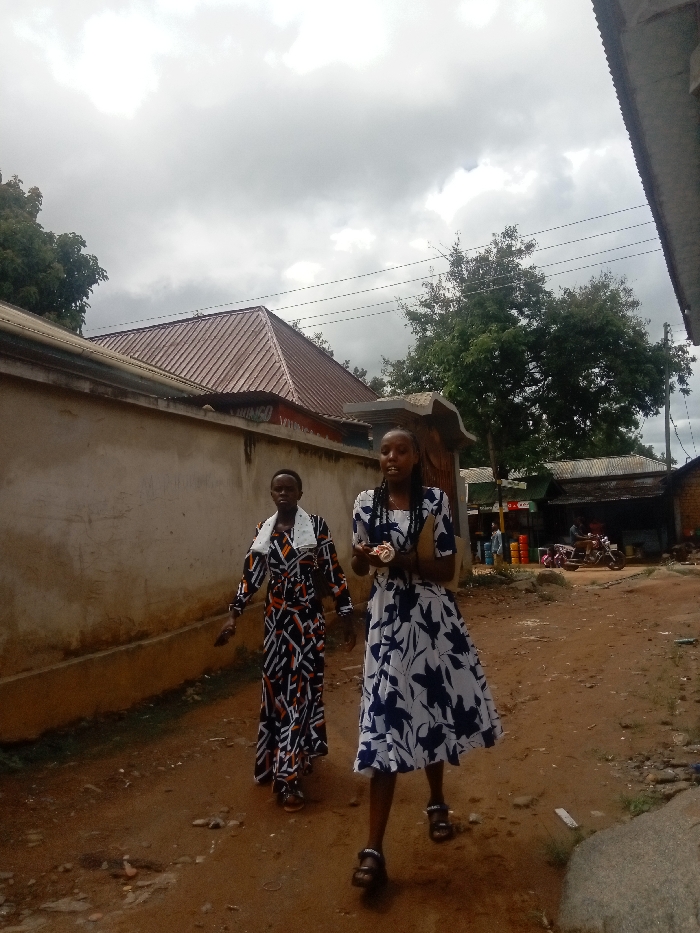
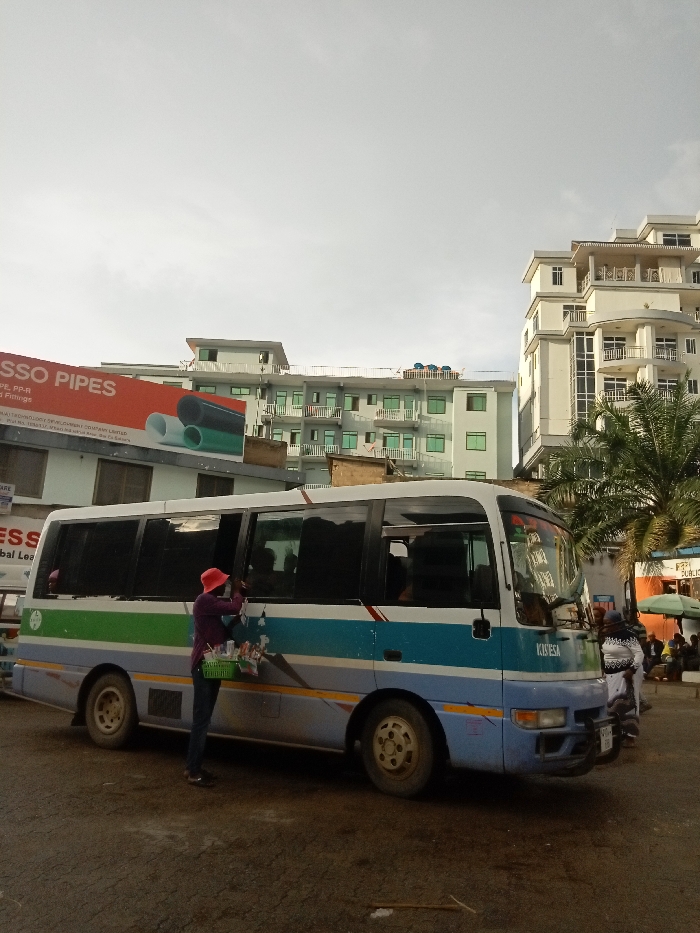
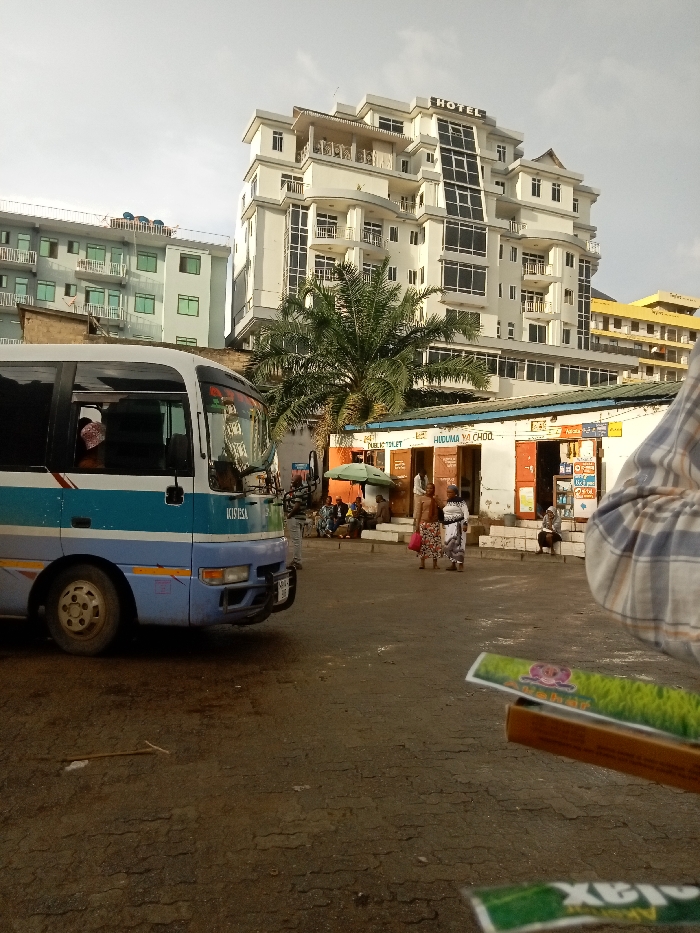
![This street-level photograph captures a lively commercial scene in Mwanza, Tanzania, under bright, clear daylight. In the foreground, a woman wearing a white hijab, a distinctive patterned headscarf, and a white long-sleeved shirt is busy serving food. She is bent over a red plastic tray, handling a light blue tray, and wears clear gloves, indicating hygienic food preparation. In front of her are clear plastic containers that appear to hold fried snacks, such as mandazi or samosas. To her left, another woman, also in a white hijab and a dark patterned dress, stands near several stainless steel food warmers.
Behind these women, a prominent green fabric tarp or curtain hangs from a corrugated metal awning, providing shade and partially obscuring the view into a shop. Above this awning, numerous electrical wires are visible against a clear blue sky. To the right of the green tarp, a man in a red and white plaid shirt, beige trousers, and a white cap stands, looking into a shop entrance. The number "1" is prominently displayed above this doorway. Inside the shop, which appears somewhat dim, another man in a light t-shirt is seated, engaged in an activity, with a sewing machine clearly visible nearby. A partially obscured sign is also visible within the shop.
On the wooden beam supporting the corrugated awning, Swahili text is visible: "DUHURANI SPARE NA MATENGENEZO." This translates to "Duhurani Spare [Parts] and Repairs," indicating the nature of the business operating under the awning. The bright sunlight casts distinct shadows, suggesting it is late morning or early afternoon. The scene depicts a bustling urban environment characterized by informal commerce and daily activity.](https://firebasestorage.googleapis.com/v0/b/patr-3a75e.appspot.com/o/uploads%2Fimage_picker_5e3e7085-910f-41bc-b.jpg?alt=media)
Stake attention in this memory
This street-level photograph captures a lively commercial scene in Mwanza, Tanzania, under bright, clear daylight. In the foreground, a woman wearing a white hijab, a distinctive patterned headscarf, and a white long-sleeved shirt is busy serving food. She is bent over a red plastic tray, handling a light blue tray, and wears clear gloves, indicating hygienic food preparation. In front of her are clear plastic containers that appear to hold fried snacks, such as mandazi or samosas. To her left, another woman, also in a white hijab and a dark patterned dress, stands near several stainless steel food warmers. Behind these women, a prominent green fabric tarp or curtain hangs from a corrugated metal awning, providing shade and partially obscuring the view into a shop. Above this awning, numerous electrical wires are visible against a clear blue sky. To the right of the green tarp, a man in a red and white plaid shirt, beige trousers, and a white cap stands, looking into a shop entrance. The number "1" is prominently displayed above this doorway. Inside the shop, which appears somewhat dim, another man in a light t-shirt is seated, engaged in an activity, with a sewing machine clearly visible nearby. A partially obscured sign is also visible within the shop. On the wooden beam supporting the corrugated awning, Swahili text is visible: "DUHURANI SPARE NA MATENGENEZO." This translates to "Duhurani Spare [Parts] and Repairs," indicating the nature of the business operating under the awning. The bright sunlight casts distinct shadows, suggesting it is late morning or early afternoon. The scene depicts a bustling urban environment characterized by informal commerce and daily activity.
No transactions found