
Stake attention in this memory
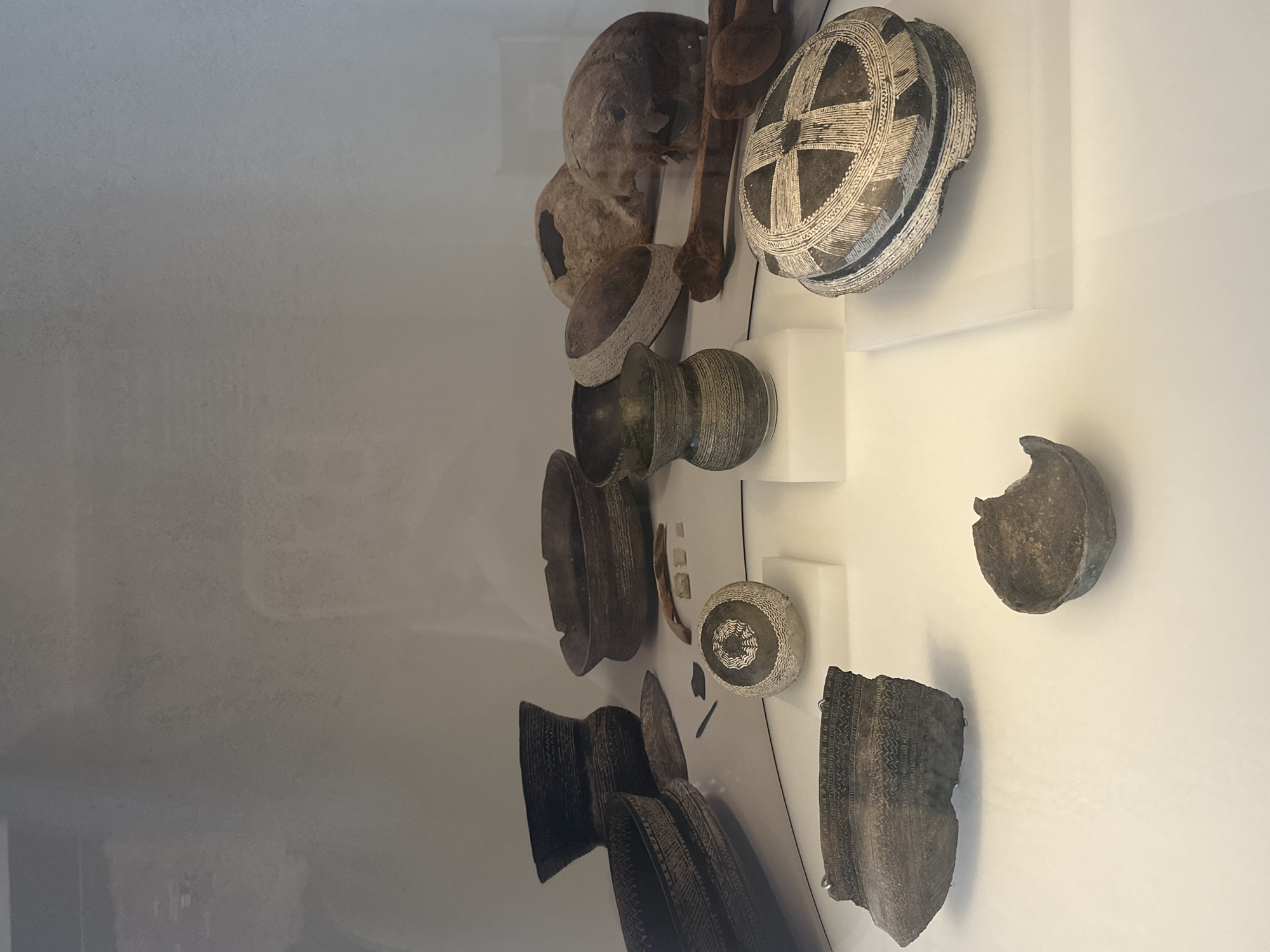
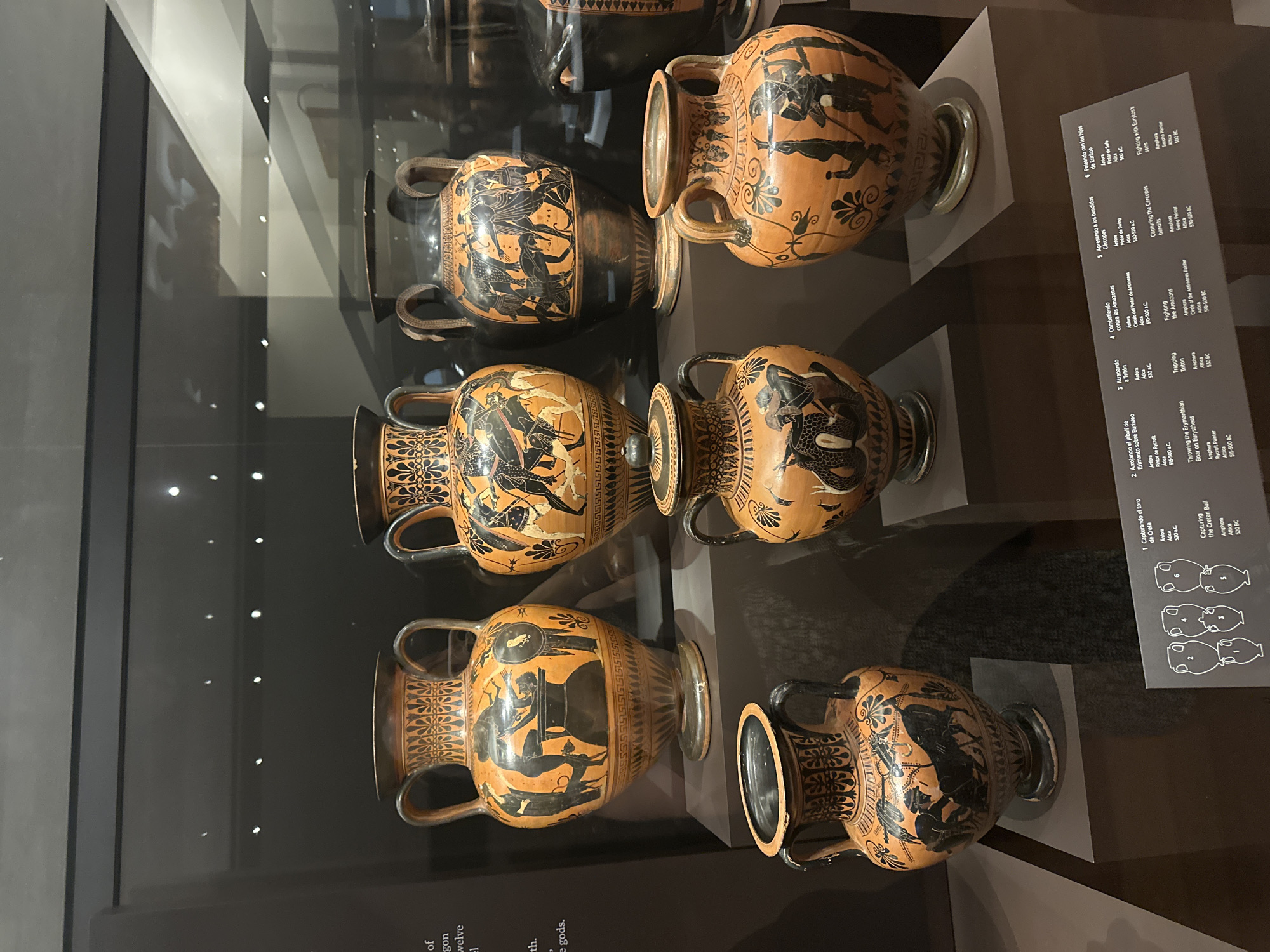
This is a vertical shot of a museum display case featuring a collection of ancient Greek amphorae. The amphorae are made of terracotta and decorated with black-figure pottery paintings. The paintings depict mythological scenes with human figures and animals in action poses, such as battles and hunts. The amphorae are arranged in two columns, with three on the left and three on the right, stacked vertically within the glass display. Some of the amphorae have a lustrous sheen, reflecting the ambient lighting of the museum, which is not directly visible. To the right of the amphorae, a white informational placard is displayed, featuring text in Spanish and English. The text appears to be labels for the artifacts, providing details such as titles of the scenes depicted ("Capturando el toro de Creta," "Throwing the Erymanthian Boar on Eurystheus," "Fighting with Eurytos's sons"), the names of the artists or painters associated with the pieces ("Pintor de Rycroft," "Sappho Painter"), the type of vessel ("Ánfora," "Amphora"), and their origin and date ("Atica," "Attica," "520 aC," "520 BC"). The placard also includes line drawings of several amphorae, likely representing different styles or examples. The overall setting is a museum display, suggested by the glass case, the lighting, and the informational placard. The background is dark, with some reflections and highlights on the glass surface. The color palette is dominated by the warm orange of the terracotta and the stark black of the painted figures. The scene conveys a sense of historical preservation and cultural exhibition.
Symbol
5E662
Volume
0
Creator
+$0.03
Revenue
+$0.00
TVL
$0.00
Loading AttnAds…
2

Rev Bot 🤖💰
Injected revenue 1mo ago
“Revenue bonus for the last stake.”
+$0.06 USD