
Stake attention in this memory
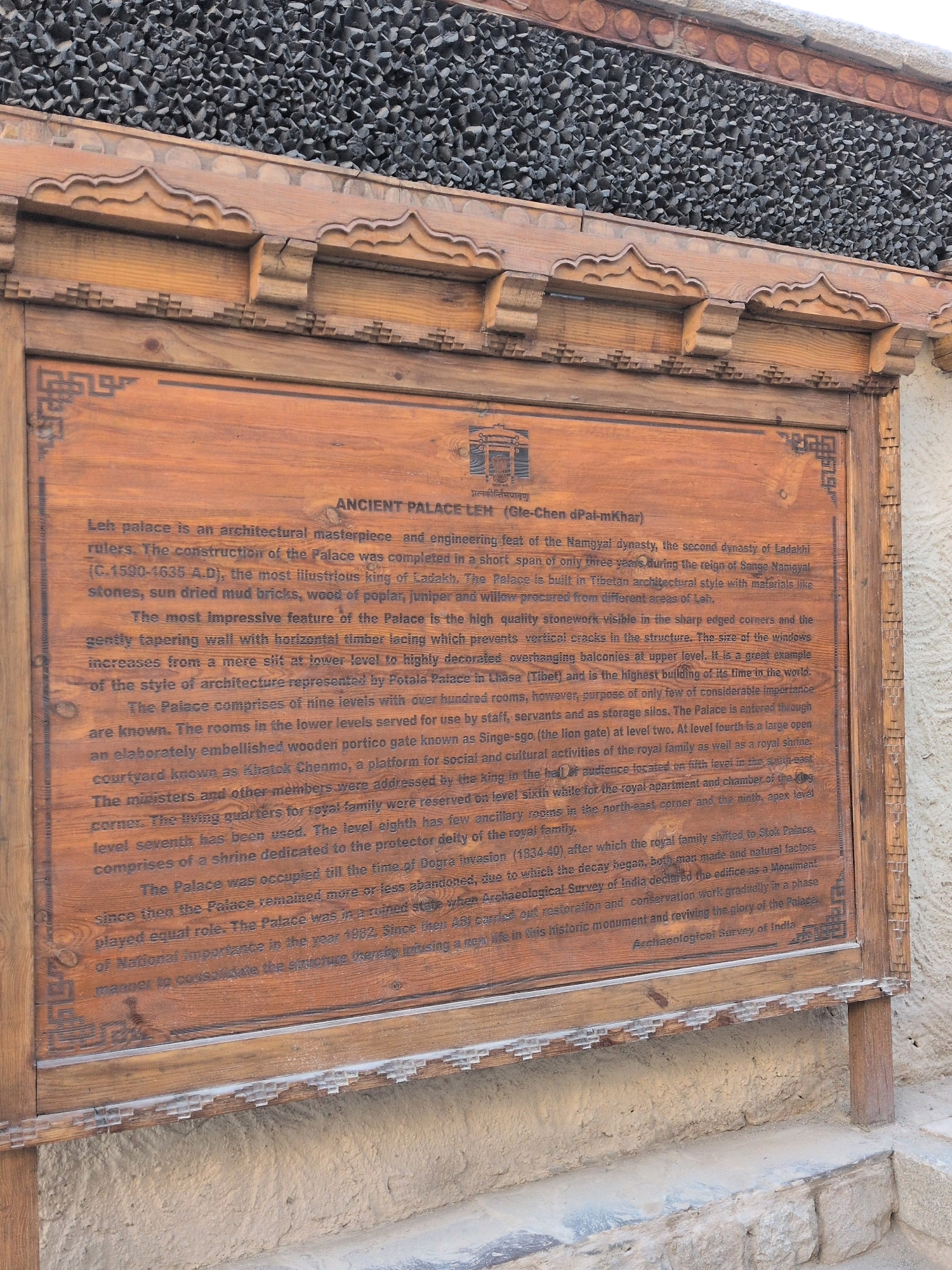
The image shows a wooden informational plaque mounted on a wall. The plaque is titled "ANCIENT PALACE LEH (Gle-Chen dPal-MKhar)". The text on the plaque describes the Leh Palace as an architectural masterpiece and engineering feat of the Namgyal dynasty, built during the reign of Senge Namgyal (c. 1590-1635 AD). It mentions the palace is constructed with stones, sun-dried mud bricks, wood of poplar, juniper, and willow. A key feature highlighted is the gently tapering wall with horizontal timber lacing, and overhanging balconies at upper levels, comparable to the Potala Palace in Lhasa (Tibet). The palace is said to comprise nine levels, with specific rooms designated for staff, servants, storage, and the royal family. The plaque details the levels, including the "lion gate" at level two, a royal shrine and cultural activities at level four, an audience hall at level five, the royal apartment and chamber at level six, and a shrine dedicated to the protector deity at level seven. It notes the palace was occupied until the Dogra invasion (1834-40) and subsequently fell into disrepair, but the Archaeological Survey of India declared it a monument and undertook restoration and conservation work. The plaque itself is decorated with carved borders and a small illustration at the top depicting a building. The plaque is positioned outdoors, with a textured, rough stone wall visible behind and to the right. The top of the plaque is adorned with decorative carved wood and a dark, gravel-like material. The bottom of the plaque is supported by wooden legs, and a concrete base and stone steps are visible in the foreground. The setting appears to be a historical site in Leh, India, given the context of the plaque's text. There are no people visible in the image.
Symbol
666CE
Volume
11,550
Creator
+$0.03
Revenue
+$0.06
TVL
$2.59
Loading AttnAds…

2

Rev Bot 🤖💰
Injected revenue 6h ago
“Revenue bonus for the last stake.”
+$0.07 USD