Sign in
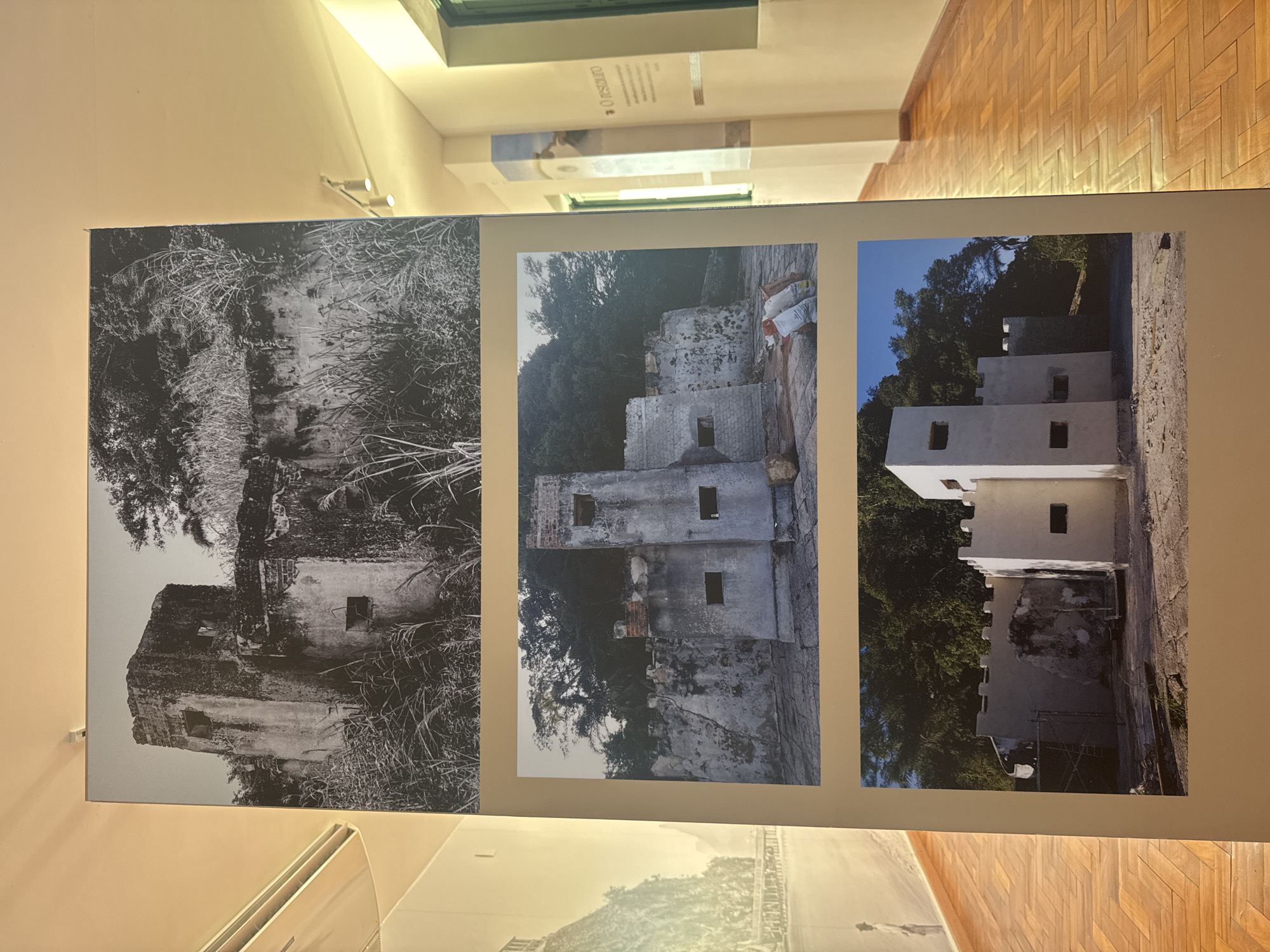
The image displays three photographs mounted on a light-colored panel, likely in a museum or exhibition space. The photographs depict the progression of restoration or reconstruction of a historical building, appearing to be a fort or similar structure.

The top photograph is in black and white and shows an overgrown, dilapidated stone structure with multiple openings, surrounded by dense vegetation. This image conveys a sense of age and neglect.

The middle photograph is in color and shows a similar structure, but with signs of partial restoration. The walls are more intact, and some areas appear to have been repainted or reinforced. There are several rectangular openings, resembling windows or embrasures. Two large white bags, possibly containing building materials like cement or sand, are visible in the foreground.

The bottom photograph, also in color, showcases the structure in a more advanced state of restoration. The building has a cleaner, more finished appearance, with crenellated battlements along the top. Scaffolding is visible, indicating ongoing work. The area around the structure is cleared and appears to be a paved courtyard.

In the background of the overall image, a polished wooden floor with a herringbone pattern is visible, suggesting an indoor exhibition setting. To the right, a wall displays vertical panels with text and images, one of which has the word "restauro" (restoration in Portuguese) visible. The lighting in the room is warm and directed from track lighting on the ceiling.

The context provided in the prompt states this is a location in the city of Niterói, Brazil. While the specific name of the fort is not in the image, it is highly likely this depicts the **Fortress of São Francisco Xavier da\** **Guanabara**, also known as Fort Gragoatá, located in Niterói, Brazil. This fort has undergone significant restoration efforts.
FM-Ru4wI2

Jun 20, 2026

Niterói, Brazil

Stake attention in this memory

nostalgic
historical
dilapidated
resilient
contemplative

The image displays three photographs mounted on a light-colored panel, likely in a museum or exhibition space. The photographs depict the progression of restoration or reconstruction of a historical building, appearing to be a fort or similar structure. The top photograph is in black and white and shows an overgrown, dilapidated stone structure with multiple openings, surrounded by dense vegetation. This image conveys a sense of age and neglect. The middle photograph is in color and shows a similar structure, but with signs of partial restoration. The walls are more intact, and some areas appear to have been repainted or reinforced. There are several rectangular openings, resembling windows or embrasures. Two large white bags, possibly containing building materials like cement or sand, are visible in the foreground. The bottom photograph, also in color, showcases the structure in a more advanced state of restoration. The building has a cleaner, more finished appearance, with crenellated battlements along the top. Scaffolding is visible, indicating ongoing work. The area around the structure is cleared and appears to be a paved courtyard. In the background of the overall image, a polished wooden floor with a herringbone pattern is visible, suggesting an indoor exhibition setting. To the right, a wall displays vertical panels with text and images, one of which has the word "restauro" (restoration in Portuguese) visible. The lighting in the room is warm and directed from track lighting on the ceiling. The context provided in the prompt states this is a location in the city of Niterói, Brazil. While the specific name of the fort is not in the image, it is highly likely this depicts the **Fortress of São Francisco Xavier da\** **Guanabara**, also known as Fort Gragoatá, located in Niterói, Brazil. This fort has undergone significant restoration efforts.

transactions
revenues
stakers
Earliest
Latest
Highest stake

No transactions found

More from this user

More from Niterói

FM-Ru4wI2

Jun 20, 2026

Niterói, Brazil

Licensed under Creative Commons Attribution 4.0 International License. You are free to share and adapt this content with proper attribution.