
Sign in
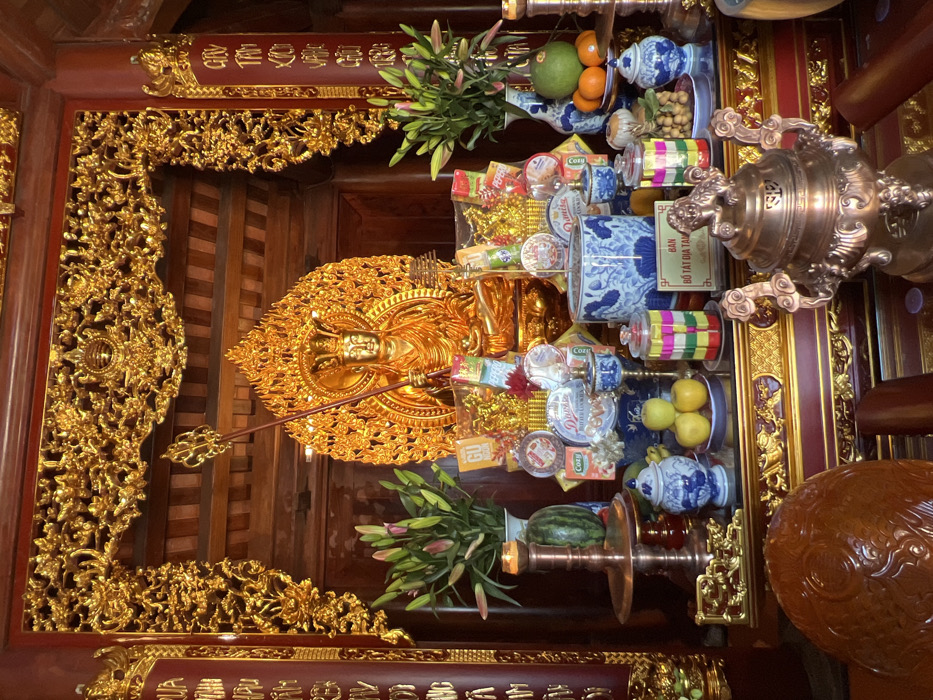
The image displays an ornate altar or shrine, likely within a temple or a traditionally decorated building, richly adorned with golden elements and dark wood. The central focus is a magnificent golden statue, depicting a seated deity or spiritual figure, possibly a Bodhisattva. The figure wears elaborate robes and a headdress or crown, and holds a long, decorated staff or scepter. Behind the statue is a large, intricate golden mandorla or halo, resembling flames or radiating light.

In front of the golden statue, an extensive array of offerings is meticulously arranged on the altar table. These offerings include various fresh fruits such as a green pomelo or grapefruit, oranges, clusters of longans, yellow apples, and a small watermelon. Alongside the fruits are several vases containing fresh flowers, which appear to be pink and white lilies.

Interspersed among the fruits and flowers are numerous packaged snack items and sweets, suggesting contemporary offerings. Brands like "Pepero," "Cosy," and "Danisa" cookies are visible, some in plastic bags, others in decorative tins or boxes. Small, colorful cylindrical items, possibly candy containers or decorative elements, are also present. The offerings are placed in decorative blue and white ceramic bowls and vases, which feature traditional patterns.

To the right side of the altar, a large, ornate copper or bronze censer or urn with decorative handles is prominently displayed. Other smaller decorative items include golden ornaments, possibly representing ingots or symbols of prosperity.

The altar itself is constructed from dark, polished wood, featuring extensive and intricate golden carvings. These carvings depict detailed floral and foliate motifs, adorning the frame around the central statue and the edges of the altar table. Above the statue, along the wooden beam, and vertically on the pillars, golden characters are visible, likely traditional script conveying blessings or inscriptions typical of a sacred space.

A white sign with a green border is placed among the offerings, bearing Vietnamese text: "BÀN BỒ TÁT ĐỊA TẠNG," which translates to "Altar of Ksitigarbha Bodhisattva."

The overall scene conveys a sense of deep reverence and devotion, characterized by the richness of the decorations and the abundance of offerings, typical of a sacred Buddhist or similar religious ceremony or act of worship.
burn in hell

Feb 22, 2026, 6:30 AM

Vietnam

Stake attention in this memory

altar
religious offering
statue
ornamentation
traditional

The image displays an ornate altar or shrine, likely within a temple or a traditionally decorated building, richly adorned with golden elements and dark wood. The central focus is a magnificent golden statue, depicting a seated deity or spiritual figure, possibly a Bodhisattva. The figure wears elaborate robes and a headdress or crown, and holds a long, decorated staff or scepter. Behind the statue is a large, intricate golden mandorla or halo, resembling flames or radiating light. In front of the golden statue, an extensive array of offerings is meticulously arranged on the altar table. These offerings include various fresh fruits such as a green pomelo or grapefruit, oranges, clusters of longans, yellow apples, and a small watermelon. Alongside the fruits are several vases containing fresh flowers, which appear to be pink and white lilies. Interspersed among the fruits and flowers are numerous packaged snack items and sweets, suggesting contemporary offerings. Brands like "Pepero," "Cosy," and "Danisa" cookies are visible, some in plastic bags, others in decorative tins or boxes. Small, colorful cylindrical items, possibly candy containers or decorative elements, are also present. The offerings are placed in decorative blue and white ceramic bowls and vases, which feature traditional patterns. To the right side of the altar, a large, ornate copper or bronze censer or urn with decorative handles is prominently displayed. Other smaller decorative items include golden ornaments, possibly representing ingots or symbols of prosperity. The altar itself is constructed from dark, polished wood, featuring extensive and intricate golden carvings. These carvings depict detailed floral and foliate motifs, adorning the frame around the central statue and the edges of the altar table. Above the statue, along the wooden beam, and vertically on the pillars, golden characters are visible, likely traditional script conveying blessings or inscriptions typical of a sacred space. A white sign with a green border is placed among the offerings, bearing Vietnamese text: "BÀN BỒ TÁT ĐỊA TẠNG," which translates to "Altar of Ksitigarbha Bodhisattva." The overall scene conveys a sense of deep reverence and devotion, characterized by the richness of the decorations and the abundance of offerings, typical of a sacred Buddhist or similar religious ceremony or act of worship.

Loading AttnAds…

transactions
revenues
stakers
Earliest
Latest
Highest stake

No transactions found

More from this user
burn in hell

Feb 22, 2026, 6:30 AM

Vietnam

Licensed under Creative Commons Attribution 4.0 International License. You are free to share and adapt this content with proper attribution.