
Sign in
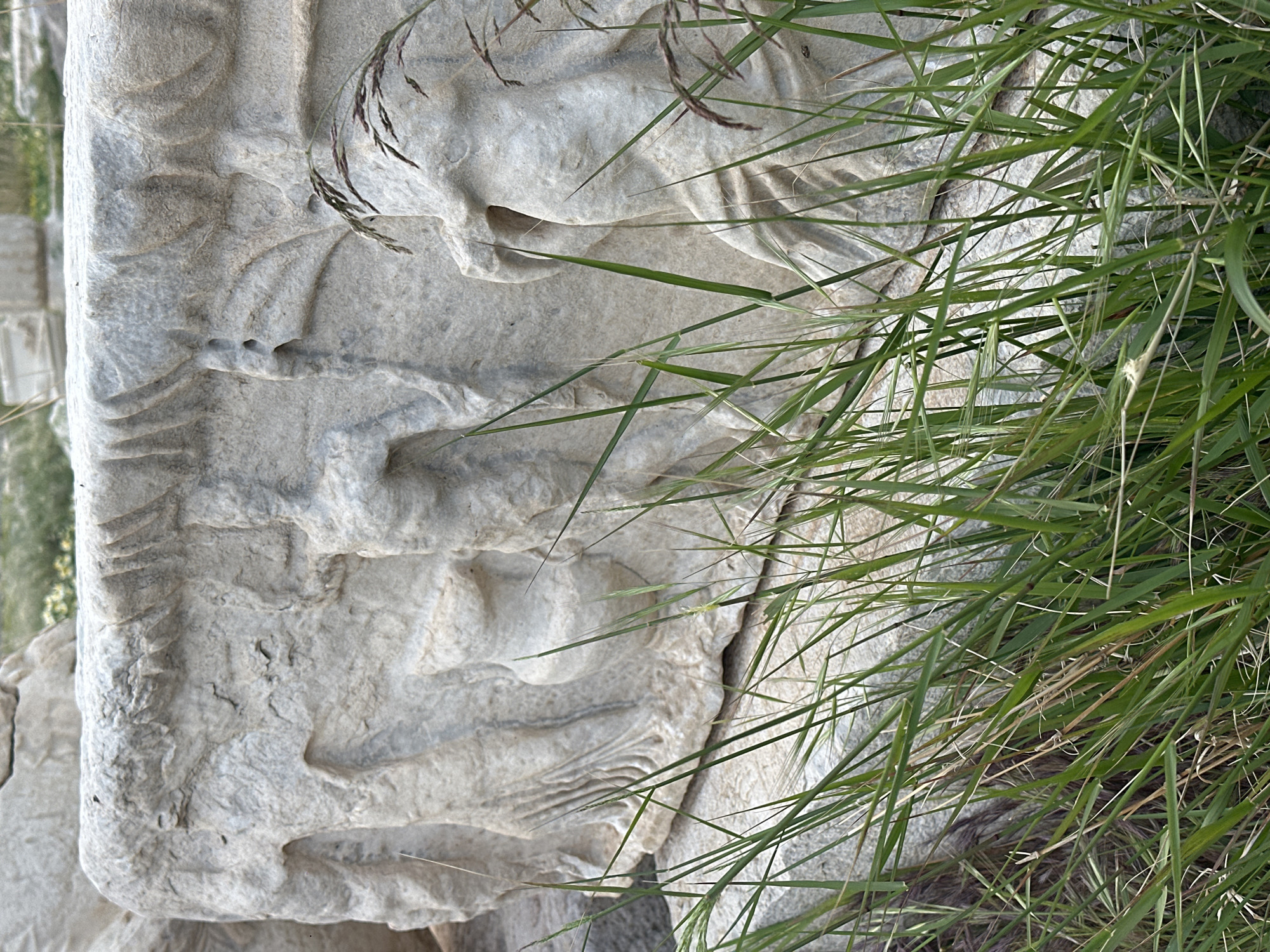
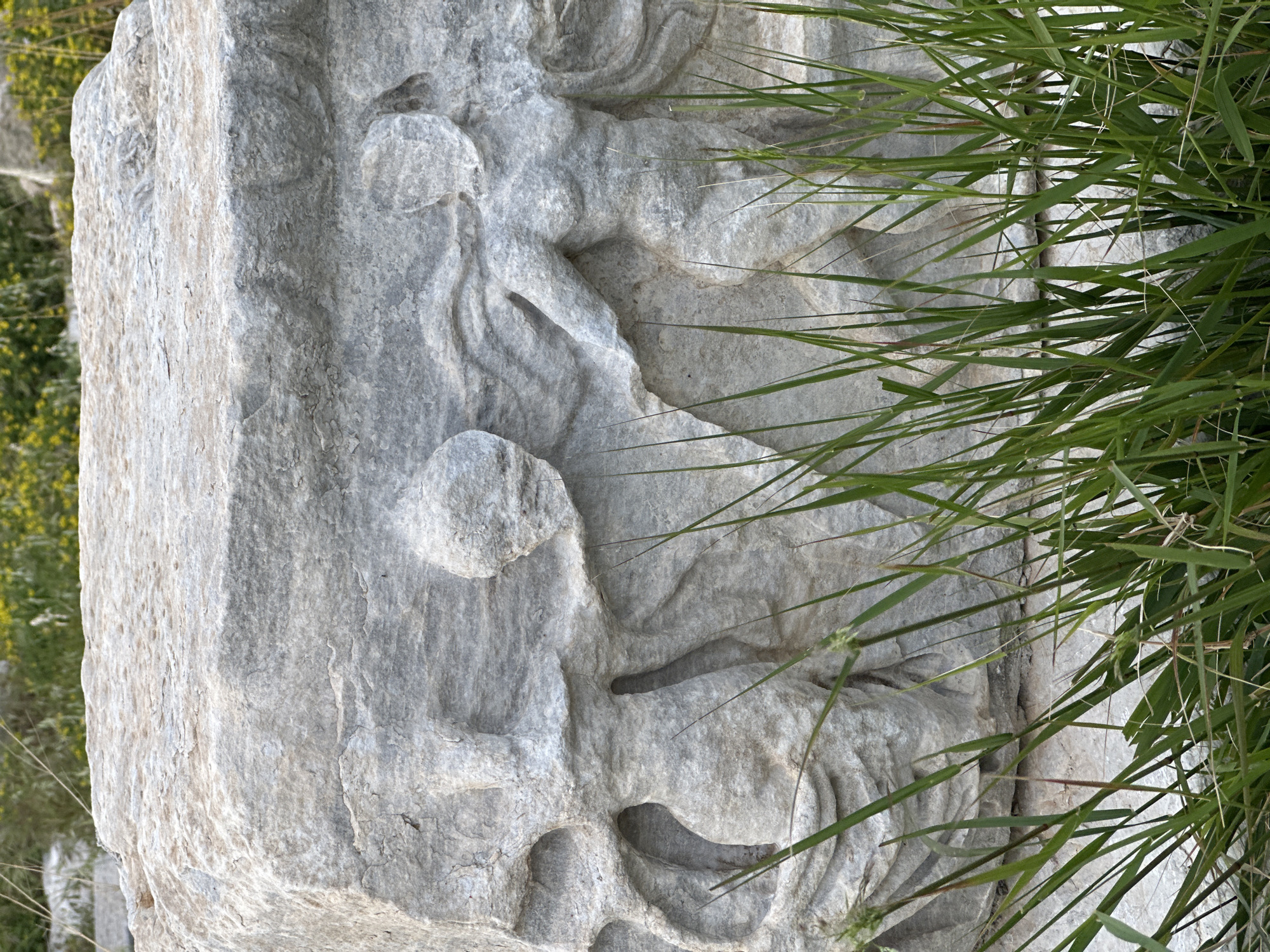
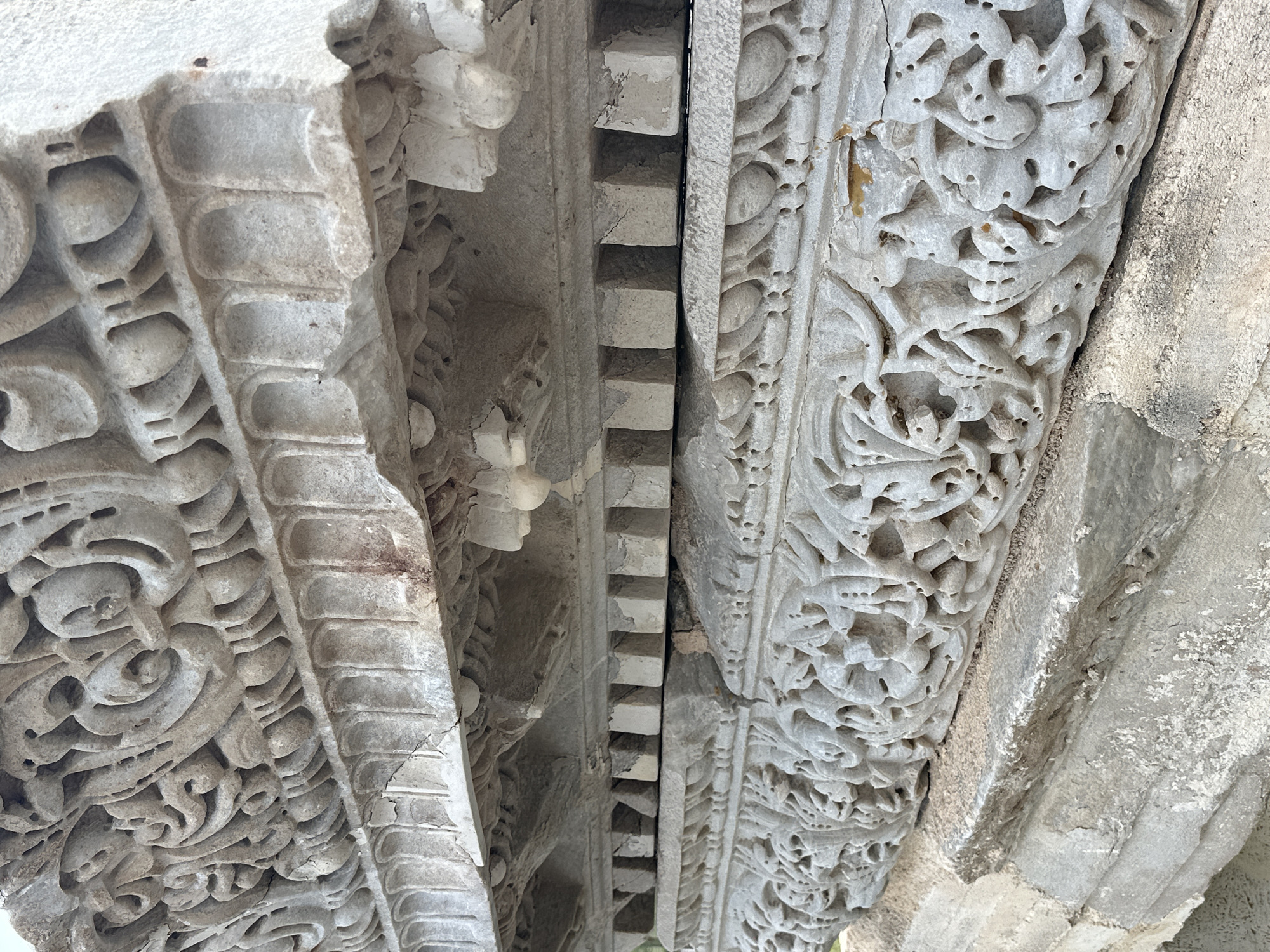
This close-up image captures an intricate section of carved stone architecture, likely part of an ancient or historical structure. The primary subjects are the detailed carvings themselves, with no people visible. The scene appears to be an exterior or partially enclosed space, bathed in bright, natural daylight, suggesting it is daytime.

The image shows three distinct vertical sections of carved stone. On the left, a panel features a repetitive pattern of interconnected, rounded, and elongated shapes, possibly stylized leaves or scrolls, with small rectangular indentations. The central section consists of a series of raised, rectangular blocks arranged in a stepped, interlocking manner, forming a deep recess or joint between the two larger carved elements. The rightmost panel showcases highly ornate and dense carvings, characterized by swirling, organic forms, intricate vegetal or floral motifs, and numerous small holes or depressions that add to their three-dimensional quality.

The stone itself is light-colored, possibly limestone or marble, and shows signs of significant age and weathering. There are visible cracks, chips, and areas of discoloration, including brownish-yellowish stains, hinting at prolonged exposure to the elements. The texture of the stone appears somewhat coarse. The perspective is angled upwards, emphasizing the depth and complexity of the overhead or vertical architectural decorations. No specific activity or event is taking place. There is no visible text. Given the context of Datça, Turkey, these carvings likely represent a style from a historical period prevalent in the region, such as Byzantine, Ottoman, or ancient Greek/Roman influences.
Vika-tika

Apr 16, 2026

Datça, Turkey

Stake attention in this memory

Ancient
Intricate
Worn
Imposing
Detailed

This close-up image captures an intricate section of carved stone architecture, likely part of an ancient or historical structure. The primary subjects are the detailed carvings themselves, with no people visible. The scene appears to be an exterior or partially enclosed space, bathed in bright, natural daylight, suggesting it is daytime. The image shows three distinct vertical sections of carved stone. On the left, a panel features a repetitive pattern of interconnected, rounded, and elongated shapes, possibly stylized leaves or scrolls, with small rectangular indentations. The central section consists of a series of raised, rectangular blocks arranged in a stepped, interlocking manner, forming a deep recess or joint between the two larger carved elements. The rightmost panel showcases highly ornate and dense carvings, characterized by swirling, organic forms, intricate vegetal or floral motifs, and numerous small holes or depressions that add to their three-dimensional quality. The stone itself is light-colored, possibly limestone or marble, and shows signs of significant age and weathering. There are visible cracks, chips, and areas of discoloration, including brownish-yellowish stains, hinting at prolonged exposure to the elements. The texture of the stone appears somewhat coarse. The perspective is angled upwards, emphasizing the depth and complexity of the overhead or vertical architectural decorations. No specific activity or event is taking place. There is no visible text. Given the context of Datça, Turkey, these carvings likely represent a style from a historical period prevalent in the region, such as Byzantine, Ottoman, or ancient Greek/Roman influences.

transactions
revenues
stakers
Earliest
Latest
Highest stake

No transactions found

More from this user

More from Datça

Vika-tika

Apr 16, 2026

Datça, Turkey

Licensed under Creative Commons Attribution 4.0 International License. You are free to share and adapt this content with proper attribution.