
Sign in
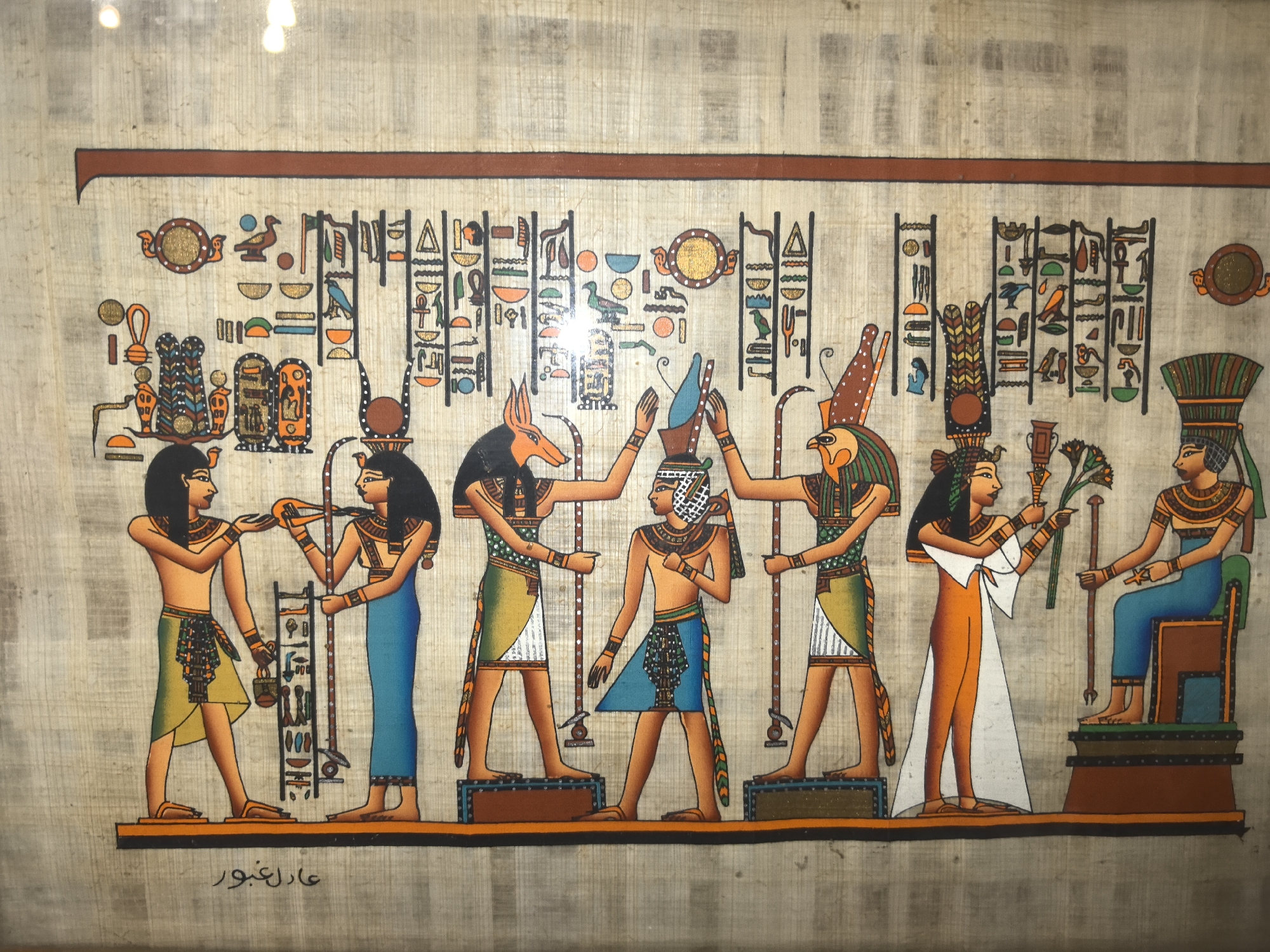
This is an image of an ancient Egyptian papyrus painting featuring several figures and hieroglyphs. The painting is framed by a reddish-brown border at the top and bottom, with an additional darker border along the very bottom. The papyrus itself has a textured, woven appearance, typical of ancient writing material.

The central scene depicts a procession of six figures. From left to right, the first figure is a man with dark hair, wearing a yellow kilt and a patterned sash, offering a vessel to another figure. The second figure is a woman with dark hair, wearing a blue dress and a patterned collar, holding a staff. The third figure is a jackal-headed deity, Anubis, dressed in a green and white garment, with his hands raised. The fourth figure is a man wearing a white headdress and a blue kilt, also with his hands raised. The fifth figure is a falcon-headed deity, likely Horus, wearing a patterned garment and holding a flower. The sixth figure is a woman in an orange and white robe, offering a flower to a seated figure. The seated figure, on the far right, wears a blue robe and a tall, green headdress, holding a staff. All figures are depicted in profile with stylized features and traditional Egyptian attire.

Above the figures, there are columns of hieroglyphs, some of which are enclosed within cartouches. These hieroglyphs, along with the depictions of deities and traditional dress, strongly suggest an ancient Egyptian religious or funerary context.

At the bottom of the papyrus, there is Arabic text written in a cursive style. The meaning or significance of this text is not immediately apparent without further context. The overall impression is of a sacred or ceremonial scene rendered in the characteristic flat, symbolic style of ancient Egyptian art. There are no clear indicators of time of day, weather, or specific location beyond the cultural context of ancient Egypt. The emotions of the figures are not clearly conveyed, as the style is highly formalized.
Alexey75

Jun 28, 2026

Unknown, Unknown

Stake attention in this memory

mysterious
ancient
reverent
ceremonial
mythological

This is an image of an ancient Egyptian papyrus painting featuring several figures and hieroglyphs. The painting is framed by a reddish-brown border at the top and bottom, with an additional darker border along the very bottom. The papyrus itself has a textured, woven appearance, typical of ancient writing material. The central scene depicts a procession of six figures. From left to right, the first figure is a man with dark hair, wearing a yellow kilt and a patterned sash, offering a vessel to another figure. The second figure is a woman with dark hair, wearing a blue dress and a patterned collar, holding a staff. The third figure is a jackal-headed deity, Anubis, dressed in a green and white garment, with his hands raised. The fourth figure is a man wearing a white headdress and a blue kilt, also with his hands raised. The fifth figure is a falcon-headed deity, likely Horus, wearing a patterned garment and holding a flower. The sixth figure is a woman in an orange and white robe, offering a flower to a seated figure. The seated figure, on the far right, wears a blue robe and a tall, green headdress, holding a staff. All figures are depicted in profile with stylized features and traditional Egyptian attire. Above the figures, there are columns of hieroglyphs, some of which are enclosed within cartouches. These hieroglyphs, along with the depictions of deities and traditional dress, strongly suggest an ancient Egyptian religious or funerary context. At the bottom of the papyrus, there is Arabic text written in a cursive style. The meaning or significance of this text is not immediately apparent without further context. The overall impression is of a sacred or ceremonial scene rendered in the characteristic flat, symbolic style of ancient Egyptian art. There are no clear indicators of time of day, weather, or specific location beyond the cultural context of ancient Egypt. The emotions of the figures are not clearly conveyed, as the style is highly formalized.

transactions
revenues
stakers
Earliest
Latest
Highest stake

No transactions found

More from this user

More from Unknown

Alexey75

Jun 28, 2026

Unknown, Unknown

Licensed under Creative Commons Attribution 4.0 International License. You are free to share and adapt this content with proper attribution.