
Sign in
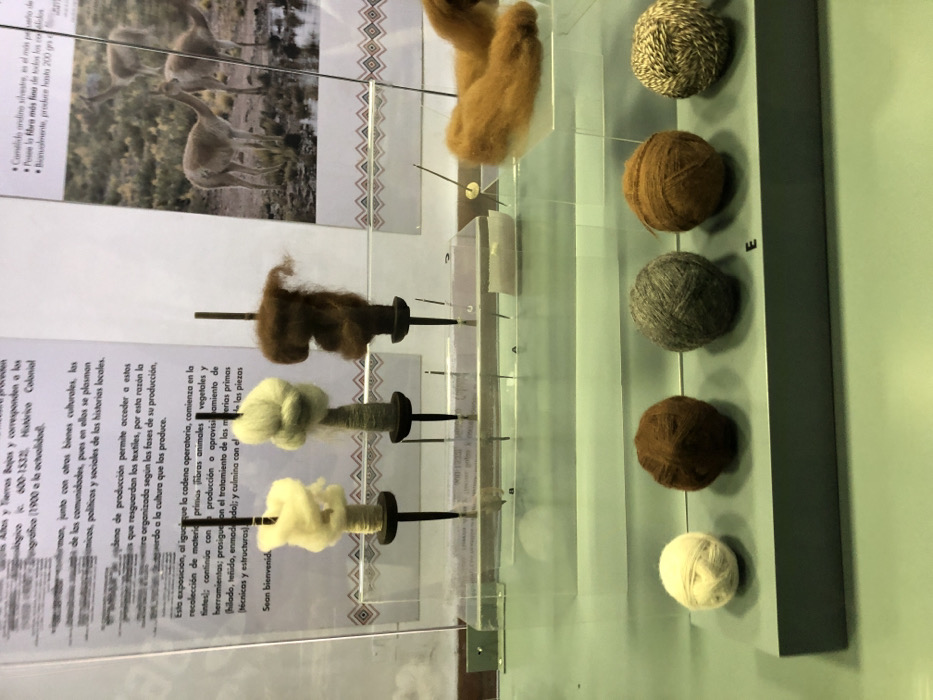
This media file captures an exhibit showcasing the stages of textile production, likely from Andean camelids, within a museum or cultural center in La Paz, Bolivia. The scene features a glass display case with various fibers and spun yarn, set against a wall with explanatory text and an image.

On the left side, an informational panel displays a photograph of two vicuña-like animals in a natural, arid landscape. Adjacent to this image are text passages, mostly in Spanish, detailing aspects of textile history and production. One visible section describes the "Comelide andino silvestre" (wild Andean camelid), noting it is the smallest, possesses the finest fiber, and produces up to 200 grams biennially, aligning with the vicuña image. Other texts discuss textile preservation, cultural significance, and the operational chain of production, from raw material collection (animal and vegetable fibers) and tool provision to processing (spinning, dyeing, weaving) and finishing. The text also mentions historical periods from "600-1532, Histórico Colonial 1900 a la actualidad."

Within the glass display case, several stages of fiber processing are visible. In the foreground, three traditional spindles or bobbins are shown with unprocessed or partially processed fibers wrapped around them, displaying shades of dark brown, a light green-grey, and cream-white. Further back, a pile of loose, light brown/tan fiber is presented, illustrating the raw material.

On the right side of the display, an arrangement of five balls of spun yarn is vertically aligned. From top to bottom, these include a variegated cream and light brown yarn, a solid reddish-brown yarn, a grey yarn, a darker brown yarn, and a cream-white yarn, representing the final product after spinning and possibly dyeing. The exhibit effectively illustrates the journey from raw fiber to usable yarn, highlighting traditional textile practices.
MNela

Jan 9, 2025, 7:53 PM

La Paz, Bolivia

Stake attention in this memory

This media file captures an exhibit showcasing the stages of textile production, likely from Andean camelids, within a museum or cultural center in La Paz, Bolivia. The scene features a glass display case with various fibers and spun yarn, set against a wall with explanatory text and an image. On the left side, an informational panel displays a photograph of two vicuña-like animals in a natural, arid landscape. Adjacent to this image are text passages, mostly in Spanish, detailing aspects of textile history and production. One visible section describes the "Comelide andino silvestre" (wild Andean camelid), noting it is the smallest, possesses the finest fiber, and produces up to 200 grams biennially, aligning with the vicuña image. Other texts discuss textile preservation, cultural significance, and the operational chain of production, from raw material collection (animal and vegetable fibers) and tool provision to processing (spinning, dyeing, weaving) and finishing. The text also mentions historical periods from "600-1532, Histórico Colonial 1900 a la actualidad." Within the glass display case, several stages of fiber processing are visible. In the foreground, three traditional spindles or bobbins are shown with unprocessed or partially processed fibers wrapped around them, displaying shades of dark brown, a light green-grey, and cream-white. Further back, a pile of loose, light brown/tan fiber is presented, illustrating the raw material. On the right side of the display, an arrangement of five balls of spun yarn is vertically aligned. From top to bottom, these include a variegated cream and light brown yarn, a solid reddish-brown yarn, a grey yarn, a darker brown yarn, and a cream-white yarn, representing the final product after spinning and possibly dyeing. The exhibit effectively illustrates the journey from raw fiber to usable yarn, highlighting traditional textile practices.

Loading AttnAds…

transactions
revenues
stakers
Earliest
Latest
Highest stake

No transactions found

More from this user

More from La Paz

MNela

Jan 9, 2025, 7:53 PM

La Paz, Bolivia

Licensed under Creative Commons Attribution 4.0 International License. You are free to share and adapt this content with proper attribution.