
Stake attention in this memory
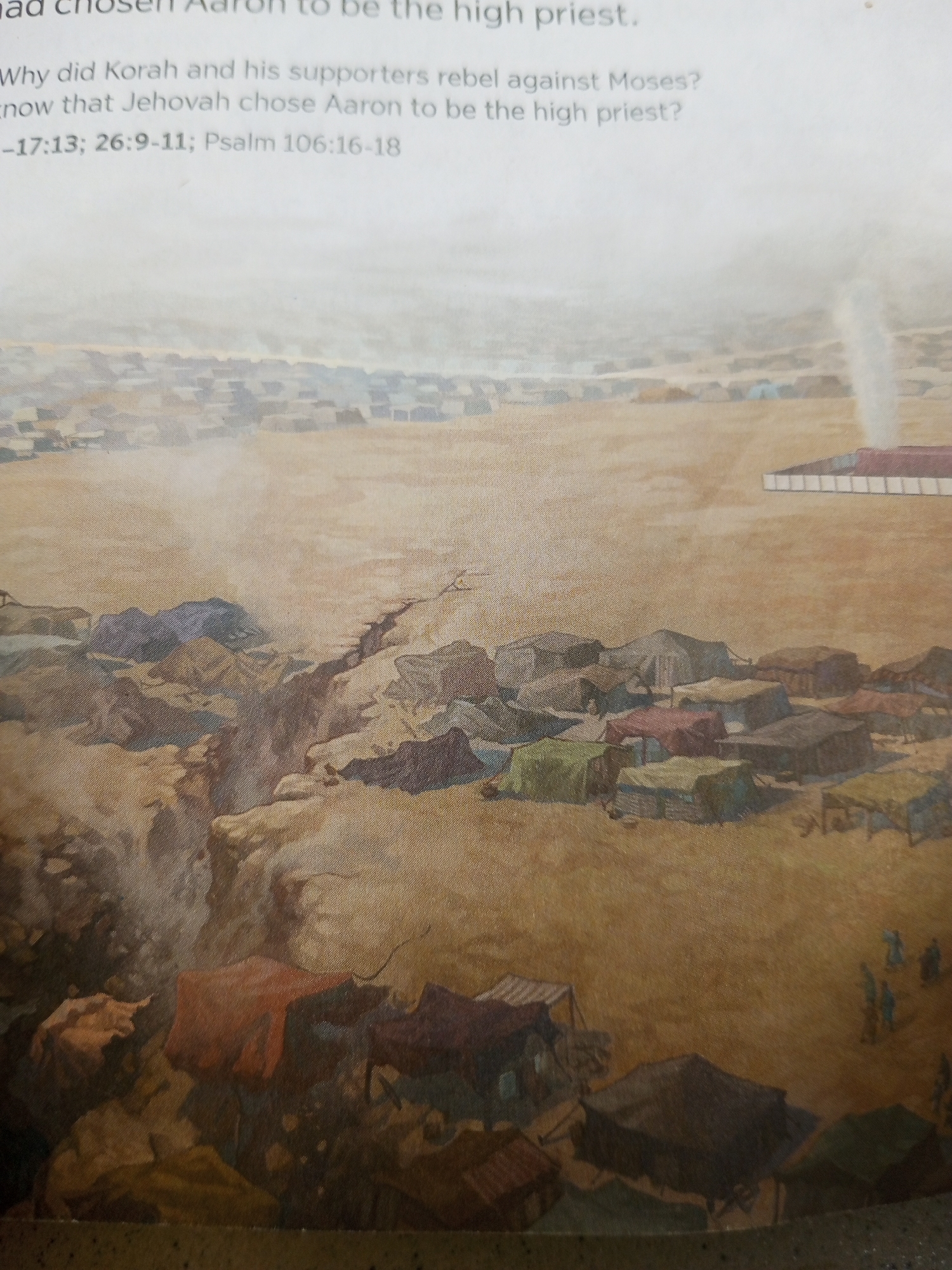
This image is a painting depicting a scene from a historical or religious narrative. In the foreground, there is a group of tents or makeshift dwellings, suggesting a temporary settlement or encampment. Some of these structures are made of fabric stretched over frames, while others appear more solid, constructed from wood and earth. A deep fissure or ravine cuts through the landscape, with rocky formations on either side, implying a dramatic geological event or a natural boundary. In the midground and background, a vast expanse of tents and structures stretches across a dusty, arid landscape. This suggests a large gathering of people, possibly an army, a migration, or a community living in a challenging environment. Further in the distance, a more substantial building with a red roof is visible, perhaps a temple or a central administrative structure. The overall atmosphere is one of hardship and perhaps conflict, given the dramatic landscape feature and the nature of a large encampment. The sky is hazy and light, suggesting a daytime setting, possibly with dust or smoke in the air, contributing to the overall muted color palette of browns, ochres, and grays. There are small figures of people visible in the distance, indicating the scale of the settlement. Visible text at the top of the image provides context, referencing a biblical narrative concerning Korah, Moses, and Aaron, and the role of a high priest. The text also includes scripture references. The painting likely illustrates this religious event, possibly depicting the rebellion of Korah and his followers or the consequences thereof, such as the earth swallowing them up, suggested by the ravine. The specific location of Jauro Yinu, Nigeria, is provided, but it is not directly evident from the visual elements of the painting itself, which appears to depict an ancient desert or wilderness setting consistent with the biblical account.
Loading AttnAds…
No transactions found