
Sign in
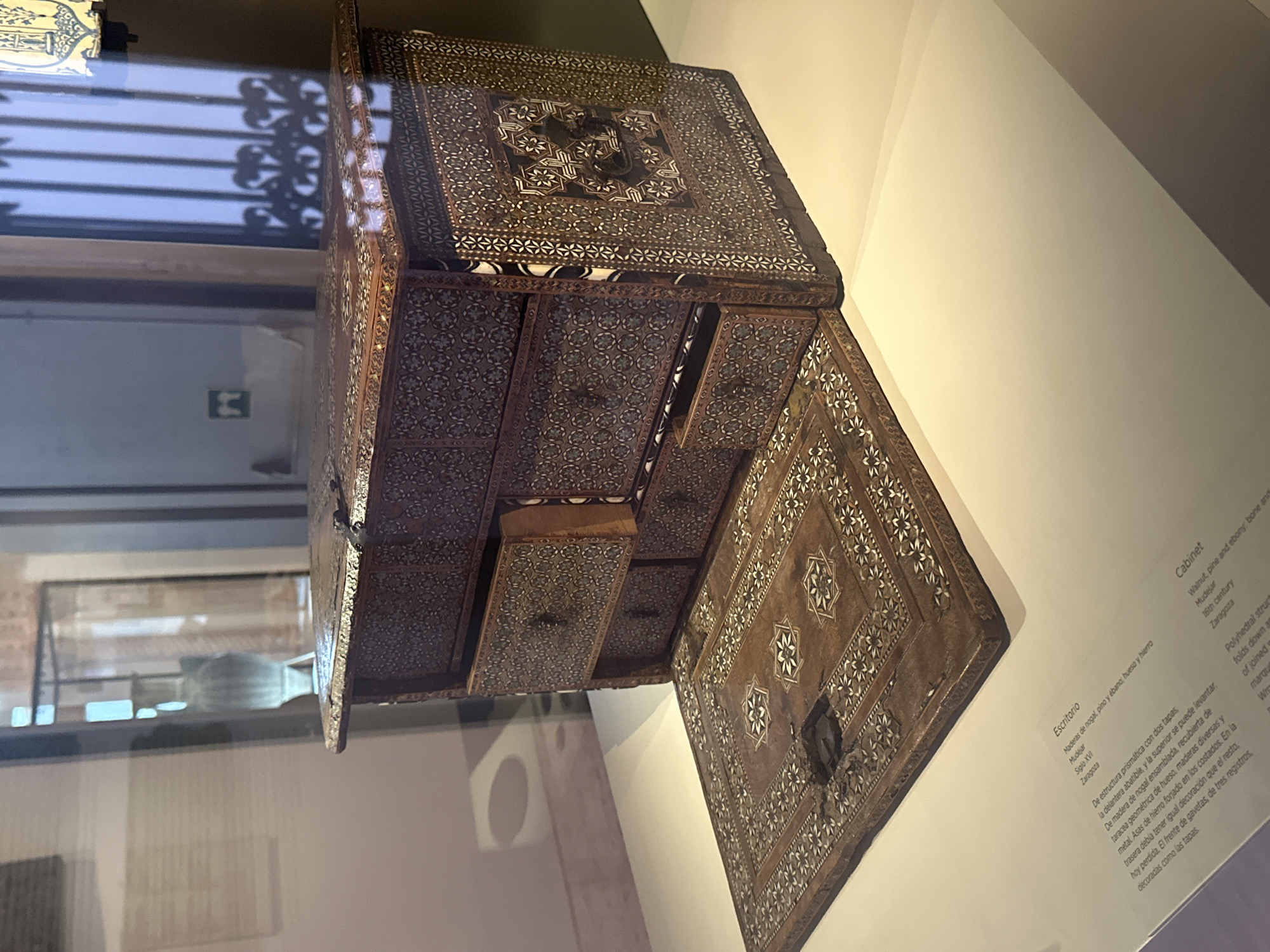
The image shows an ornate, antique wooden cabinet displayed in a museum setting, likely in Madrid, Spain. The cabinet is elaborately decorated with geometric inlays of bone, various woods, and possibly metal, with the dominant patterns featuring stars and floral motifs. The cabinet is open, revealing multiple drawers and compartments, with its front and top surfaces intricately carved.

The text visible in the image provides information about the object, identifying it as an "Escritorio" (desk or writing cabinet) and a "Cabinet." It lists the materials used as walnut, pine, and ebony wood, bone, and iron. The style is described as "Mudéjar," and the period is indicated as the 16th century. The place of origin is identified as Zaragoza. The descriptive text further details its structure, including two lids, one of which is foldable, and the intricate inlay work on its surfaces. It also mentions the presence of forged iron handles and a lost decorative element on the back.

The lighting suggests an indoor environment, possibly with natural light filtering through a barred window, casting patterned shadows on the left side of the cabinet, contributing to the museum-like atmosphere. The scene is static, focusing solely on the artifact and its descriptive plaque.
Tati

Jun 30, 2026

Madrid, Spain

Moment

Stake attention in this memory

nostalgia
intricacy
elegance
curiosity
admiration

The image shows an ornate, antique wooden cabinet displayed in a museum setting, likely in Madrid, Spain. The cabinet is elaborately decorated with geometric inlays of bone, various woods, and possibly metal, with the dominant patterns featuring stars and floral motifs. The cabinet is open, revealing multiple drawers and compartments, with its front and top surfaces intricately carved. The text visible in the image provides information about the object, identifying it as an "Escritorio" (desk or writing cabinet) and a "Cabinet." It lists the materials used as walnut, pine, and ebony wood, bone, and iron. The style is described as "Mudéjar," and the period is indicated as the 16th century. The place of origin is identified as Zaragoza. The descriptive text further details its structure, including two lids, one of which is foldable, and the intricate inlay work on its surfaces. It also mentions the presence of forged iron handles and a lost decorative element on the back. The lighting suggests an indoor environment, possibly with natural light filtering through a barred window, casting patterned shadows on the left side of the cabinet, contributing to the museum-like atmosphere. The scene is static, focusing solely on the artifact and its descriptive plaque.

transactions
revenues
stakers
Earliest
Latest
Highest stake

No transactions found

More from this user

More from Madrid

Tati

Jun 30, 2026

Madrid, Spain

Licensed under Creative Commons Attribution 4.0 International License. You are free to share and adapt this content with proper attribution.