Sign in
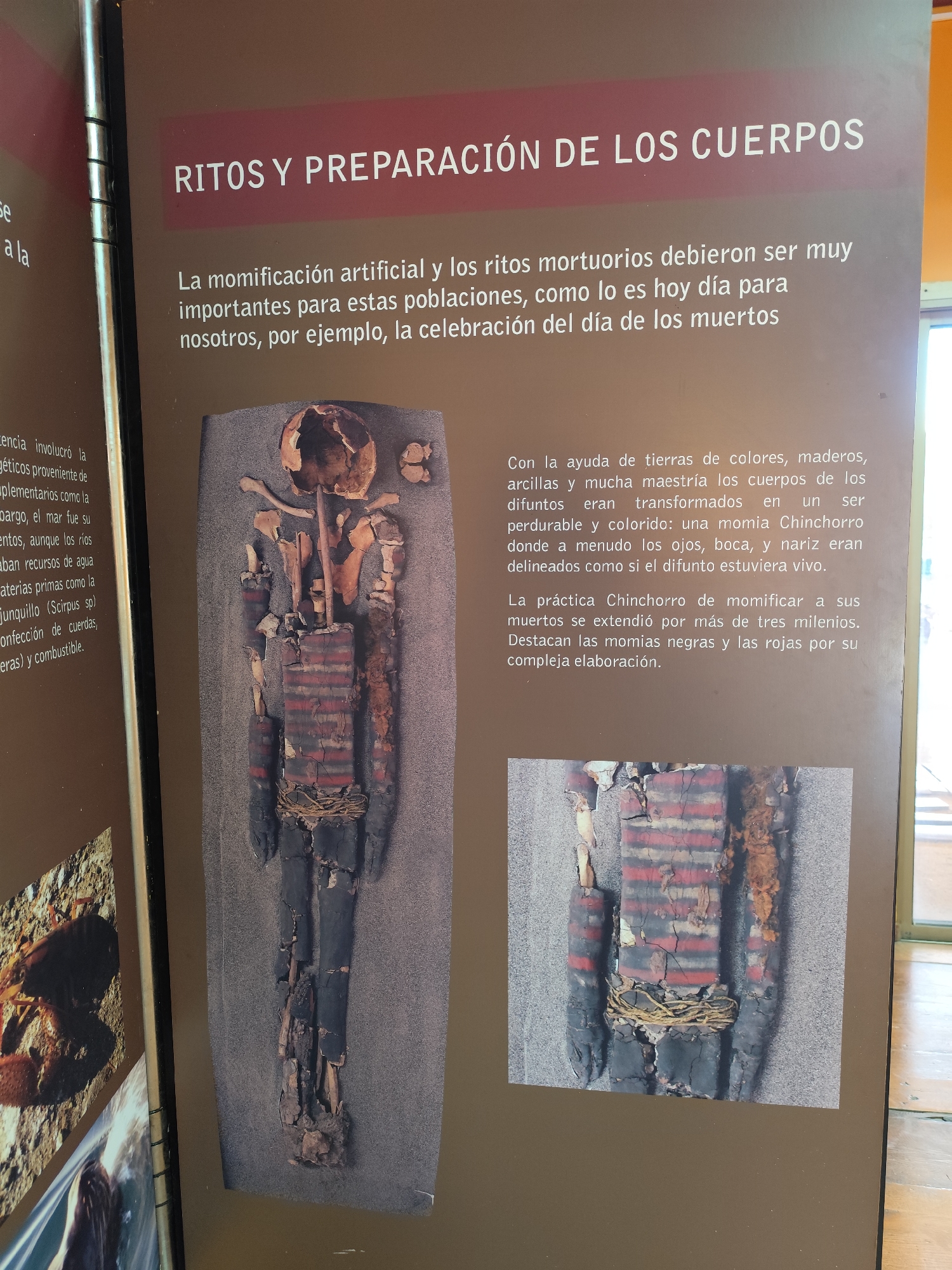
This media file showcases an informational display about the "Ritos y Preparación de los Cuerpos" (Rites and Preparation of Bodies), focusing on the Chinchorro mummies. The display features several images of these ancient mummies, highlighting their intricate preparation and appearance.

The main image on the left is a full-body depiction of a Chinchorro mummy, displaying its skeletal structure wrapped in textiles. The mummy is adorned with colorful bands of red and black, and its lower legs appear to be wrapped in darker material, possibly indicating soot or a black pigment. The mummy is presented as if standing upright.

To the right of the full mummy, a close-up image shows the torso and limbs of another mummy, offering a more detailed view of the textile wrappings and the colors used. This detail shot emphasizes the craftsmanship involved in their creation.

Text panels accompany the images, providing information in Spanish. The title, "RITOS Y PREPARACIÓN DE LOS CUERPOS," is prominently displayed. The text explains that artificial mummification and mortuary rites were very important to these populations, comparing their significance to the modern celebration of the Day of the Dead. It further describes how, with the aid of colored earths, woods, clays, and great skill, the bodies of the deceased were transformed into a durable and colorful being—a Chinchorro mummy, often with features like eyes, mouth, and nose outlined as if the deceased were alive. The text also mentions that the Chinchorro practice of mummifying their dead extended for over three millennia, with the black and red mummies being notable for their complex elaboration.

A smaller image on the far left, partially visible, seems to show a crab and perhaps other elements from the coastal environment, hinting at the geographical context of the Chinchorro culture, likely Arica, Chile, known for its coastal resources. The overall setting is indoors, suggesting a museum or exhibition space, with a warm, brownish background for the display. The lighting appears to be artificial and even, illuminating the subjects without harsh shadows.
cynthia🇨🇱📈

Jun 26, 2026

Arica, Chile

Stake attention in this memory

somber
reverent
mysterious
melancholic
solemn

This media file showcases an informational display about the "Ritos y Preparación de los Cuerpos" (Rites and Preparation of Bodies), focusing on the Chinchorro mummies. The display features several images of these ancient mummies, highlighting their intricate preparation and appearance. The main image on the left is a full-body depiction of a Chinchorro mummy, displaying its skeletal structure wrapped in textiles. The mummy is adorned with colorful bands of red and black, and its lower legs appear to be wrapped in darker material, possibly indicating soot or a black pigment. The mummy is presented as if standing upright. To the right of the full mummy, a close-up image shows the torso and limbs of another mummy, offering a more detailed view of the textile wrappings and the colors used. This detail shot emphasizes the craftsmanship involved in their creation. Text panels accompany the images, providing information in Spanish. The title, "RITOS Y PREPARACIÓN DE LOS CUERPOS," is prominently displayed. The text explains that artificial mummification and mortuary rites were very important to these populations, comparing their significance to the modern celebration of the Day of the Dead. It further describes how, with the aid of colored earths, woods, clays, and great skill, the bodies of the deceased were transformed into a durable and colorful being—a Chinchorro mummy, often with features like eyes, mouth, and nose outlined as if the deceased were alive. The text also mentions that the Chinchorro practice of mummifying their dead extended for over three millennia, with the black and red mummies being notable for their complex elaboration. A smaller image on the far left, partially visible, seems to show a crab and perhaps other elements from the coastal environment, hinting at the geographical context of the Chinchorro culture, likely Arica, Chile, known for its coastal resources. The overall setting is indoors, suggesting a museum or exhibition space, with a warm, brownish background for the display. The lighting appears to be artificial and even, illuminating the subjects without harsh shadows.

transactions
revenues
stakers
Earliest
Latest
Highest stake

No transactions found

More from this user

More from Arica

cynthia🇨🇱📈

Jun 26, 2026

Arica, Chile

Licensed under Creative Commons Attribution 4.0 International License. You are free to share and adapt this content with proper attribution.