Stake attention in this memory
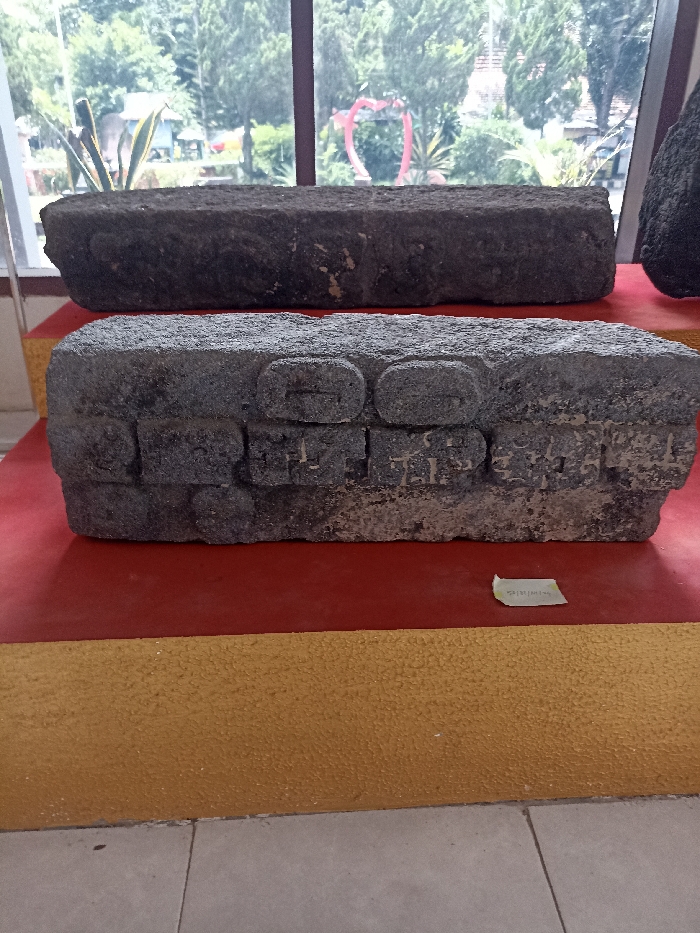
The image displays two ancient-looking, rectangular stone artifacts presented on a red and yellow display stand, likely within a museum or exhibition space. The primary subject is a dark gray, rough-textured stone block situated in the foreground. This stone features a series of distinctive carvings along its visible long side. These carvings consist of raised, elongated oval or rectangular shapes, each containing a horizontal indent or line. The pattern of these shapes suggests a decorative frieze or architectural element, possibly indicating its original function as part of a larger structure like a temple. The stone shows signs of wear and age, with some areas appearing eroded or damaged. Behind and slightly above this stone lies another similar dark gray, rectangular stone block. This upper stone appears less intricately carved or its details are more worn than the one below, with subtle, perhaps geometric, patterns barely discernible. Both stones are presented on a vibrant red surface, which in turn rests on a textured yellow base. In the background, a large window reveals an outdoor scene, suggesting the display area has natural light. Through the window, green foliage and trees are visible, along with some distant structures. A notable detail in the background is a large, bright red, heart-shaped sculpture among the greenery. The lighting suggests it is daytime. A small, white rectangular label with green handwriting is visible on the red display surface in front of the lower stone. The text on the label is partially obscured and difficult to read clearly, but it includes what appears to be a date, "21/VII/2021", and possibly an identifying word like "batubata" (Indonesian for brick) or similar, indicating the artifact's acquisition date or classification. The overall scene evokes a sense of historical preservation and public display in Kediri, Indonesia.
No transactions found