
Stake attention in this memory
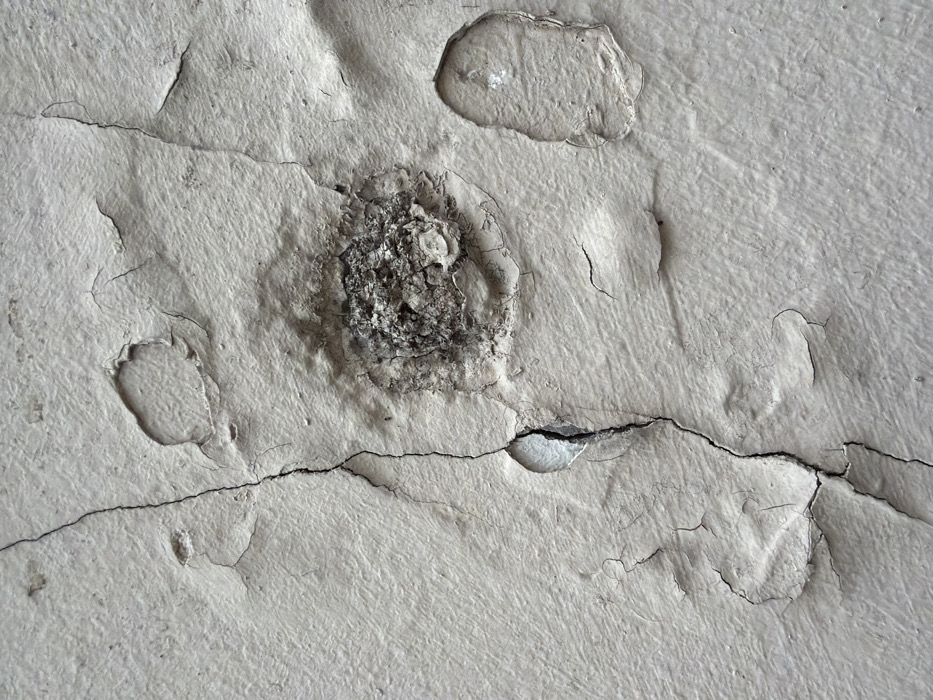
The image presents a detailed close-up of a severely damaged, light-colored surface, likely a wall or ceiling. The dominant color palette consists of off-white and various shades of light gray, with darker grays and blacks appearing in the areas of most significant deterioration. The surface exhibits considerable texture due to widespread peeling, flaking, and cracking. A prominent, irregular circular or crater-like area near the center of the image shows the most extensive damage, where the outer layer has completely fallen away, revealing a much darker, granular, and rough material beneath. This central patch is rich in texture, appearing crumbly and rugged. Surrounding this central damage, and scattered across the rest of the surface, are numerous other patches where the lighter outer layer has peeled or flaked off. These areas are irregular in shape, often resembling blisters that have burst or curled edges of paint. Beneath these flakes, a slightly darker, smoother layer is visible compared to the outermost surface. A distinct, linear crack runs horizontally across the lower third of the image, extending from the left edge towards the right. Along this main crack, towards the right side, there is a small, deeper cavity or void where a piece of the material has broken away. Smaller, finer cracks branch out from the larger ones and also appear within the flaking areas, highlighting the brittle nature of the damaged surface. The overall texture of the relatively intact sections of the light surface appears slightly uneven, with subtle undulations and fine lines, possibly indicative of an underlying rough finish or brush strokes. No activity or event is taking place; the image is a static capture of a decaying architectural surface. There are no people, objects, or visible text in the frame. The lighting appears even, without harsh shadows, suggesting an indoor setting or overcast conditions, which effectively accentuates the intricate textures and depth of the damage. The condition of the surface strongly suggests aging, wear and tear, or possibly moisture damage.
Loading AttnAds…
No transactions found