
Sign in
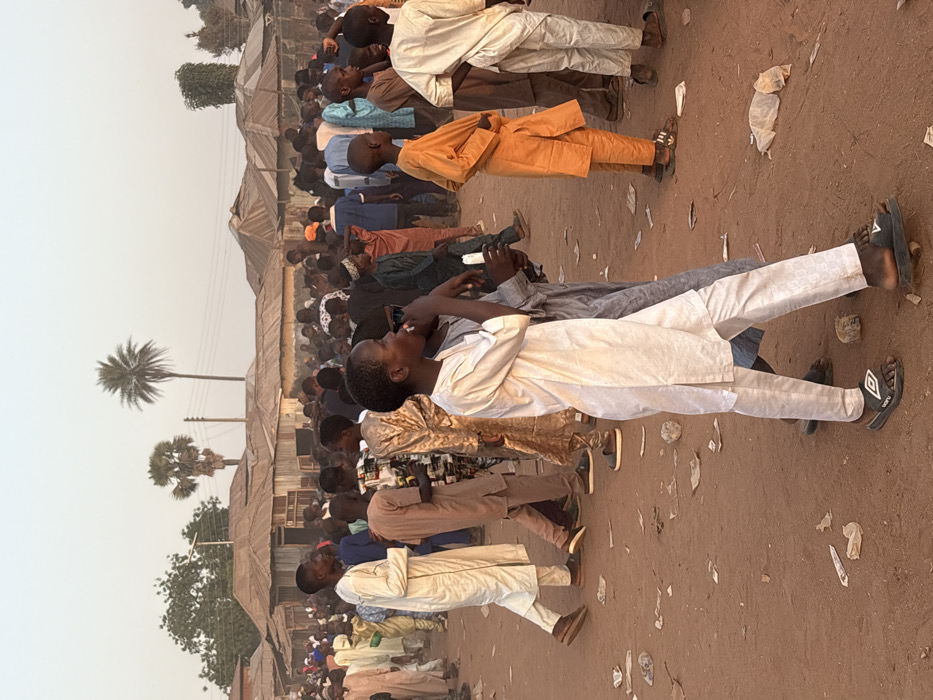
An outdoor scene in Lafia, Nigeria, depicts a densely populated area under a hazy, light-colored sky. The ground consists of reddish-brown dirt littered with various white and light-colored debris, including paper and plastic.

Approximately 50 or more individuals, predominantly males of varying ages from children to adults, are present. Many are dressed in traditional Nigerian attire, including long-sleeved tunics (kaftans or agbadas) and matching trousers, in colors such as white, cream, beige, brown, orange, blue, and patterned fabrics. Footwear includes sandals, slip-on shoes, and bare feet. Most individuals are standing or walking, facing various directions.

In the foreground, a young male in an off-white kaftan and trousers walks towards the right, with his left hand near his jaw. He wears black open-toe sandals. To his left, another young male in a cream-colored kaftan walks towards the left, looking right. Another male in a light brown kaftan walks towards the right. To the right, a male in a bright orange kaftan stands facing right.

In the mid-ground and background, the crowd is denser. Behind the crowd, multiple single-story structures with corrugated metal roofs are visible, appearing weathered. These buildings are constructed with what appears to be unpainted or lightly colored block/mud walls. Two prominent palm trees, one tall and slender, the other shorter and broader, stand against the horizon. Faint electrical wires are visible in the upper mid-ground. The lighting suggests late afternoon, casting soft shadows with a warm overall hue, indicative of a dusty or hazy atmosphere.
Johnson

Mar 21, 2026, 5:13 PM

Lafia, Nigeria

Stake attention in this memory

Community
Tradition
Anticipation
Curiosity
Respect

An outdoor scene in Lafia, Nigeria, depicts a densely populated area under a hazy, light-colored sky. The ground consists of reddish-brown dirt littered with various white and light-colored debris, including paper and plastic. Approximately 50 or more individuals, predominantly males of varying ages from children to adults, are present. Many are dressed in traditional Nigerian attire, including long-sleeved tunics (kaftans or agbadas) and matching trousers, in colors such as white, cream, beige, brown, orange, blue, and patterned fabrics. Footwear includes sandals, slip-on shoes, and bare feet. Most individuals are standing or walking, facing various directions. In the foreground, a young male in an off-white kaftan and trousers walks towards the right, with his left hand near his jaw. He wears black open-toe sandals. To his left, another young male in a cream-colored kaftan walks towards the left, looking right. Another male in a light brown kaftan walks towards the right. To the right, a male in a bright orange kaftan stands facing right. In the mid-ground and background, the crowd is denser. Behind the crowd, multiple single-story structures with corrugated metal roofs are visible, appearing weathered. These buildings are constructed with what appears to be unpainted or lightly colored block/mud walls. Two prominent palm trees, one tall and slender, the other shorter and broader, stand against the horizon. Faint electrical wires are visible in the upper mid-ground. The lighting suggests late afternoon, casting soft shadows with a warm overall hue, indicative of a dusty or hazy atmosphere.

transactions
revenues
stakers
Earliest
Latest
Highest stake

No transactions found

More from this user

More from Lafia

Johnson

Mar 21, 2026, 5:13 PM

Lafia, Nigeria

Licensed under Creative Commons Attribution 4.0 International License. You are free to share and adapt this content with proper attribution.