
Sign in
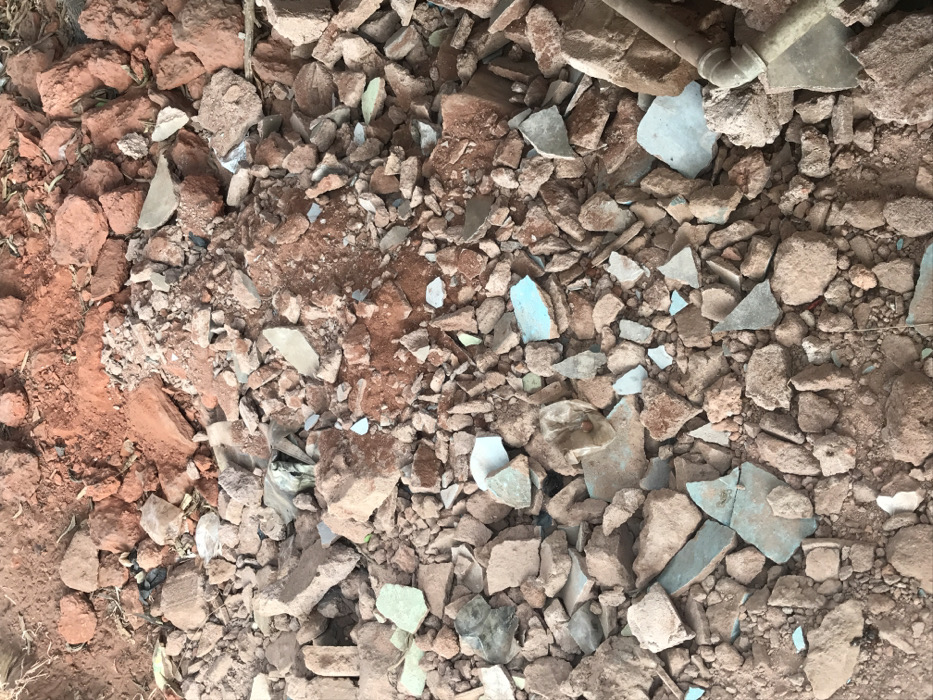
This image captures a high-angle view of a ground surface heavily covered in a mix of construction debris and soil. The scene is dominated by numerous irregular fragments of broken building materials.

The most prominent subjects are pieces of reddish-brown material, resembling shattered bricks or dried clay, which are mixed with lighter-colored fragments of concrete or plaster. Many of these concrete pieces show remnants of paint, with noticeable patches of light blue, light green, and off-white/greyish hues, indicating they were once part of painted surfaces. The debris ranges in size from small pebbles to larger chunks several inches across.

Along the left side of the frame, a distinct area of reddish-brown earth is visible, suggesting exposed soil or a dirt path. Scattered among the larger debris are smaller stones, dust, and a few minor pieces of what appears to be plastic or foil. In the upper right portion of the image, a section of a grey, possibly metallic or PVC, pipe or conduit is partially visible, protruding from beneath larger chunks of rubble.

There are no people, animals, or any specific activity taking place; the scene is static, depicting the aftermath of a demolition, construction, or waste disposal event. The lighting suggests it is daytime, with even illumination across the surface and no strong shadows to indicate a specific time of day or harsh weather conditions. No visible text is present on any of the objects or surfaces. The assortment of natural earth and man-made rubble is consistent with a disturbed site in a location such as Ankpa, Nigeria.
Bright

Dec 30, 2025, 4:14 PM

Ankpa, Nigeria

Stake attention in this memory

rubble
debris
broken
concrete
construction

This image captures a high-angle view of a ground surface heavily covered in a mix of construction debris and soil. The scene is dominated by numerous irregular fragments of broken building materials. The most prominent subjects are pieces of reddish-brown material, resembling shattered bricks or dried clay, which are mixed with lighter-colored fragments of concrete or plaster. Many of these concrete pieces show remnants of paint, with noticeable patches of light blue, light green, and off-white/greyish hues, indicating they were once part of painted surfaces. The debris ranges in size from small pebbles to larger chunks several inches across. Along the left side of the frame, a distinct area of reddish-brown earth is visible, suggesting exposed soil or a dirt path. Scattered among the larger debris are smaller stones, dust, and a few minor pieces of what appears to be plastic or foil. In the upper right portion of the image, a section of a grey, possibly metallic or PVC, pipe or conduit is partially visible, protruding from beneath larger chunks of rubble. There are no people, animals, or any specific activity taking place; the scene is static, depicting the aftermath of a demolition, construction, or waste disposal event. The lighting suggests it is daytime, with even illumination across the surface and no strong shadows to indicate a specific time of day or harsh weather conditions. No visible text is present on any of the objects or surfaces. The assortment of natural earth and man-made rubble is consistent with a disturbed site in a location such as Ankpa, Nigeria.

Loading AttnAds…

transactions
revenues
stakers
Earliest
Latest
Highest stake

No transactions found

More from this user

More from Ankpa

Bright

Dec 30, 2025, 4:14 PM

Ankpa, Nigeria

Licensed under Creative Commons Attribution 4.0 International License. You are free to share and adapt this content with proper attribution.