
Sign in
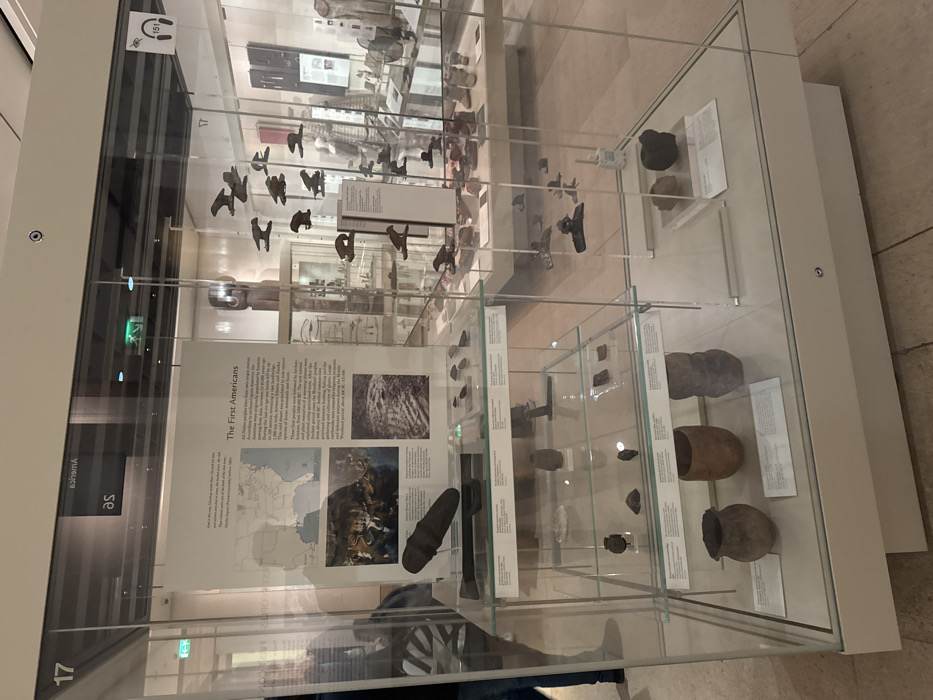
This media file captures an indoor view of a museum exhibit, likely focusing on ancient American cultures. The central element is a large, rectangular glass display case, showcasing numerous artifacts on multiple shelves.

Inside the display case, a variety of objects are visible. On the upper shelves, there are many small, dark-colored artifacts, possibly tools, figurines, or decorative items, which appear to be made of stone, bone, or wood. On the lower shelves and within a separate section of the case, larger pottery vessels, including jars and bowls, are displayed alongside other stone or ceramic implements. Each artifact often has a small informational label next to it, although the text on these labels is generally too small to read clearly.

A significant informational panel titled "The First Americans" is prominently displayed on the left side of the exhibit. The text on this panel discusses the early migration of people across Beringia and their spread throughout North, Central, and South America, mentioning timeframes like 15,000 to 10,000 years ago and referring to Woodland peoples from 300 BC to AD 1000. Below this text, there is a map showing geographical regions relevant to these migrations, and two illustrative images, one appearing to be a detailed carving or pattern, and another depicting an ancient scene or artwork. The text also refers to specific areas like Alaska, Canada, USA, and Mexico.

Reflections of the museum interior, including light fixtures, ceiling structures, and possibly other visitors, are visible on the glass surfaces of the display case. A headphone icon with "15+" and an exhibit number "17" are visible, suggesting an audio guide point and exhibit identifier. The word "America" is also visible in reflection, suggesting nearby signage. The floor appears to be a light-colored, possibly tiled or stone, surface typical of museum environments.
punit03

Dec 13, 2024, 3:57 PM

London, UK

Stake attention in this memory

This media file captures an indoor view of a museum exhibit, likely focusing on ancient American cultures. The central element is a large, rectangular glass display case, showcasing numerous artifacts on multiple shelves. Inside the display case, a variety of objects are visible. On the upper shelves, there are many small, dark-colored artifacts, possibly tools, figurines, or decorative items, which appear to be made of stone, bone, or wood. On the lower shelves and within a separate section of the case, larger pottery vessels, including jars and bowls, are displayed alongside other stone or ceramic implements. Each artifact often has a small informational label next to it, although the text on these labels is generally too small to read clearly. A significant informational panel titled "The First Americans" is prominently displayed on the left side of the exhibit. The text on this panel discusses the early migration of people across Beringia and their spread throughout North, Central, and South America, mentioning timeframes like 15,000 to 10,000 years ago and referring to Woodland peoples from 300 BC to AD 1000. Below this text, there is a map showing geographical regions relevant to these migrations, and two illustrative images, one appearing to be a detailed carving or pattern, and another depicting an ancient scene or artwork. The text also refers to specific areas like Alaska, Canada, USA, and Mexico. Reflections of the museum interior, including light fixtures, ceiling structures, and possibly other visitors, are visible on the glass surfaces of the display case. A headphone icon with "15+" and an exhibit number "17" are visible, suggesting an audio guide point and exhibit identifier. The word "America" is also visible in reflection, suggesting nearby signage. The floor appears to be a light-colored, possibly tiled or stone, surface typical of museum environments.

Loading AttnAds…

transactions
revenues
stakers
Earliest
Latest
Highest stake

No transactions found

More from this user

More from London

punit03

Dec 13, 2024, 3:57 PM

London, UK

Licensed under Creative Commons Attribution 4.0 International License. You are free to share and adapt this content with proper attribution.