Sign in
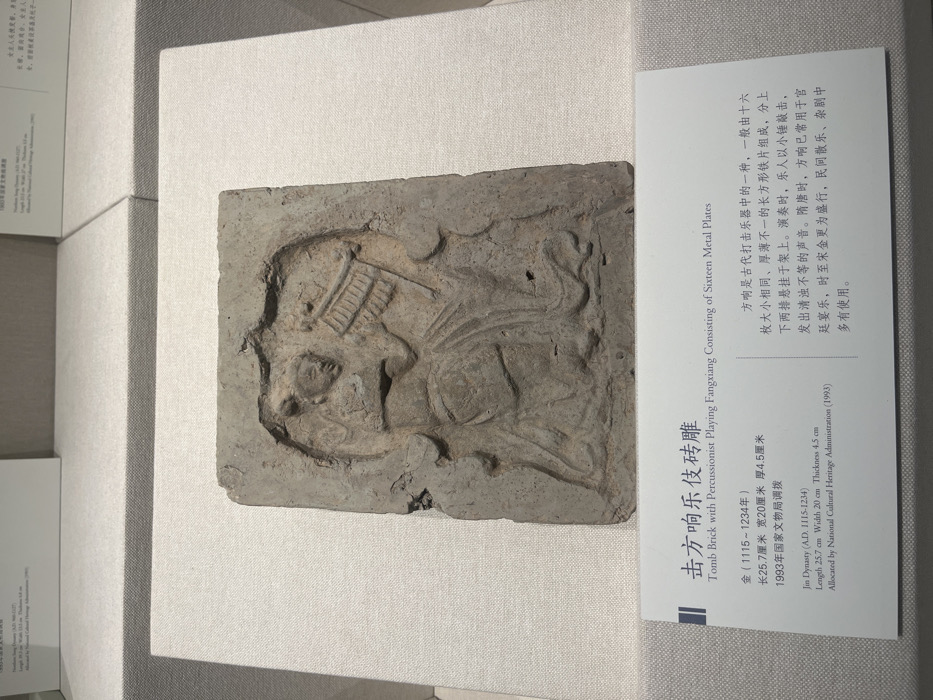
The image displays a rectangular tomb brick with a carved relief, presented in what appears to be a museum or exhibition setting. The brick, rendered in a muted grey-brown tone, is positioned centrally within the frame, resting on a light-colored, possibly fabric-covered, surface.

The relief carving on the brick depicts a figure, likely a musician, in the act of playing a musical instrument. The figure's head is visible on the left side of the carving, looking towards the instrument. The instrument itself is prominently featured, characterized by multiple parallel, rectangular plates arranged on a stand or frame. The figure's hands are depicted in a position suggesting they are striking these plates with small mallets. The overall style of the carving is stylized and somewhat eroded, giving it an ancient appearance, but the details of the instrument and the performer's action are discernible. The background of the carving includes some abstract, wavy patterns, possibly representing clouds or an artistic flourish.

To the right of the tomb brick, an upright white informational plaque provides details about the artifact in both Chinese and English. The plaque is rectangular and contains several lines of text.

The visible text on the plaque is as follows:
**Chinese Title:** 击方响乐伎砖雕
**English Title:** Tomb Brick with Percussionist Playing Fangxiang Consisting of Sixteen Metal Plates

**Artifact Details (Chinese and English):**
*   金(1115~1234年) / Jin Dynasty (A.D. 1115-1234)
*   长25.7厘米宽20厘米厚4.5厘米 / Length 25.7 cm Width 20 cm Thickness 4.5 cm
*   1993年国家文物局调拨 / Allocated by National Cultural Heritage Administration (1993)

**Description of the "Fangxiang" instrument (Chinese, with implied English translation):**
"方响是古代打击乐器中的一种,一般由十六枚大小相同、厚薄不一的长方形铁片组成,分上下两排悬挂于架上。演奏时,乐人以小锤敲击,发出清浊不等的声音。隋唐时,方响已常用于官廷宴乐,时至宋金更为盛行,民间散乐、杂剧中多有使用。"
(Translated: "The fangxiang is an ancient percussion instrument, typically composed of sixteen rectangular iron plates of similar size but varying thickness, hung in upper and lower rows on a stand. When played, musicians strike them with small mallets, producing sounds of varying pitch. During the Sui and Tang dynasties, the fangxiang was commonly used for imperial banquets. It became even more popular during the Song and Jin dynasties and was widely used in folk music and theatrical performances.")

The setting appears to be an indoor exhibition, with soft, even lighting illuminating the artifact and its label. The background behind the display surface consists of light, neutral-toned panels, typical of museum exhibits.
F
FM-hM0Hx2

Oct 25, 2024, 7:37 AM

Shen Zhen Shi, China

Stake attention in this memory

The image displays a rectangular tomb brick with a carved relief, presented in what appears to be a museum or exhibition setting. The brick, rendered in a muted grey-brown tone, is positioned centrally within the frame, resting on a light-colored, possibly fabric-covered, surface. The relief carving on the brick depicts a figure, likely a musician, in the act of playing a musical instrument. The figure's head is visible on the left side of the carving, looking towards the instrument. The instrument itself is prominently featured, characterized by multiple parallel, rectangular plates arranged on a stand or frame. The figure's hands are depicted in a position suggesting they are striking these plates with small mallets. The overall style of the carving is stylized and somewhat eroded, giving it an ancient appearance, but the details of the instrument and the performer's action are discernible. The background of the carving includes some abstract, wavy patterns, possibly representing clouds or an artistic flourish. To the right of the tomb brick, an upright white informational plaque provides details about the artifact in both Chinese and English. The plaque is rectangular and contains several lines of text. The visible text on the plaque is as follows: **Chinese Title:** 击方响乐伎砖雕 **English Title:** Tomb Brick with Percussionist Playing Fangxiang Consisting of Sixteen Metal Plates **Artifact Details (Chinese and English):** * 金(1115~1234年) / Jin Dynasty (A.D. 1115-1234) * 长25.7厘米宽20厘米厚4.5厘米 / Length 25.7 cm Width 20 cm Thickness 4.5 cm * 1993年国家文物局调拨 / Allocated by National Cultural Heritage Administration (1993) **Description of the "Fangxiang" instrument (Chinese, with implied English translation):** "方响是古代打击乐器中的一种,一般由十六枚大小相同、厚薄不一的长方形铁片组成,分上下两排悬挂于架上。演奏时,乐人以小锤敲击,发出清浊不等的声音。隋唐时,方响已常用于官廷宴乐,时至宋金更为盛行,民间散乐、杂剧中多有使用。" (Translated: "The fangxiang is an ancient percussion instrument, typically composed of sixteen rectangular iron plates of similar size but varying thickness, hung in upper and lower rows on a stand. When played, musicians strike them with small mallets, producing sounds of varying pitch. During the Sui and Tang dynasties, the fangxiang was commonly used for imperial banquets. It became even more popular during the Song and Jin dynasties and was widely used in folk music and theatrical performances.") The setting appears to be an indoor exhibition, with soft, even lighting illuminating the artifact and its label. The background behind the display surface consists of light, neutral-toned panels, typical of museum exhibits.

Loading AttnAds…

transactions
revenues
stakers
Earliest
Latest
Highest stake

No transactions found

More from this user

More from Shen Zhen Shi

FFM-hM0Hx2

Oct 25, 2024, 7:37 AM

Shen Zhen Shi, China

Licensed under Creative Commons Attribution 4.0 International License. You are free to share and adapt this content with proper attribution.