Sign in
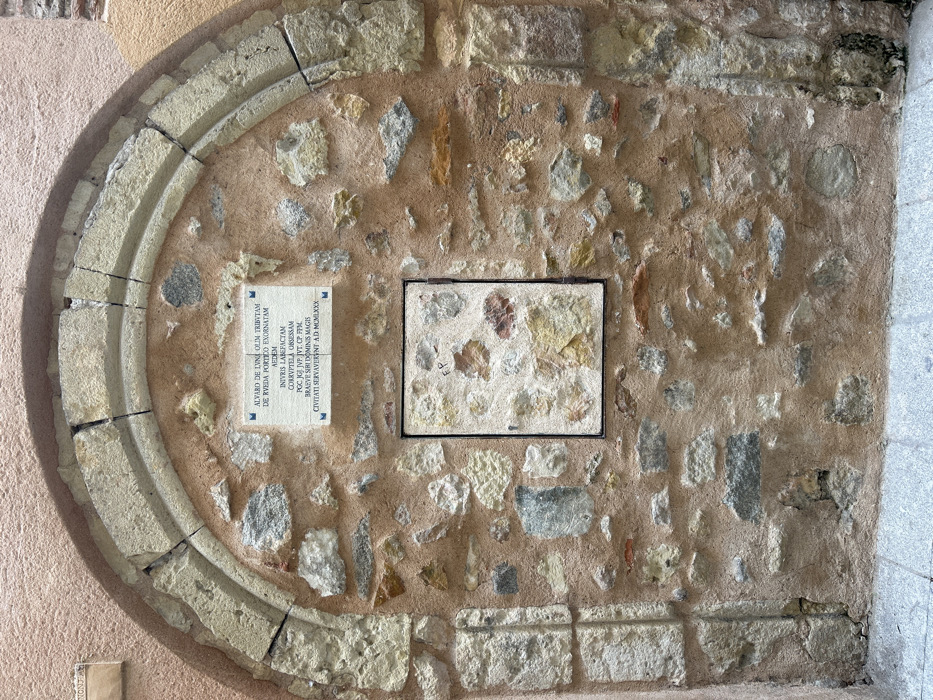
The image displays a close-up view of an ancient stone wall, likely part of a historical structure in Segovia, Spain. The wall features a rustic construction, with numerous irregular stones of varying sizes and colors—ranging from greys and whites to earthy browns and yellows—embedded in a light brown mortar.

A prominent architectural detail is a semi-circular arch or frame made of lighter, cut stone blocks, visible on the left side of the image. This curved structure shows visible cracks and repairs, indicating its age.

Two distinct rectangular elements are affixed to the wall. To the left, a white plaque with dark Latin text commemorates a historical event or restoration. The inscription reads: "ALVARO DE LUNA OLIN TRIBVTAM DE RVEDA PORTIDO EXORNATAM AEDEM INIVRIS LABEFACTAM CORRUPTELA OBSESSAM POC JGJ JVP JVT. CP FIN BRAEVE SIRI DOMINIS MAGIS CIVITATI SERVAVERUNT AD MCMLXXX M". This text suggests the preservation of a building (Aedem) related to Álvaro de Luna, which was damaged ("inivris labefactam") and "afflicted by corruption" ("corruptela obsessam"), and saved for the city ("civitati servaverunt") in the year 1980 (MCMLXXX).

To the right of this inscribed plaque, another rectangular section is visible. It is framed by a dark border and contains a surface similar to the surrounding wall, featuring small, light-colored stones set in mortar. Faint markings "FP" are visible on this surface.

The lighting indicates a clear daytime setting, casting subtle shadows that highlight the textures of the stone and mortar. No people or activities are depicted; the focus is entirely on the architectural and historical elements of the wall.
F
FM-s2wvm2

Jan 30, 2025, 10:45 AM

Segovia, Spain

Stake attention in this memory

The image displays a close-up view of an ancient stone wall, likely part of a historical structure in Segovia, Spain. The wall features a rustic construction, with numerous irregular stones of varying sizes and colors—ranging from greys and whites to earthy browns and yellows—embedded in a light brown mortar. A prominent architectural detail is a semi-circular arch or frame made of lighter, cut stone blocks, visible on the left side of the image. This curved structure shows visible cracks and repairs, indicating its age. Two distinct rectangular elements are affixed to the wall. To the left, a white plaque with dark Latin text commemorates a historical event or restoration. The inscription reads: "ALVARO DE LUNA OLIN TRIBVTAM DE RVEDA PORTIDO EXORNATAM AEDEM INIVRIS LABEFACTAM CORRUPTELA OBSESSAM POC JGJ JVP JVT. CP FIN BRAEVE SIRI DOMINIS MAGIS CIVITATI SERVAVERUNT AD MCMLXXX M". This text suggests the preservation of a building (Aedem) related to Álvaro de Luna, which was damaged ("inivris labefactam") and "afflicted by corruption" ("corruptela obsessam"), and saved for the city ("civitati servaverunt") in the year 1980 (MCMLXXX). To the right of this inscribed plaque, another rectangular section is visible. It is framed by a dark border and contains a surface similar to the surrounding wall, featuring small, light-colored stones set in mortar. Faint markings "FP" are visible on this surface. The lighting indicates a clear daytime setting, casting subtle shadows that highlight the textures of the stone and mortar. No people or activities are depicted; the focus is entirely on the architectural and historical elements of the wall.

Loading AttnAds…

transactions
revenues
stakers
Earliest
Latest
Highest stake

No transactions found

More from this user

More from Segovia

FFM-s2wvm2

Jan 30, 2025, 10:45 AM

Segovia, Spain

Licensed under Creative Commons Attribution 4.0 International License. You are free to share and adapt this content with proper attribution.