
Sign in
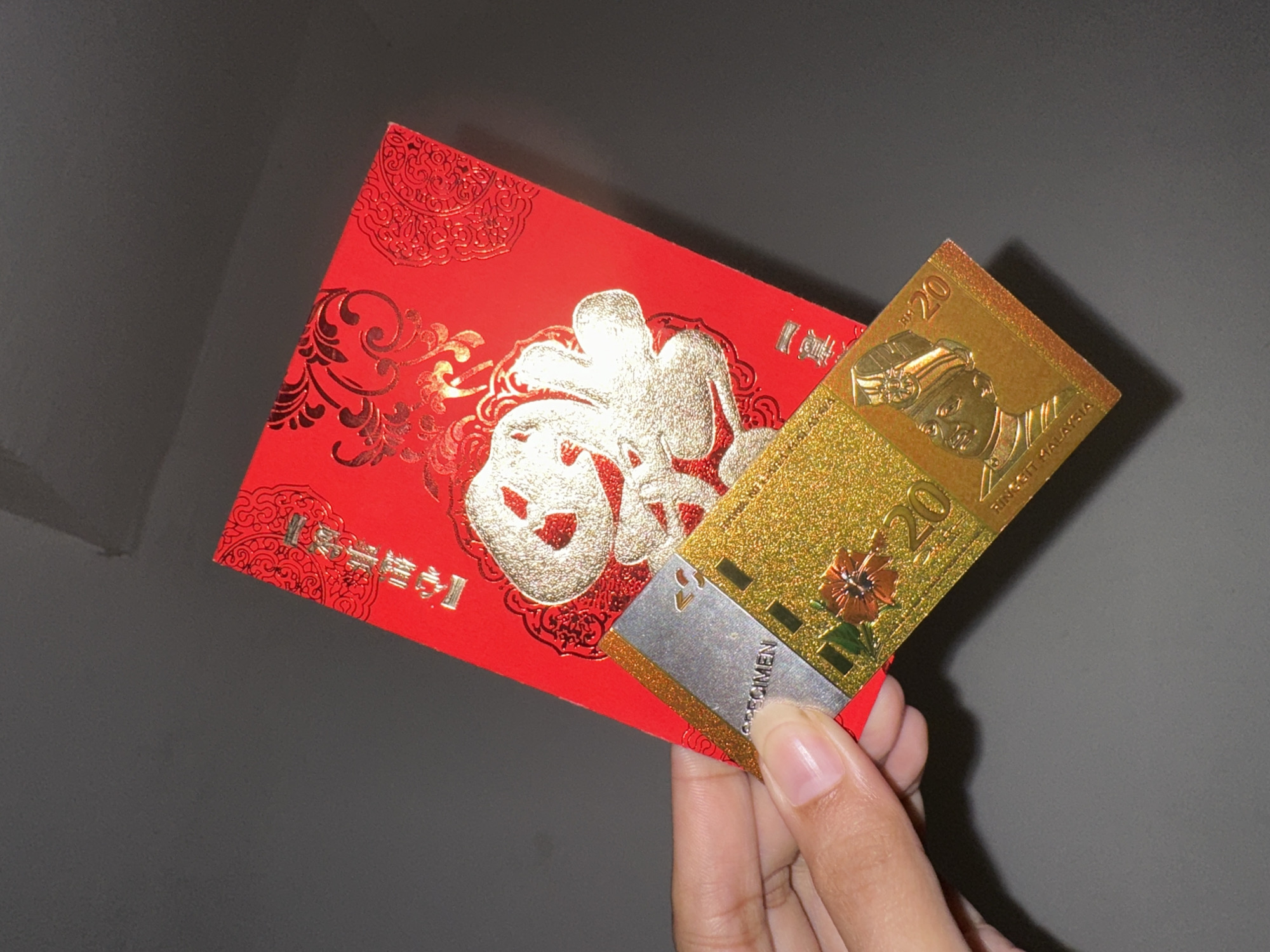
A close-up, slightly angled shot captures a hand holding a vibrant red envelope and a gold-colored commemorative item against a plain, dark grey background. The lighting highlights the metallic textures of the objects.

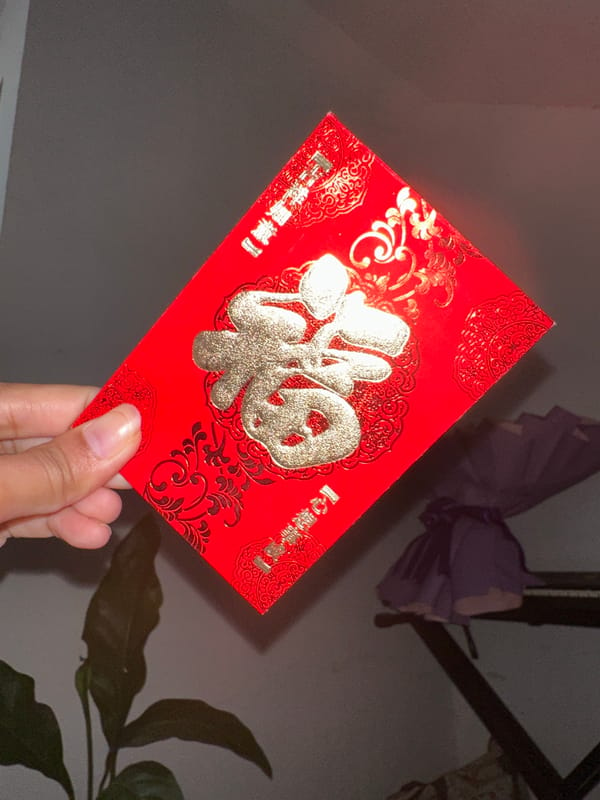
The prominent red envelope, a traditional Hongbao or Angpao, is embossed with intricate gold and silver patterns. The central and most discernible motif is the Chinese character 囍 (shuāngxǐ), symbolizing "double happiness," typically used for weddings and engagements. Elaborate floral and swirling designs embellish the rest of the envelope, and some stylized Chinese characters are partially visible on the lower left side.

Partially protruding from the red envelope is a rectangular, gold-colored item that resembles a banknote. It features a glittery surface and a detailed embossed portrait of a figure in traditional attire, similar to those found on Malaysian currency. The number "20" is visible in the top left and top right corners, and the words "RINGGIT MALAYSIA" are partially legible along the right side, indicating its likeness to a Malaysian 20 Ringgit banknote. A decorative flower design is present in the lower center. A metallic silver strip at the bottom of the gold item prominently displays the word "SPECIMEN," confirming it is a decorative or souvenir piece rather than actual currency.

A person's hand, with neatly maintained nails, holds these items. The presence of the "double happiness" symbol on the red envelope suggests the items are associated with a celebratory event, such as a wedding or engagement, where tokens of good wishes are traditionally exchanged. This scene, observed in Davao City, Philippines, reflects a cultural practice prevalent in Chinese and Southeast Asian communities, with the "SPECIMEN" banknote serving as a unique commemorative gift.
zyanyyy

Jun 2, 2026, 6:38 PM

Davao City, Philippines

Stake attention in this memory

Joyful
Excited
Hopeful
Lucky
Celebratory

A close-up, slightly angled shot captures a hand holding a vibrant red envelope and a gold-colored commemorative item against a plain, dark grey background. The lighting highlights the metallic textures of the objects. The prominent red envelope, a traditional Hongbao or Angpao, is embossed with intricate gold and silver patterns. The central and most discernible motif is the Chinese character 囍 (shuāngxǐ), symbolizing "double happiness," typically used for weddings and engagements. Elaborate floral and swirling designs embellish the rest of the envelope, and some stylized Chinese characters are partially visible on the lower left side. Partially protruding from the red envelope is a rectangular, gold-colored item that resembles a banknote. It features a glittery surface and a detailed embossed portrait of a figure in traditional attire, similar to those found on Malaysian currency. The number "20" is visible in the top left and top right corners, and the words "RINGGIT MALAYSIA" are partially legible along the right side, indicating its likeness to a Malaysian 20 Ringgit banknote. A decorative flower design is present in the lower center. A metallic silver strip at the bottom of the gold item prominently displays the word "SPECIMEN," confirming it is a decorative or souvenir piece rather than actual currency. A person's hand, with neatly maintained nails, holds these items. The presence of the "double happiness" symbol on the red envelope suggests the items are associated with a celebratory event, such as a wedding or engagement, where tokens of good wishes are traditionally exchanged. This scene, observed in Davao City, Philippines, reflects a cultural practice prevalent in Chinese and Southeast Asian communities, with the "SPECIMEN" banknote serving as a unique commemorative gift.

Loading AttnAds…

transactions
revenues
stakers
Earliest
Latest
Highest stake

No transactions found

More from this user

More from Davao City

zyanyyy

Jun 2, 2026, 6:38 PM

Davao City, Philippines

Licensed under Creative Commons Attribution 4.0 International License. You are free to share and adapt this content with proper attribution.