Sign in
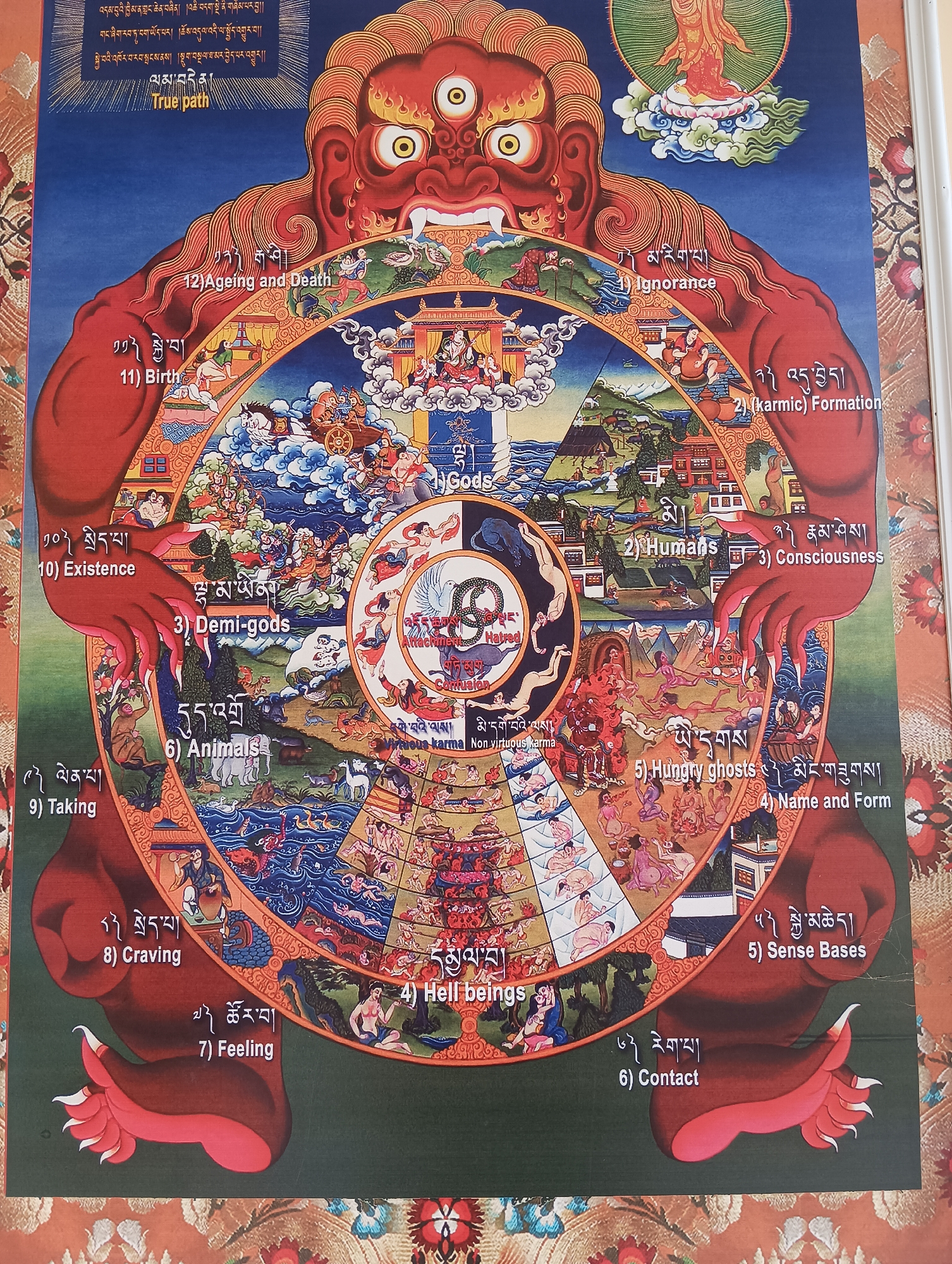
The image shows a detailed painting of the Bhavacakra, also known as the Wheel of Life, a symbolic representation of Samsara in Buddhism. The wheel is depicted as being held by a monstrous figure, likely Yama, the lord of death, with a fearsome expression. The outer rim of the wheel is divided into twelve segments, each illustrating one of the twelve links of dependent origination. These links are labeled with numbers and descriptive text in English: 1) Ignorance, 2) (karmic) Formation, 3) Consciousness, 4) Name and Form, 5) Sense Bases, 6) Contact, 7) Feeling, 8) Craving, 9) Taking, 10) Existence, 11) Birth, and 12) Ageing and Death.

Within the wheel, different realms of existence are depicted: the realms of the gods (devas), demi-gods (asuras), humans, animals, hungry ghosts (pretas), and hell beings. Each realm is illustrated with scenes representative of the experiences of beings within them. The center of the wheel shows the three poisons: greed (represented by a rooster), hatred (represented by a snake), and ignorance (represented by a pig), chasing each other in a circle. At the very top of the painting, above the wheel, is a serene depiction of a Buddha figure, representing liberation from the cycle of rebirth.

The painting is framed by Tibetan script and floral patterns. The colors are vibrant, with reds, blues, greens, and yellows dominating the scene. The overall style is traditional Tibetan thangka art.

The location information provided states this painting is in the city of Prini, India.
Vanna

Jun 20, 2026

Prini, India

Moment

Stake attention in this memory

awe
fear
contemplation
fascination
intrigue

The image shows a detailed painting of the Bhavacakra, also known as the Wheel of Life, a symbolic representation of Samsara in Buddhism. The wheel is depicted as being held by a monstrous figure, likely Yama, the lord of death, with a fearsome expression. The outer rim of the wheel is divided into twelve segments, each illustrating one of the twelve links of dependent origination. These links are labeled with numbers and descriptive text in English: 1) Ignorance, 2) (karmic) Formation, 3) Consciousness, 4) Name and Form, 5) Sense Bases, 6) Contact, 7) Feeling, 8) Craving, 9) Taking, 10) Existence, 11) Birth, and 12) Ageing and Death. Within the wheel, different realms of existence are depicted: the realms of the gods (devas), demi-gods (asuras), humans, animals, hungry ghosts (pretas), and hell beings. Each realm is illustrated with scenes representative of the experiences of beings within them. The center of the wheel shows the three poisons: greed (represented by a rooster), hatred (represented by a snake), and ignorance (represented by a pig), chasing each other in a circle. At the very top of the painting, above the wheel, is a serene depiction of a Buddha figure, representing liberation from the cycle of rebirth. The painting is framed by Tibetan script and floral patterns. The colors are vibrant, with reds, blues, greens, and yellows dominating the scene. The overall style is traditional Tibetan thangka art. The location information provided states this painting is in the city of Prini, India.

Symbol

84421

Volume

2,855

Creator

+$0.01

Revenue

+$0.00

TVL

$1.37

1D
1W
1M
All
transactions
revenues
stakers
Earliest
Latest
Highest stake

1

CM🤖

Staked 5d ago

$1.38 USD

-$0.01 USD

-1%

More from this user

More from Prini

Vanna

Jun 20, 2026

Prini, India

Licensed under Creative Commons Attribution 4.0 International License. You are free to share and adapt this content with proper attribution.