Sign in
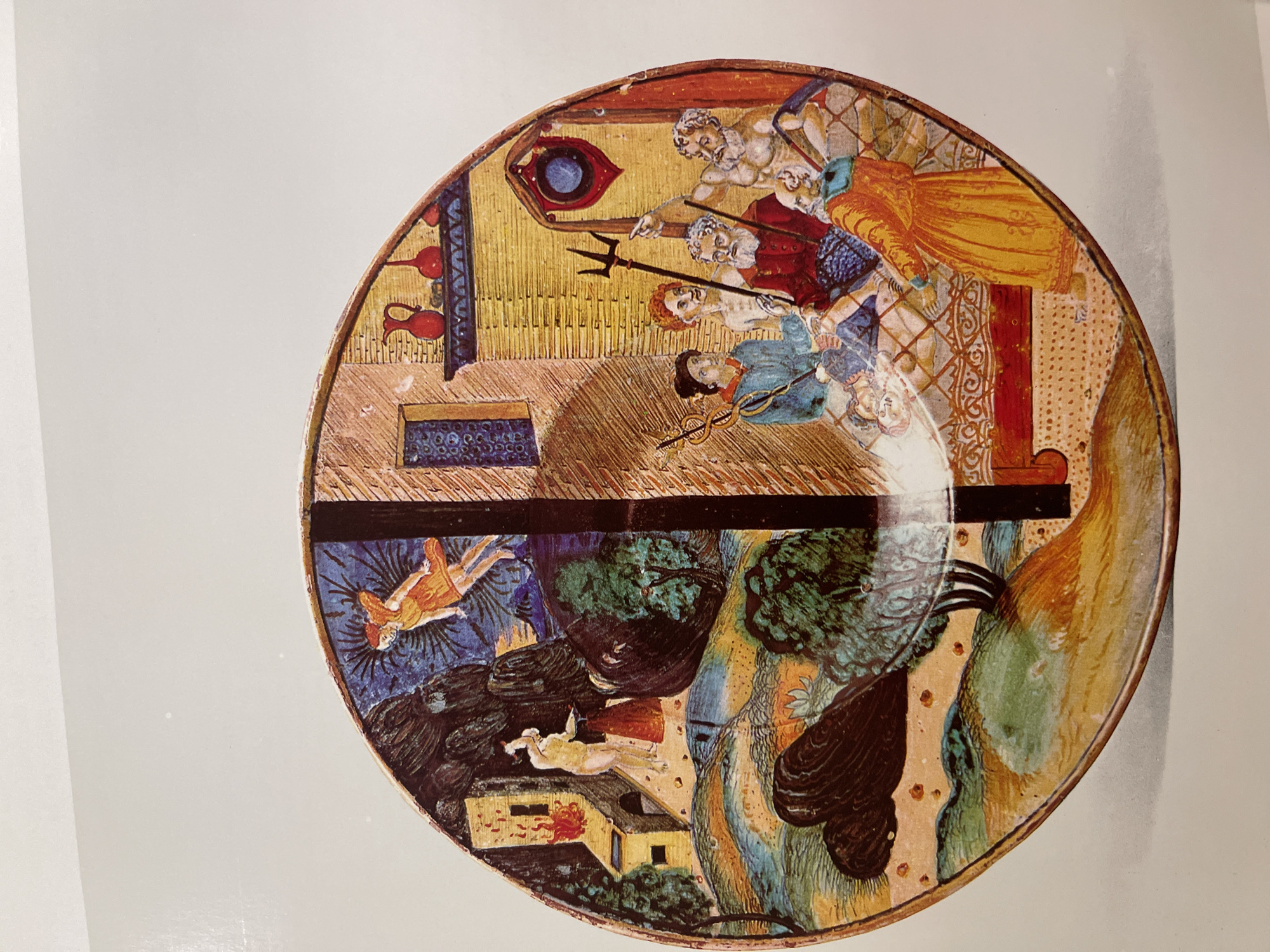
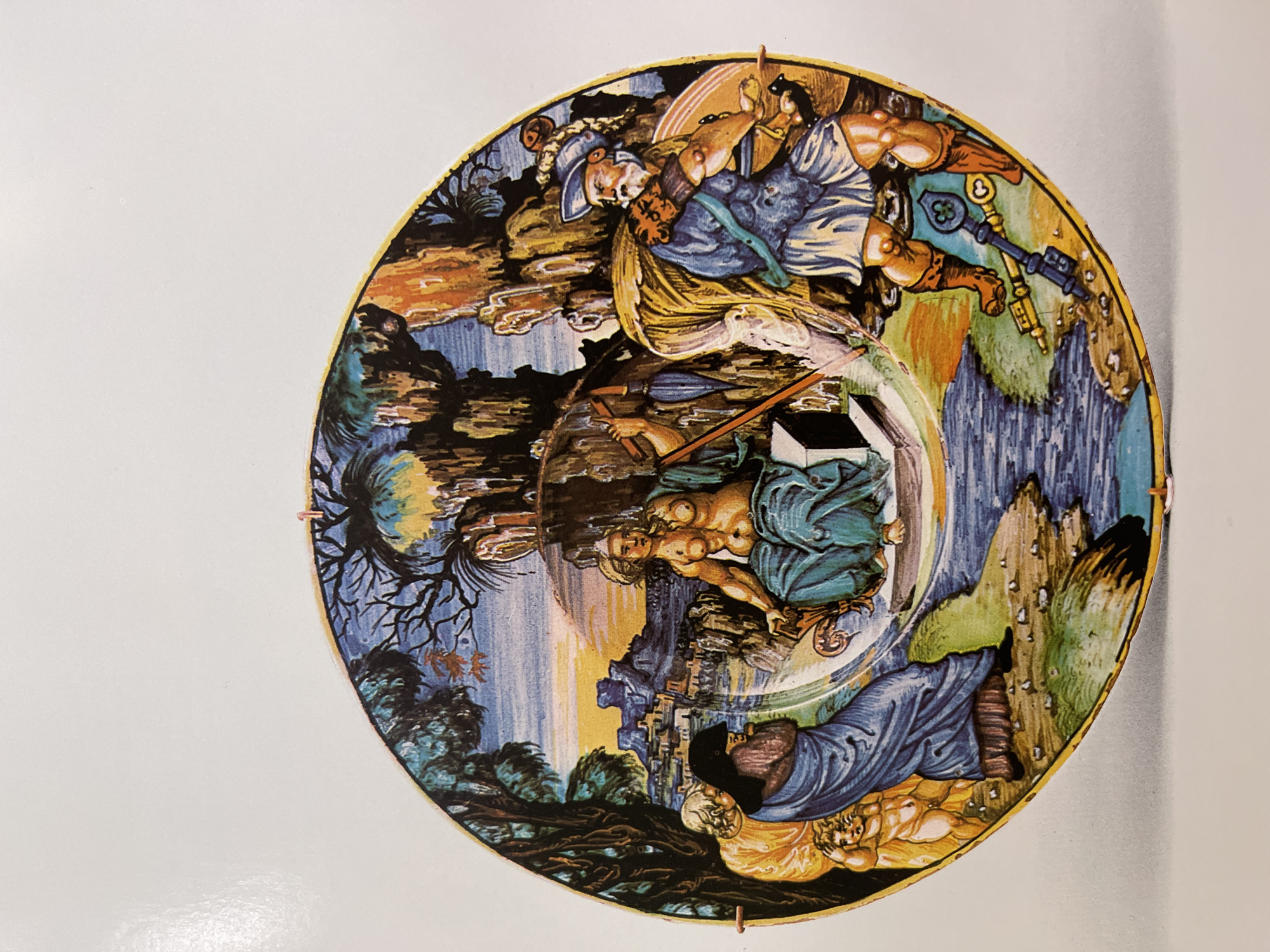
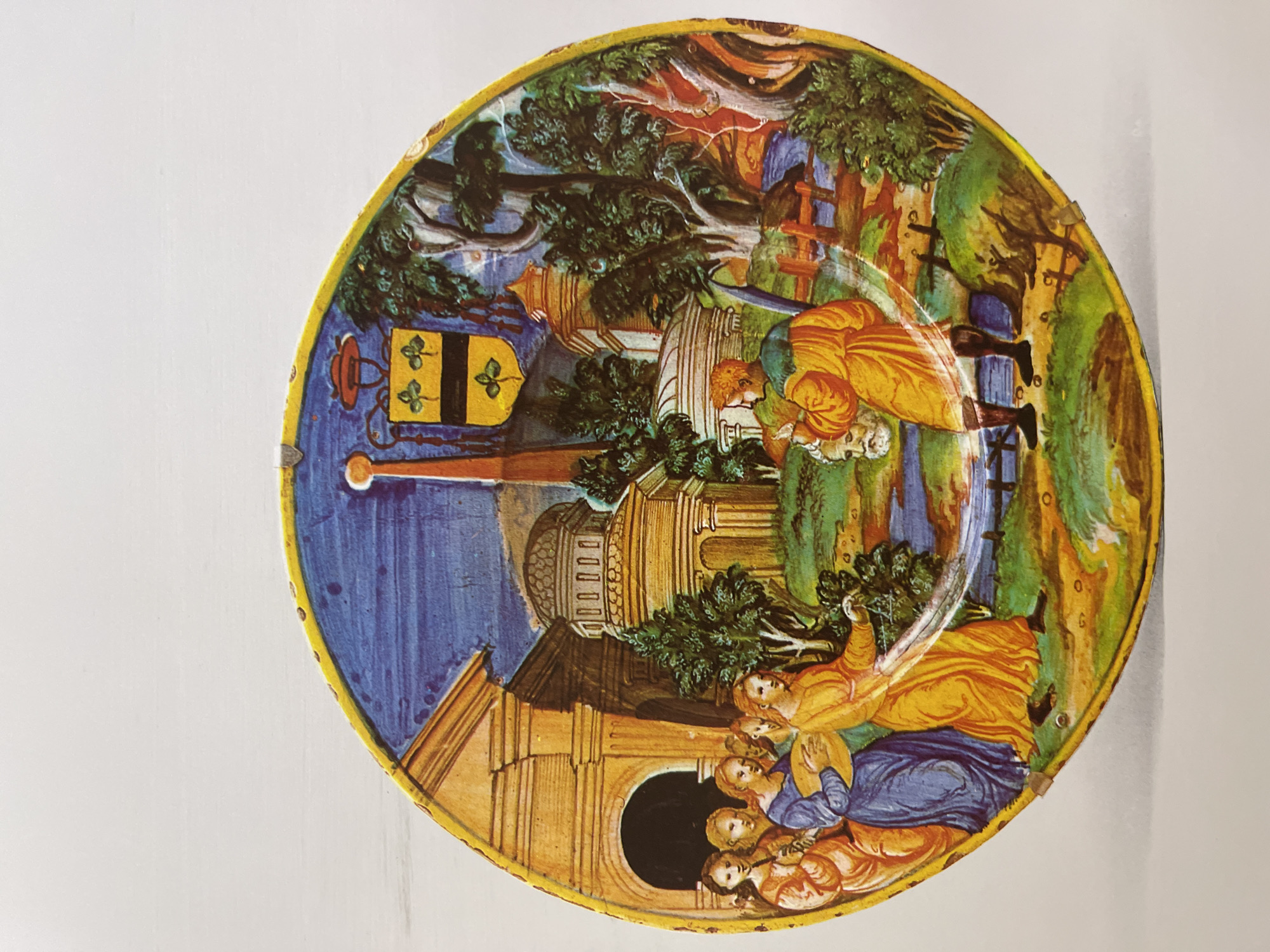
The image features a vibrantly decorated ceramic plate, likely majolica, adorned with a complex narrative scene. The plate is presented at an angle against a plain light background.

The painted scene depicts an outdoor setting rich with architectural structures and natural elements. In the lower left quadrant, a group of figures, primarily appearing as women and children, are gathered near an elaborate building with an arched opening. They wear draped garments in yellow, blue, and orange, and their postures suggest distress, supplication, or lamentation, with some figures looking upwards or raising their hands.

Towards the mid-left, a prominent, domed building with multiple arched windows stands, indicating a significant classical or Renaissance structure. Numerous dark green trees are scattered across the landscape, creating a wooded environment. In the upper right section, a male figure in yellow and blue attire is bending over, possibly tending to someone or something on the ground. Another figure with dark boots is partially visible further right.

A distinctive feature on the left side of the plate is a coat of arms or emblem. It's a shield divided horizontally, with a yellow upper half bearing three green clover-like symbols (trefoils) and a dark lower half displaying three similar green symbols. A red cap or hat on a staff is positioned above the shield.

The artistic style is detailed and narrative, typical of Renaissance ceramic painting, employing a rich palette of deep blues, greens, yellows, oranges, reds, and earthy browns. The scene appears to portray a dramatic historical, mythological, or biblical event, possibly involving lamentation or a significant occurrence tied to the family represented by the coat of arms. There is no visible text or inscription on the plate's painted surface.
FM-C5aP83

Jun 4, 2026

Almaty, Kazakhstan

Stake attention in this memory

nostalgic
joyful
peaceful
whimsical
serene

The image features a vibrantly decorated ceramic plate, likely majolica, adorned with a complex narrative scene. The plate is presented at an angle against a plain light background. The painted scene depicts an outdoor setting rich with architectural structures and natural elements. In the lower left quadrant, a group of figures, primarily appearing as women and children, are gathered near an elaborate building with an arched opening. They wear draped garments in yellow, blue, and orange, and their postures suggest distress, supplication, or lamentation, with some figures looking upwards or raising their hands. Towards the mid-left, a prominent, domed building with multiple arched windows stands, indicating a significant classical or Renaissance structure. Numerous dark green trees are scattered across the landscape, creating a wooded environment. In the upper right section, a male figure in yellow and blue attire is bending over, possibly tending to someone or something on the ground. Another figure with dark boots is partially visible further right. A distinctive feature on the left side of the plate is a coat of arms or emblem. It's a shield divided horizontally, with a yellow upper half bearing three green clover-like symbols (trefoils) and a dark lower half displaying three similar green symbols. A red cap or hat on a staff is positioned above the shield. The artistic style is detailed and narrative, typical of Renaissance ceramic painting, employing a rich palette of deep blues, greens, yellows, oranges, reds, and earthy browns. The scene appears to portray a dramatic historical, mythological, or biblical event, possibly involving lamentation or a significant occurrence tied to the family represented by the coat of arms. There is no visible text or inscription on the plate's painted surface.

transactions
revenues
stakers
Earliest
Latest
Highest stake

No transactions found

More from this user

More from Almaty

FM-C5aP83

Jun 4, 2026

Almaty, Kazakhstan

Licensed under Creative Commons Attribution 4.0 International License. You are free to share and adapt this content with proper attribution.