
Sign in
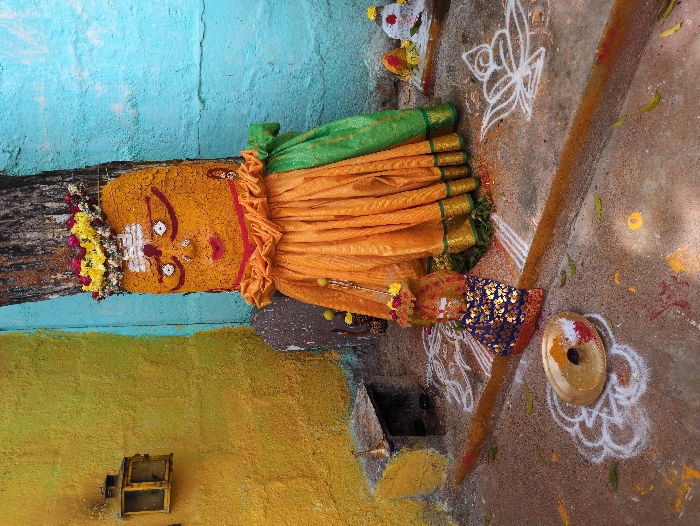
The image, oriented vertically (as if rotated 90 degrees clockwise from its current display), showcases a vibrant outdoor or semi-outdoor Hindu shrine centered around a decorated tree trunk or wooden post.

The main subject is a large, sturdy tree trunk, which has been transformed into a representation of a deity. The upper portion of the trunk is painted bright yellow, forming a stylized face. This face features prominent white eyes with black pupils and red outlines, bold red eyebrows, and a red mouth with white detailing, possibly indicating teeth or an expression. A distinct white "tilak" or "namam" mark is applied vertically on the forehead. A colorful garland of yellow and white flowers with some red accents adorns the top of the 'head'.

The 'body' of the deity is draped with rich fabric. An orange garment, possibly a saree or dhoti, with a lustrous green border and gold trim, is intricately folded or pleated down the trunk. A lighter green fabric is wrapped around the upper part of the orange garment. At the base of the draped fabric, a small, ornate item, possibly a miniature deity or an offering vessel, is visible, adorned with blue fabric featuring gold patterns.

The background consists of a wall painted in two sections: an upper section of bright, textured turquoise blue and a lower section of textured yellow. The ground in front of the deity is made of light brown earth or concrete, showing signs of religious activity. Various white rangoli or kolam patterns are drawn on the ground, including a prominent lotus-like design to the right of the deity's base. Streaks and patches of yellow powder (likely turmeric) and red powder (likely kumkum) are scattered across the ground, along with a few green leaves, indicating recent offerings or rituals. A long, diagonal line of yellow powder extends across the ground from the base of the deity towards the lower right corner of the frame.

Further to the right on the ground, a golden or brass plate or tray holds additional offerings of red and yellow powder, along with more green leaves. This plate has a small, central circular hole. In the upper right corner of the ground area, near the blue wall, there are additional small white marks, red powder, and tiny yellow flowers. On the yellow section of the wall, near the base of the deity, a small, rustic wooden box-like structure is affixed, possibly a niche for offerings or a small altar.

The scene conveys a strong sense of devotion and cultural practice, likely depicting a form of tree worship or a shrine dedicated to a village deity (Grama Devata). The bright colors and offerings suggest a recent festival or daily prayer. There is no visible text in the image. The lighting indicates it is daytime.
EvgenSmit

Feb 18, 2026, 7:18 AM

Tiruvannamalai, India

Stake attention in this memory

deity
Hindu
shrine
decoration
religious site

The image, oriented vertically (as if rotated 90 degrees clockwise from its current display), showcases a vibrant outdoor or semi-outdoor Hindu shrine centered around a decorated tree trunk or wooden post. The main subject is a large, sturdy tree trunk, which has been transformed into a representation of a deity. The upper portion of the trunk is painted bright yellow, forming a stylized face. This face features prominent white eyes with black pupils and red outlines, bold red eyebrows, and a red mouth with white detailing, possibly indicating teeth or an expression. A distinct white "tilak" or "namam" mark is applied vertically on the forehead. A colorful garland of yellow and white flowers with some red accents adorns the top of the 'head'. The 'body' of the deity is draped with rich fabric. An orange garment, possibly a saree or dhoti, with a lustrous green border and gold trim, is intricately folded or pleated down the trunk. A lighter green fabric is wrapped around the upper part of the orange garment. At the base of the draped fabric, a small, ornate item, possibly a miniature deity or an offering vessel, is visible, adorned with blue fabric featuring gold patterns. The background consists of a wall painted in two sections: an upper section of bright, textured turquoise blue and a lower section of textured yellow. The ground in front of the deity is made of light brown earth or concrete, showing signs of religious activity. Various white rangoli or kolam patterns are drawn on the ground, including a prominent lotus-like design to the right of the deity's base. Streaks and patches of yellow powder (likely turmeric) and red powder (likely kumkum) are scattered across the ground, along with a few green leaves, indicating recent offerings or rituals. A long, diagonal line of yellow powder extends across the ground from the base of the deity towards the lower right corner of the frame. Further to the right on the ground, a golden or brass plate or tray holds additional offerings of red and yellow powder, along with more green leaves. This plate has a small, central circular hole. In the upper right corner of the ground area, near the blue wall, there are additional small white marks, red powder, and tiny yellow flowers. On the yellow section of the wall, near the base of the deity, a small, rustic wooden box-like structure is affixed, possibly a niche for offerings or a small altar. The scene conveys a strong sense of devotion and cultural practice, likely depicting a form of tree worship or a shrine dedicated to a village deity (Grama Devata). The bright colors and offerings suggest a recent festival or daily prayer. There is no visible text in the image. The lighting indicates it is daytime.

Loading AttnAds…

transactions
revenues
stakers
Earliest
Latest
Highest stake

No transactions found

More from this user

More from Tiruvannamalai

EvgenSmit

Feb 18, 2026, 7:18 AM

Tiruvannamalai, India

Licensed under Creative Commons Attribution 4.0 International License. You are free to share and adapt this content with proper attribution.