
Sign in
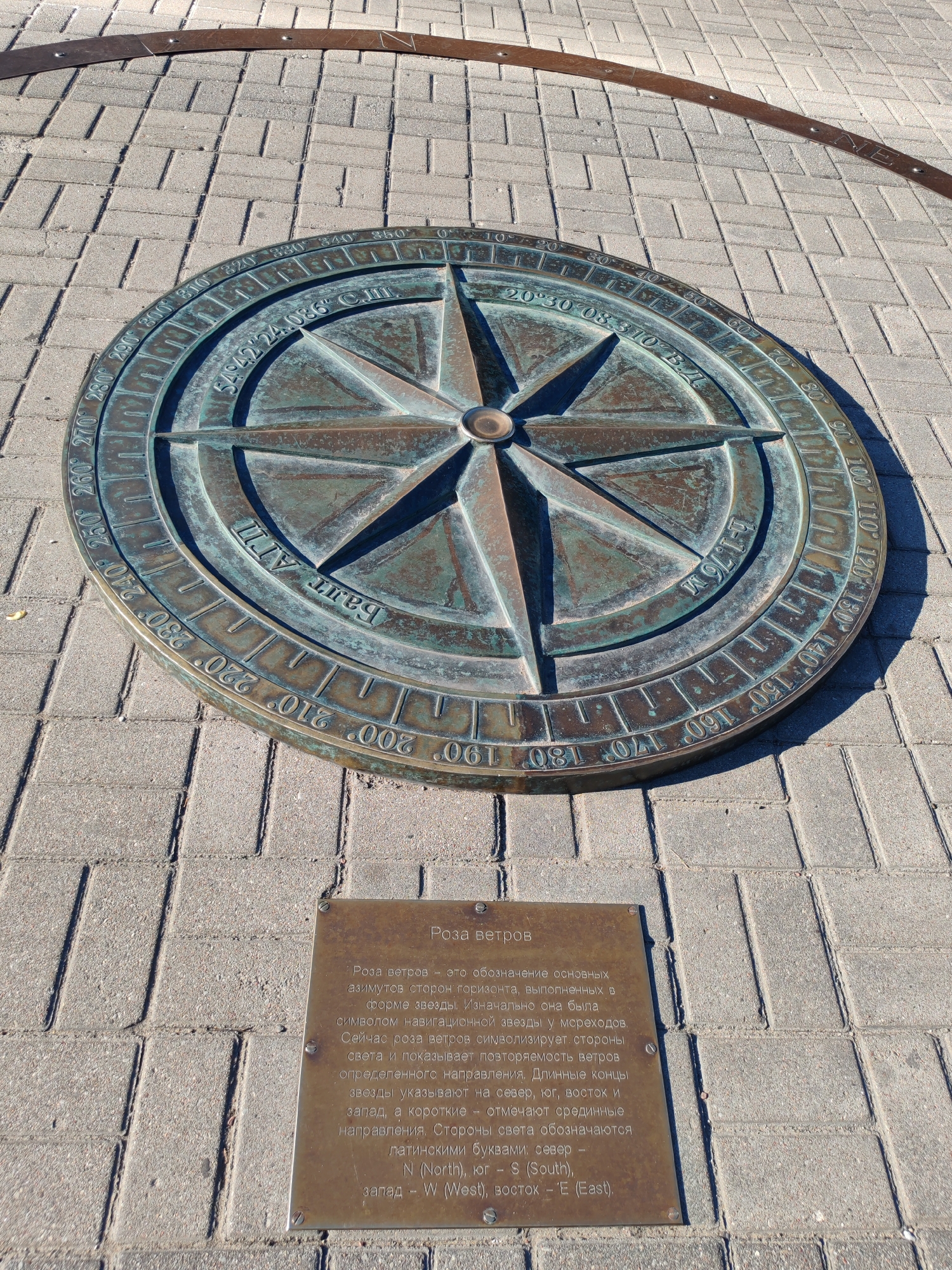
This media file features a close-up, angled view of a large, weathered brass wind rose installed on a paved walkway. The wind rose is circular and detailed, with markings and numbers representing degrees and cardinal directions. It is positioned outdoors on a sunny day, as indicated by the strong shadows cast by the wind rose and the clear lighting. The walkway is made of grey rectangular pavers laid in a brick pattern. A small, rectangular bronze plaque is affixed to the pavement in front of the wind rose, displaying text in Russian.

The text on the plaque explains what a "wind rose" is, describing it as a representation of cardinal directions in the form of a star, originally used by seafarers. It clarifies that the long points of the star indicate the main directions (north, south, east, west), while shorter points mark intermediate directions. It also lists the Latin abbreviations for these directions: N (North), S (South), W (West), and E (East). The wind rose itself has Cyrillic lettering on it, including what appears to be "54°42′24.086′ С.Ш.", likely indicating latitude, and "20°30′08.310′ В.Д.", likely indicating longitude. Other Cyrillic text is visible on the wind rose, such as "Балт Атп" and "1-1.76 М".

The overall scene suggests an outdoor public space, possibly a promenade or a park, where navigational or historical information is displayed. The wind rose is a central object, appearing to be a permanent fixture. The lighting and shadows indicate it is likely daytime, with the sun high in the sky. The weathered appearance of the brass suggests it has been exposed to the elements for some time.
Tasena

Jun 25, 2026

Kaliningrad, Russia

Stake attention in this memory

curiosity
contemplative
serene
nostalgic
adventurous

This media file features a close-up, angled view of a large, weathered brass wind rose installed on a paved walkway. The wind rose is circular and detailed, with markings and numbers representing degrees and cardinal directions. It is positioned outdoors on a sunny day, as indicated by the strong shadows cast by the wind rose and the clear lighting. The walkway is made of grey rectangular pavers laid in a brick pattern. A small, rectangular bronze plaque is affixed to the pavement in front of the wind rose, displaying text in Russian. The text on the plaque explains what a "wind rose" is, describing it as a representation of cardinal directions in the form of a star, originally used by seafarers. It clarifies that the long points of the star indicate the main directions (north, south, east, west), while shorter points mark intermediate directions. It also lists the Latin abbreviations for these directions: N (North), S (South), W (West), and E (East). The wind rose itself has Cyrillic lettering on it, including what appears to be "54°42′24.086′ С.Ш.", likely indicating latitude, and "20°30′08.310′ В.Д.", likely indicating longitude. Other Cyrillic text is visible on the wind rose, such as "Балт Атп" and "1-1.76 М". The overall scene suggests an outdoor public space, possibly a promenade or a park, where navigational or historical information is displayed. The wind rose is a central object, appearing to be a permanent fixture. The lighting and shadows indicate it is likely daytime, with the sun high in the sky. The weathered appearance of the brass suggests it has been exposed to the elements for some time.

transactions
revenues
stakers
Earliest
Latest
Highest stake

No transactions found

More from this user

More from Kaliningrad

Tasena

Jun 25, 2026

Kaliningrad, Russia

Licensed under Creative Commons Attribution 4.0 International License. You are free to share and adapt this content with proper attribution.