Sign in
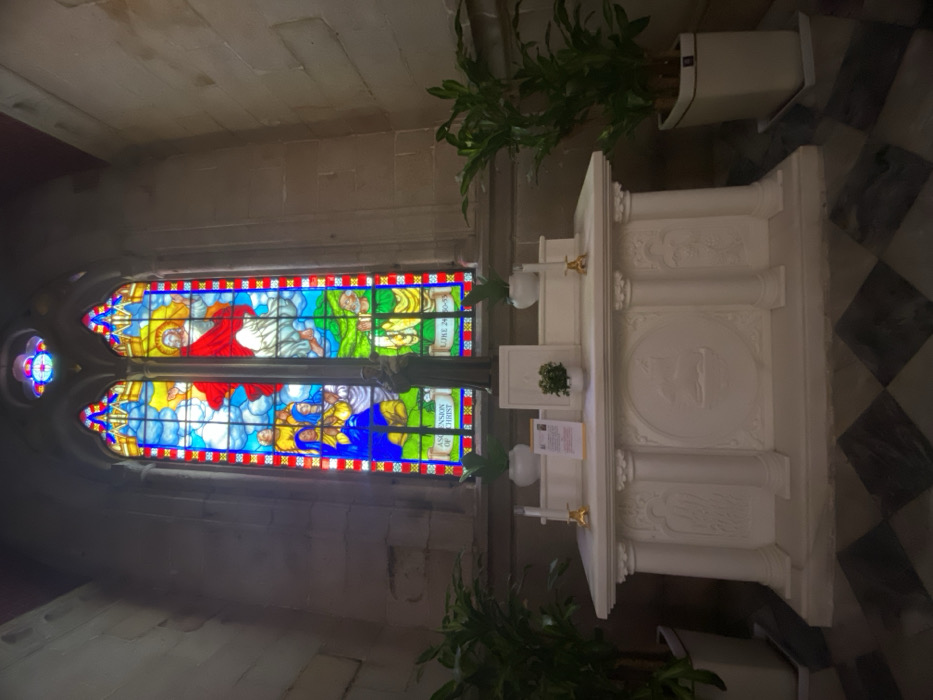
The image provides an interior view of a religious building, likely a church or chapel, located in Guangzhou City, China. The scene is dominated by a large, colorful stained glass window on the left, and an ornate white altar to its right.

The stained glass window vividly depicts the "Ascension of Christ." The upper portion shows a figure in red robes, presumably Jesus, ascending into a cloudy sky, flanked by smaller figures. Text within this panel reads "LUKE 24:50-53," citing the biblical reference for the event. The lower section of the window continues the narrative, showing the same red-robed figure ascending above a group of onlookers, including a prominent figure in blue robes, all gazing upwards. The text "ASCENSION OF CHRIST" is clearly visible in this lower panel. To the immediate left of the main window is a smaller, circular stained glass rosette, featuring a multi-colored, star-like pattern.

Adjacent to the window on the right stands a large, white, intricately carved altar or pedestal. It is adorned with classical columns and detailed relief work. A circular carving on the front face of the altar depicts a boat with sails, a symbol often associated with the Church. On the altar's surface are two white, candle-shaped lamps with gold bases, a small potted green plant, and several papers or brochures.

Green leafy plants in white planters are placed around the altar and also visible above the stained glass window, adding greenery to the interior. The floor on the right side of the image features a distinct checkerboard pattern of dark and light tiles. The walls surrounding the window and altar appear to be constructed from stone or a similar material. The natural light filtering through the stained glass illuminates the scene, creating a solemn and reverent atmosphere within the sacred space.
F
FM-CaIMM2

Jan 9, 2025, 8:15 AM

Guang Zhou Shi, China

Stake attention in this memory

The image provides an interior view of a religious building, likely a church or chapel, located in Guangzhou City, China. The scene is dominated by a large, colorful stained glass window on the left, and an ornate white altar to its right. The stained glass window vividly depicts the "Ascension of Christ." The upper portion shows a figure in red robes, presumably Jesus, ascending into a cloudy sky, flanked by smaller figures. Text within this panel reads "LUKE 24:50-53," citing the biblical reference for the event. The lower section of the window continues the narrative, showing the same red-robed figure ascending above a group of onlookers, including a prominent figure in blue robes, all gazing upwards. The text "ASCENSION OF CHRIST" is clearly visible in this lower panel. To the immediate left of the main window is a smaller, circular stained glass rosette, featuring a multi-colored, star-like pattern. Adjacent to the window on the right stands a large, white, intricately carved altar or pedestal. It is adorned with classical columns and detailed relief work. A circular carving on the front face of the altar depicts a boat with sails, a symbol often associated with the Church. On the altar's surface are two white, candle-shaped lamps with gold bases, a small potted green plant, and several papers or brochures. Green leafy plants in white planters are placed around the altar and also visible above the stained glass window, adding greenery to the interior. The floor on the right side of the image features a distinct checkerboard pattern of dark and light tiles. The walls surrounding the window and altar appear to be constructed from stone or a similar material. The natural light filtering through the stained glass illuminates the scene, creating a solemn and reverent atmosphere within the sacred space.

Loading AttnAds…

transactions
revenues
stakers
Earliest
Latest
Highest stake

No transactions found

More from this user

More from Guang Zhou Shi

FFM-CaIMM2

Jan 9, 2025, 8:15 AM

Guang Zhou Shi, China

Licensed under Creative Commons Attribution 4.0 International License. You are free to share and adapt this content with proper attribution.