
Stake attention in this memory
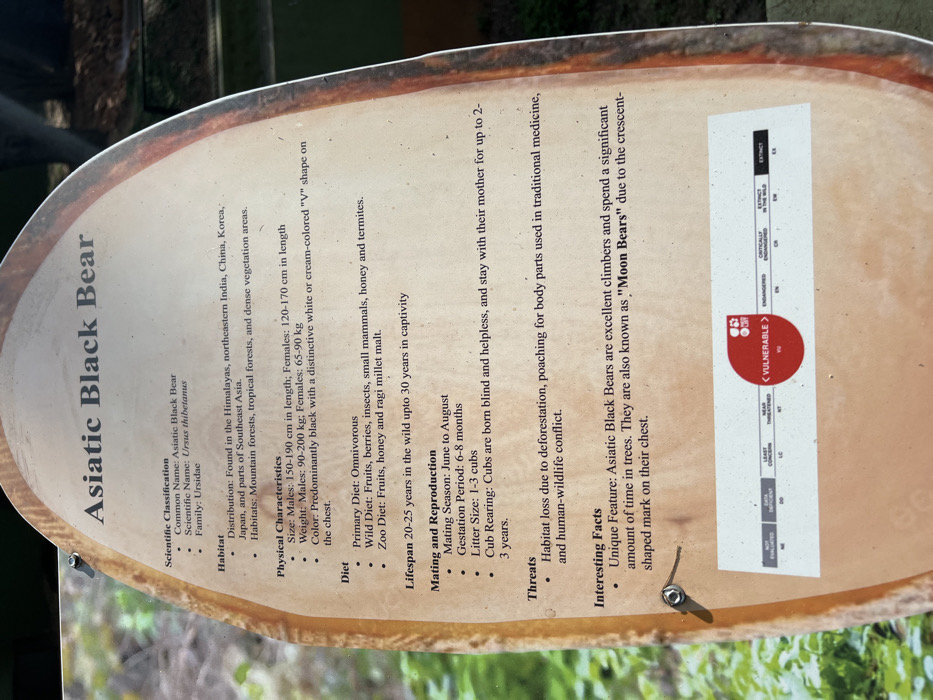
An outdoor, vertically oriented photograph captures an oval-shaped information board detailing the Asiatic Black Bear, likely situated within a zoo or wildlife park in Mysuru, India. The wooden or wood-look sign, slightly tilted, displays comprehensive text about the bear against a blurred background of green foliage and brown structural elements, suggesting an enclosure or natural setting. The sign's prominent title is "Asiatic Black Bear." It provides the scientific classification: Common Name: Asiatic Black Bear, Scientific Name: *Ursus thibetanus*, and Family: Ursidae. Habitat information includes distribution across the Himalayas, northeastern India, China, Korea, Japan, and parts of Southeast Asia, favoring mountain forests, tropical forests, and dense vegetation. Physical characteristics are detailed, with males measuring 150-190 cm and weighing 90-200 kg, and females 120-170 cm and 65-90 kg. They are predominantly black with a distinctive white or cream-colored "V" shape on the chest. Their diet is omnivorous, including fruits, berries, insects, small mammals, honey, and termites in the wild, and fruits, honey, and ragi millet malt in captivity. Lifespan is 20-25 years in the wild, extending to 30 years in captivity. Mating and reproduction details state a June to August mating season, 6-8 months gestation, 1-3 cubs per litter, with cubs born blind, helpless, and staying with their mother for 2-3 years. Threats include habitat loss from deforestation, poaching for traditional medicine, and human-wildlife conflict. Interesting facts mention their climbing ability and the "Moon Bear" nickname, referring to the crescent-shaped mark on their chest. A visual conservation status indicator shows "VULNERABLE." A securing screw is visible at the bottom right of the sign. The scene is set during daytime under natural light.
No transactions found