
Sign in
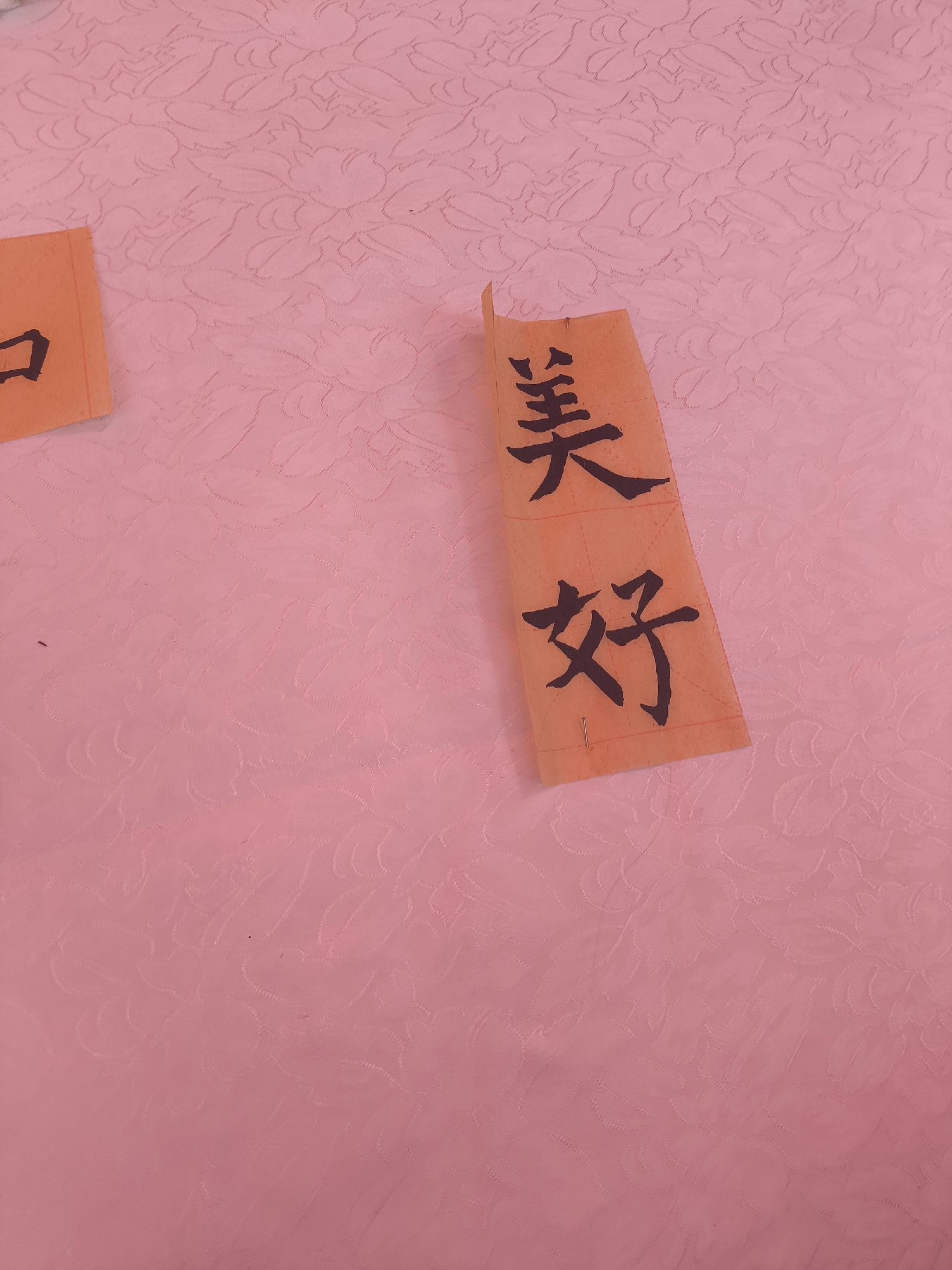
The image presents a close-up view of a pink tablecloth, featuring a subtle, embossed or woven pattern of floral or leafy motifs. The surface appears textured and soft.

Two pieces of orange-colored paper are placed on the tablecloth. On the right side, a rectangular strip of orange paper is pinned vertically to the tablecloth with a small, discreet silver pin. Written in bold black ink on this strip are two Chinese characters: "美好" (měihǎo). This word translates to "beautiful," "good," or "wonderful."

To the left, only a small, partial section of another orange paper strip is visible towards the bottom-left corner of the frame. A single black character or radical is written on it, resembling "口" (kǒu), which typically means "mouth" or "opening." It is not fully discernible whether this is a complete character or part of a larger one.

No people are visible in the frame. The lighting suggests an indoor setting, with soft and even illumination that highlights the texture of the tablecloth and the calligraphed papers. Given the provided context that the location is La Paz, Bolivia, the presence of Chinese characters indicates a connection to Chinese culture, possibly at a Chinese restaurant, a cultural event, or a gathering in the city. The setup implies an event or a decorated space, with these papers serving as decorative elements or labels.
crisszz

Apr 20, 2026

La Paz, Bolivia

Stake attention in this memory

untagged

The image presents a close-up view of a pink tablecloth, featuring a subtle, embossed or woven pattern of floral or leafy motifs. The surface appears textured and soft. Two pieces of orange-colored paper are placed on the tablecloth. On the right side, a rectangular strip of orange paper is pinned vertically to the tablecloth with a small, discreet silver pin. Written in bold black ink on this strip are two Chinese characters: "美好" (měihǎo). This word translates to "beautiful," "good," or "wonderful." To the left, only a small, partial section of another orange paper strip is visible towards the bottom-left corner of the frame. A single black character or radical is written on it, resembling "口" (kǒu), which typically means "mouth" or "opening." It is not fully discernible whether this is a complete character or part of a larger one. No people are visible in the frame. The lighting suggests an indoor setting, with soft and even illumination that highlights the texture of the tablecloth and the calligraphed papers. Given the provided context that the location is La Paz, Bolivia, the presence of Chinese characters indicates a connection to Chinese culture, possibly at a Chinese restaurant, a cultural event, or a gathering in the city. The setup implies an event or a decorated space, with these papers serving as decorative elements or labels.

transactions
revenues
stakers
Earliest
Latest
Highest stake

No transactions found

More from this user

More from La Paz

crisszz

Apr 20, 2026

La Paz, Bolivia

Licensed under Creative Commons Attribution 4.0 International License. You are free to share and adapt this content with proper attribution.