Sign in
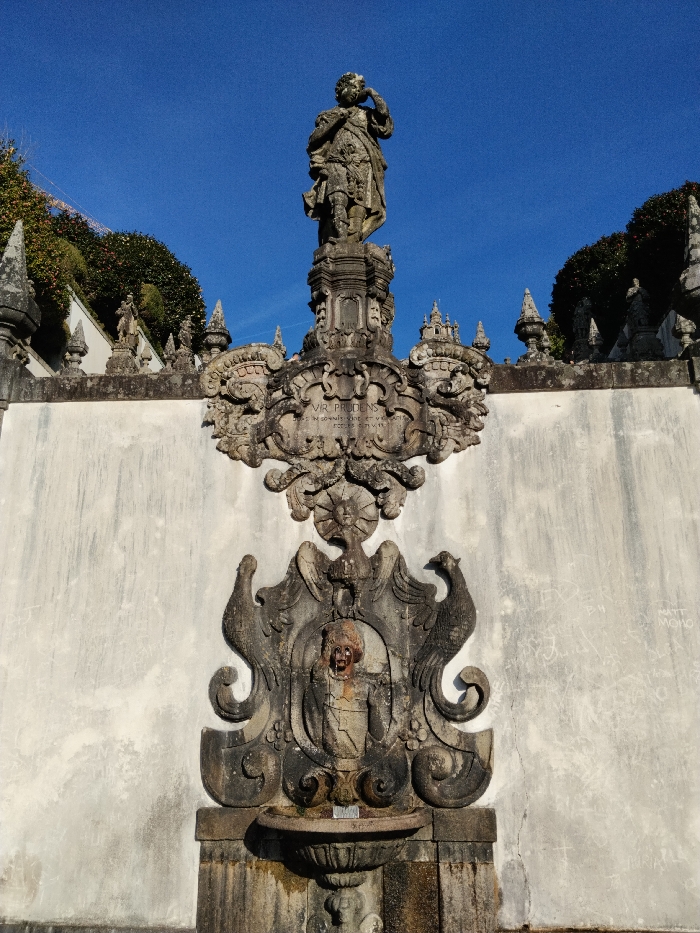
The image displays a grand, ornate stone sculpture integrated into a light-colored wall, set against a clear, deep blue sky. The scene is dominated by a multi-tiered Baroque or Rococo-style structure, featuring a statue, intricate carvings, and a fountain.

At the very top, a full-body stone statue of a male figure stands prominently on an elaborate pedestal. The figure appears to be dressed in period clothing, possibly a tunic or coat, with one hand raised towards his mouth or chin, in a gesture that might convey thought or silence. The statue is weathered, showing signs of age with darkened areas and texture on the stone.

Below this statue, and integrated into the wall, is a large, highly decorative stone carving. This section features swirling volutes, stylized shell motifs, and what appear to be winged figures or cherubs amidst the intricate stonework. At the center of this carving, an inscription is visible. The prominent text reads "VIR PRUDENS," and below it, in smaller script, the Latin phrase "QUI IN CONSILIO DNI" is discernible, followed by "NON STETIT IN VIA PECCAT..." which suggests a biblical or philosophical quote, likely from Psalm 1:1, "Blessed is the man who walks not in the counsel of the wicked."

Further down, at the base of this central carving, is a fountain element. It features a smaller, bust-like figure with a distressed or grotesque expression, from whose mouth water would typically spout into a semicircular basin below. This figure is framed by more ornate carvings, including large, stylized wings or bird-like figures on either side, resembling phoenixes or eagles. The stone here shows significant weathering and dark stains, particularly around the water outlet and basin, indicative of prolonged exposure to water. Cracks are also visible across the face and body of the fountain figure.

The entire stone structure is set against a high wall of light-colored material, possibly stucco or ancient stone, which shows some marks and faint, indistinct graffiti on its right side. Behind the wall, on an elevated level, lush green foliage with glimpses of red flowers (possibly camellias) is visible, suggesting a garden or terraced landscape. Smaller, spiky decorative finials and at least one other distant, smaller statue can be seen along the top edge of the wall.

The lighting suggests a bright, sunny day, with strong shadows cast by the carvings, indicating the sun is high in the sky. The overall impression is one of historical grandeur and detailed craftsmanship, likely part of a religious or monumental staircase and fountain complex.
FM-xkd7v1

Feb 22, 2026, 4:19 PM

Braga, Portugal

Stake attention in this memory

statue
architecture
stone carving
fountain
baroque

The image displays a grand, ornate stone sculpture integrated into a light-colored wall, set against a clear, deep blue sky. The scene is dominated by a multi-tiered Baroque or Rococo-style structure, featuring a statue, intricate carvings, and a fountain. At the very top, a full-body stone statue of a male figure stands prominently on an elaborate pedestal. The figure appears to be dressed in period clothing, possibly a tunic or coat, with one hand raised towards his mouth or chin, in a gesture that might convey thought or silence. The statue is weathered, showing signs of age with darkened areas and texture on the stone. Below this statue, and integrated into the wall, is a large, highly decorative stone carving. This section features swirling volutes, stylized shell motifs, and what appear to be winged figures or cherubs amidst the intricate stonework. At the center of this carving, an inscription is visible. The prominent text reads "VIR PRUDENS," and below it, in smaller script, the Latin phrase "QUI IN CONSILIO DNI" is discernible, followed by "NON STETIT IN VIA PECCAT..." which suggests a biblical or philosophical quote, likely from Psalm 1:1, "Blessed is the man who walks not in the counsel of the wicked." Further down, at the base of this central carving, is a fountain element. It features a smaller, bust-like figure with a distressed or grotesque expression, from whose mouth water would typically spout into a semicircular basin below. This figure is framed by more ornate carvings, including large, stylized wings or bird-like figures on either side, resembling phoenixes or eagles. The stone here shows significant weathering and dark stains, particularly around the water outlet and basin, indicative of prolonged exposure to water. Cracks are also visible across the face and body of the fountain figure. The entire stone structure is set against a high wall of light-colored material, possibly stucco or ancient stone, which shows some marks and faint, indistinct graffiti on its right side. Behind the wall, on an elevated level, lush green foliage with glimpses of red flowers (possibly camellias) is visible, suggesting a garden or terraced landscape. Smaller, spiky decorative finials and at least one other distant, smaller statue can be seen along the top edge of the wall. The lighting suggests a bright, sunny day, with strong shadows cast by the carvings, indicating the sun is high in the sky. The overall impression is one of historical grandeur and detailed craftsmanship, likely part of a religious or monumental staircase and fountain complex.

Loading AttnAds…

transactions
revenues
stakers
Earliest
Latest
Highest stake

No transactions found

More from this user

More from Braga

FM-xkd7v1

Feb 22, 2026, 4:19 PM

Braga, Portugal

Licensed under Creative Commons Attribution 4.0 International License. You are free to share and adapt this content with proper attribution.