
Stake attention in this memory
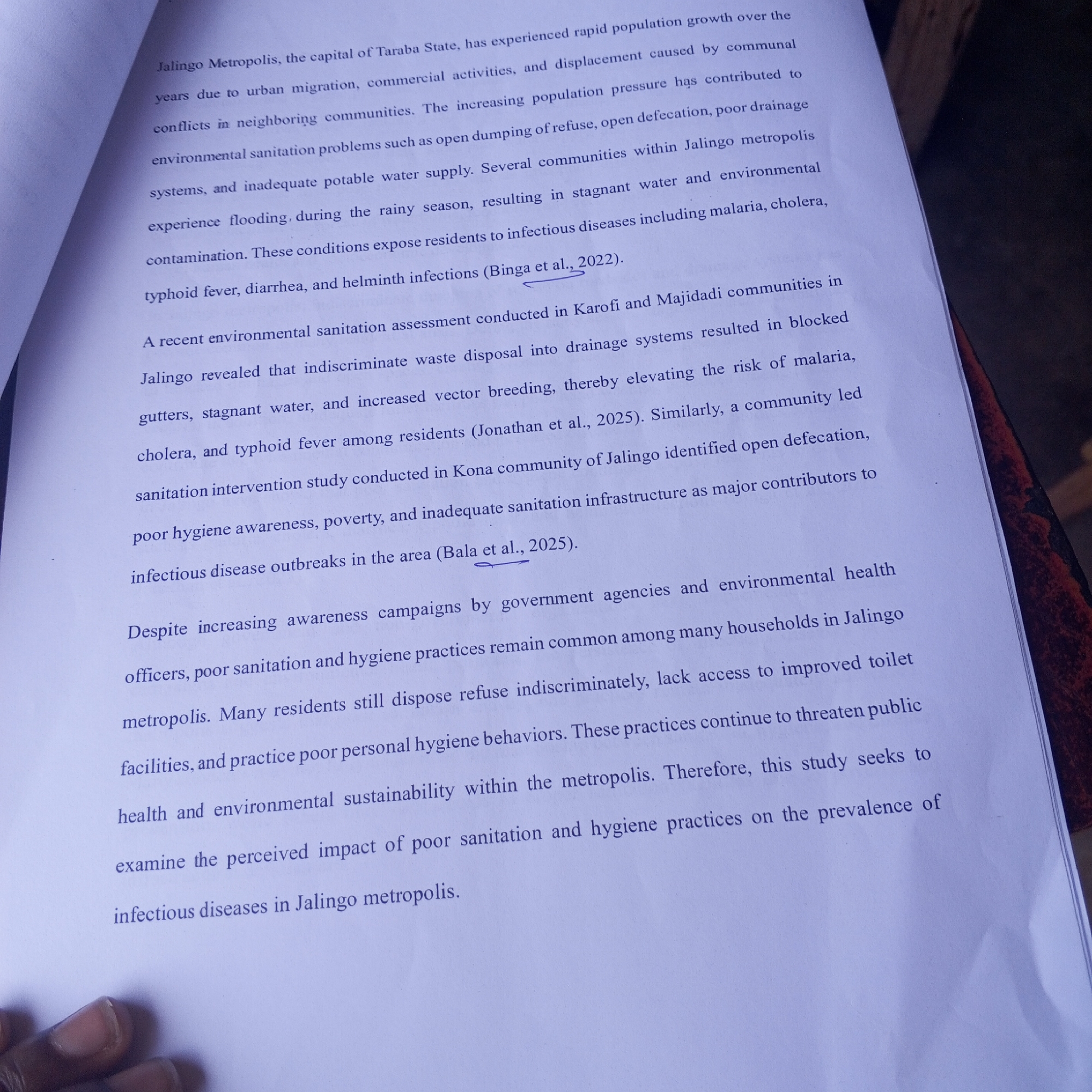
The image displays a page of text, likely from a document or book, detailing issues related to sanitation in Jalingo, Nigeria. The text focuses on rapid population growth, urban migration, commercial activities, and their impact on environmental sanitation. It highlights problems such as open dumping of refuse, open defecation, poor drainage systems, and inadequate potable water supply. These conditions are described as leading to stagnant water and environmental contamination, exposing residents to infectious diseases like malaria, cholera, typhoid fever, diarrhea, and helminth infections. The text mentions a recent environmental sanitation assessment conducted in Karofi and Majidadi communities within Jalingo, which revealed indiscriminate waste disposal into drainage systems, blocked gutters, stagnant water, and increased vector breeding. This elevated the risk of malaria, cholera, and typhoid fever among residents, as noted by Jonathan et al. (2025). Furthermore, a study in the Kona community of Jalingo identified open defecation, poor hygiene awareness, poverty, and inadequate sanitation infrastructure as major contributors to infectious disease outbreaks, as per Bala et al. (2025). The document also discusses ongoing awareness campaigns by government agencies and environmental health officers, but poor sanitation and hygiene practices remain prevalent in many households in Jalingo metropolis. Many residents still dispose of refuse indiscriminately and lack access to improved toilet facilities, practicing poor personal hygiene behaviors. These practices are identified as continuous threats to public health and environmental sustainability within the metropolis. The text concludes by stating that the study aims to examine the perceived impact of poor sanitation and hygiene practices on the prevalence of infectious diseases in Jalingo metropolis. The image itself is a close-up, slightly angled shot of the text, with a blurred background that suggests it is placed on a surface and possibly being held or viewed in a setting with limited lighting. A person's hand is partially visible in the lower left corner of the frame, indicating a human presence interacting with the document. The lighting appears to be artificial, casting shadows and highlighting the texture of the paper.
Loading AttnAds…
No transactions found