Sign in
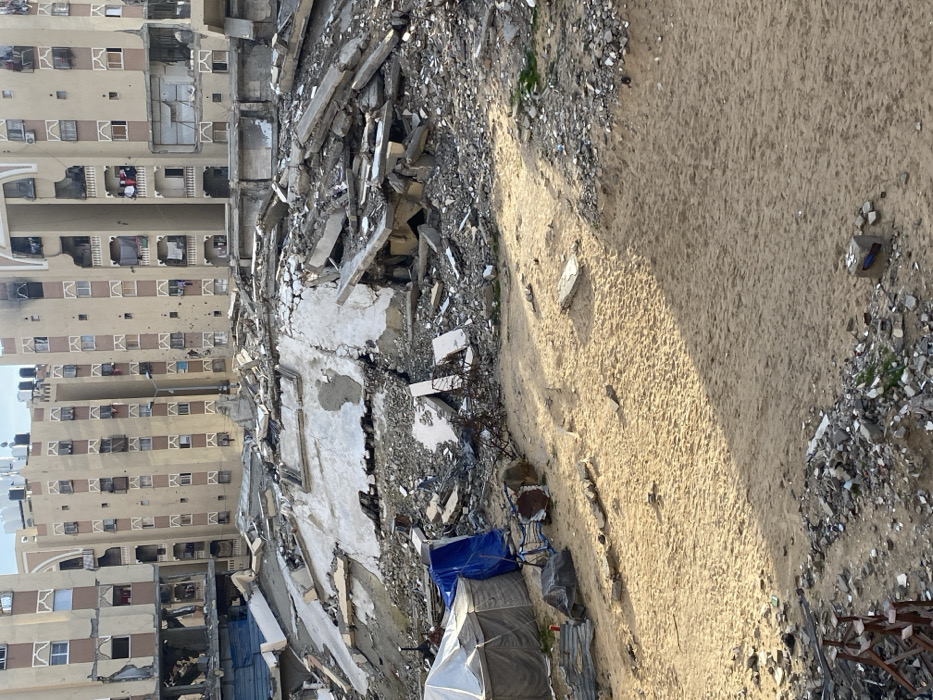
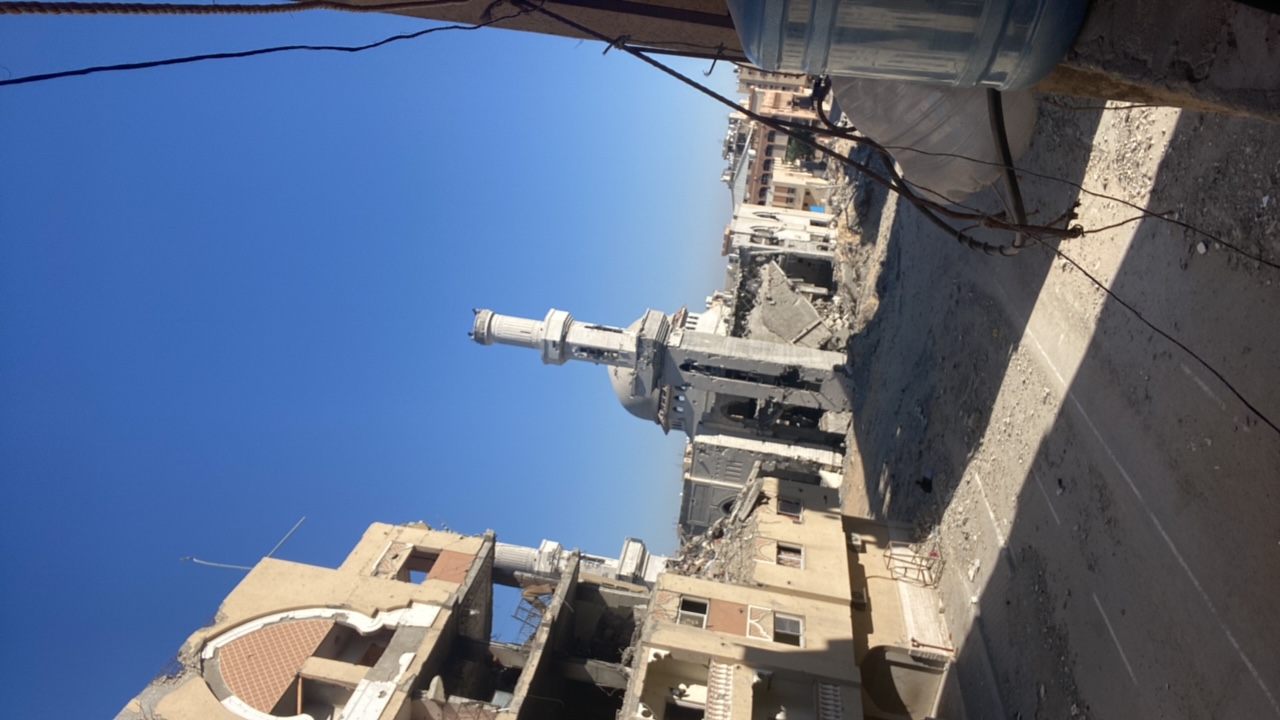
The image presents a landscape of extensive urban destruction, captured in daylight under a clear sky. On the left side of the frame, several tall, multi-story apartment buildings, constructed from light-colored concrete or stucco, dominate the skyline. These buildings exhibit significant damage, including numerous shattered or missing windows, dark scorch marks or soot stains on their facades, and visibly damaged sections of balconies and walls, particularly in the lower and middle floors. Despite the destruction, some balconies show laundry hanging to dry, suggesting ongoing habitation or recent occupancy. Several water tanks are visible on the rooftops of these structures.

Adjacent to these partially standing buildings, stretching across the middle and right-hand side of the image, lies a vast expanse of rubble and debris. This area is a chaotic pile of fractured concrete slabs, twisted rebar, broken bricks, and other remnants of collapsed or severely damaged structures. The scale of the debris indicates substantial destruction.

Towards the right and extending into the foreground, the terrain transitions to a sandy or dusty ground, littered with smaller stones and scattered debris. A distinct shadow is cast across a significant portion of this sandy area, suggesting strong sunlight originating from the left, indicative of either morning or late afternoon. Within this rubble-strewn and sandy zone, near the bottom center and right, several makeshift shelters or tents are visible. One prominent tent is blue, while another appears to be made of gray or white tarp, implying temporary living arrangements or encampments amidst the devastation. Small patches of green vegetation, likely weeds, punctuate the debris and sandy ground.

No direct human activity is depicted in the static image, but the presence of laundry and temporary shelters strongly implies human presence and an ongoing struggle for daily life in a severely damaged urban setting. There is no visible text in the image. The scene conveys a profound sense of destruction and hardship.
NERMEEN SALEH

Jan 29, 2026, 2:11 PM

Khan Yunis, Palestinian Territory

Stake attention in this memory

Devastation
Loss
Despair
Trauma
Fear

The image presents a landscape of extensive urban destruction, captured in daylight under a clear sky. On the left side of the frame, several tall, multi-story apartment buildings, constructed from light-colored concrete or stucco, dominate the skyline. These buildings exhibit significant damage, including numerous shattered or missing windows, dark scorch marks or soot stains on their facades, and visibly damaged sections of balconies and walls, particularly in the lower and middle floors. Despite the destruction, some balconies show laundry hanging to dry, suggesting ongoing habitation or recent occupancy. Several water tanks are visible on the rooftops of these structures. Adjacent to these partially standing buildings, stretching across the middle and right-hand side of the image, lies a vast expanse of rubble and debris. This area is a chaotic pile of fractured concrete slabs, twisted rebar, broken bricks, and other remnants of collapsed or severely damaged structures. The scale of the debris indicates substantial destruction. Towards the right and extending into the foreground, the terrain transitions to a sandy or dusty ground, littered with smaller stones and scattered debris. A distinct shadow is cast across a significant portion of this sandy area, suggesting strong sunlight originating from the left, indicative of either morning or late afternoon. Within this rubble-strewn and sandy zone, near the bottom center and right, several makeshift shelters or tents are visible. One prominent tent is blue, while another appears to be made of gray or white tarp, implying temporary living arrangements or encampments amidst the devastation. Small patches of green vegetation, likely weeds, punctuate the debris and sandy ground. No direct human activity is depicted in the static image, but the presence of laundry and temporary shelters strongly implies human presence and an ongoing struggle for daily life in a severely damaged urban setting. There is no visible text in the image. The scene conveys a profound sense of destruction and hardship.

Loading AttnAds…

transactions
revenues
stakers
Earliest
Latest
Highest stake

No transactions found

More from this user

More from Khan Yunis

NERMEEN SALEH

Jan 29, 2026, 2:11 PM

Khan Yunis, Palestinian Territory

Licensed under Creative Commons Attribution 4.0 International License. You are free to share and adapt this content with proper attribution.