
Sign in
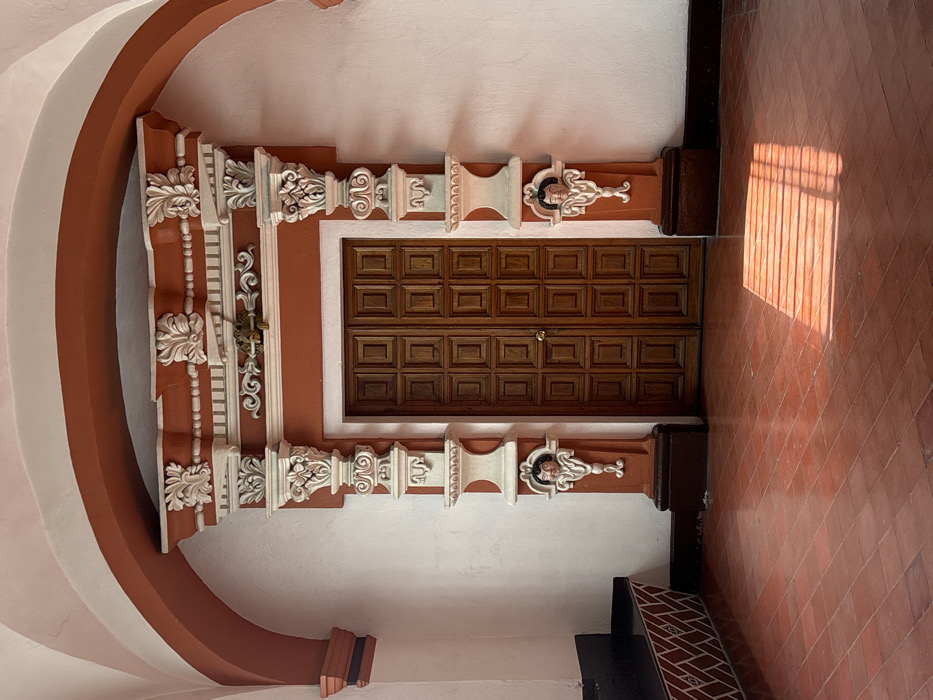
The image displays an interior architectural scene, centrally featuring an ornate double wooden door beneath a wide archway. The door is composed of multiple recessed square panels, stained dark brown, with a single brass doorknob located at the center where the two door panels meet.

The door is framed by an elaborate reddish-brown portal with white stucco detailing. On either side of the door, decorative columns with scrolled capitals and pedestals are present. Integrated into the lower section of each column is a carved, light-colored human-like face, resembling a grotesque, with dark features. Above the door, a horizontal frieze continues the white decorative motifs, featuring a small, greenish-brown reptilian figure perched atop the central scrollwork.

The surrounding walls are white, transitioning into a large, reddish-brown arched corridor above the door frame. The floor is paved with reddish-orange square terracotta tiles laid in a diagonal pattern. To the left of the doorway, a dark, elevated structure with a geometrically patterned (herringbone or zigzag) base is partially visible. Sunlight enters from the right, casting distinct, parallel striped shadows across the tiled floor. No individuals or active interactions are present in the scene.

This architectural style, characterized by arches, stucco embellishments, and terracotta flooring, is typical of colonial-era structures commonly found in the historic city of Puebla, Mexico, often within convents, former haciendas, or public buildings.
Tatoo

Mar 1, 2026, 3:48 PM

Puebla, Mexico

Stake attention in this memory

serenity
tradition
awe
peacefulness
stillness

The image displays an interior architectural scene, centrally featuring an ornate double wooden door beneath a wide archway. The door is composed of multiple recessed square panels, stained dark brown, with a single brass doorknob located at the center where the two door panels meet. The door is framed by an elaborate reddish-brown portal with white stucco detailing. On either side of the door, decorative columns with scrolled capitals and pedestals are present. Integrated into the lower section of each column is a carved, light-colored human-like face, resembling a grotesque, with dark features. Above the door, a horizontal frieze continues the white decorative motifs, featuring a small, greenish-brown reptilian figure perched atop the central scrollwork. The surrounding walls are white, transitioning into a large, reddish-brown arched corridor above the door frame. The floor is paved with reddish-orange square terracotta tiles laid in a diagonal pattern. To the left of the doorway, a dark, elevated structure with a geometrically patterned (herringbone or zigzag) base is partially visible. Sunlight enters from the right, casting distinct, parallel striped shadows across the tiled floor. No individuals or active interactions are present in the scene. This architectural style, characterized by arches, stucco embellishments, and terracotta flooring, is typical of colonial-era structures commonly found in the historic city of Puebla, Mexico, often within convents, former haciendas, or public buildings.

Loading AttnAds…

transactions
revenues
stakers
Earliest
Latest
Highest stake

No transactions found

More from this user

More from Puebla

Tatoo

Mar 1, 2026, 3:48 PM

Puebla, Mexico

Licensed under Creative Commons Attribution 4.0 International License. You are free to share and adapt this content with proper attribution.