
Stake attention in this memory
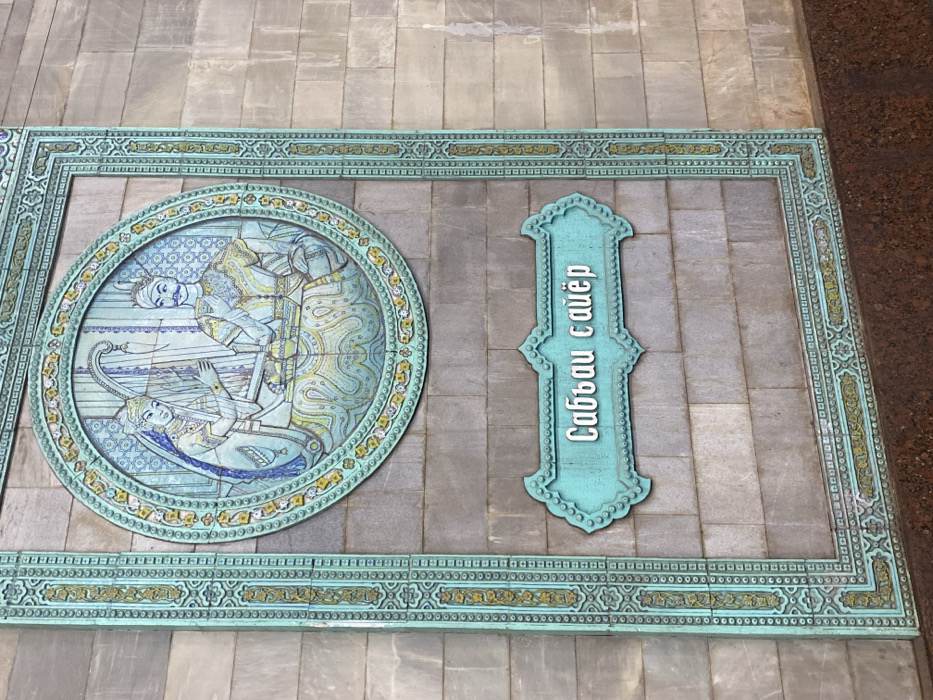
This image displays a large, ornate wall panel located within the *Buyuk Ipak Yo'li* metro station in Tashkent, Uzbekistan. The panel is constructed primarily of teal-colored, possibly ceramic or metal, decorative elements with gold accents, set against a wall of light grey rectangular stone or tile blocks. The central feature is a circular mosaic depicting two figures in traditional Central Asian attire. On the left, a female figure with a blue veiled head and patterned clothing is seated, actively playing a large, multi-stringed harp-like instrument with both hands. Opposite her, on the right, a male figure with a mustache, wearing an elaborate patterned robe, is seated and holds a small, ornate cup or bowl in his right hand. Between the two figures, a low table displays multiple small dishes or containers. The mosaic employs shades of blue, teal, yellow, and white, and is framed by a teal border with yellow dot accents. Below the circular mosaic, a horizontally oriented, ornate teal sign with decorative protrusions displays the white Cyrillic text "Сабъаи сайёр". This sign is centered within a larger rectangular frame composed of repeating geometric and floral patterns in teal and gold, which extends vertically along the sides and horizontally above the mosaic and below the sign. The entire art installation is positioned above a darker, reddish-brown, granular surface, likely a granite base or floor.
Loading AttnAds…
No transactions found