Sign in
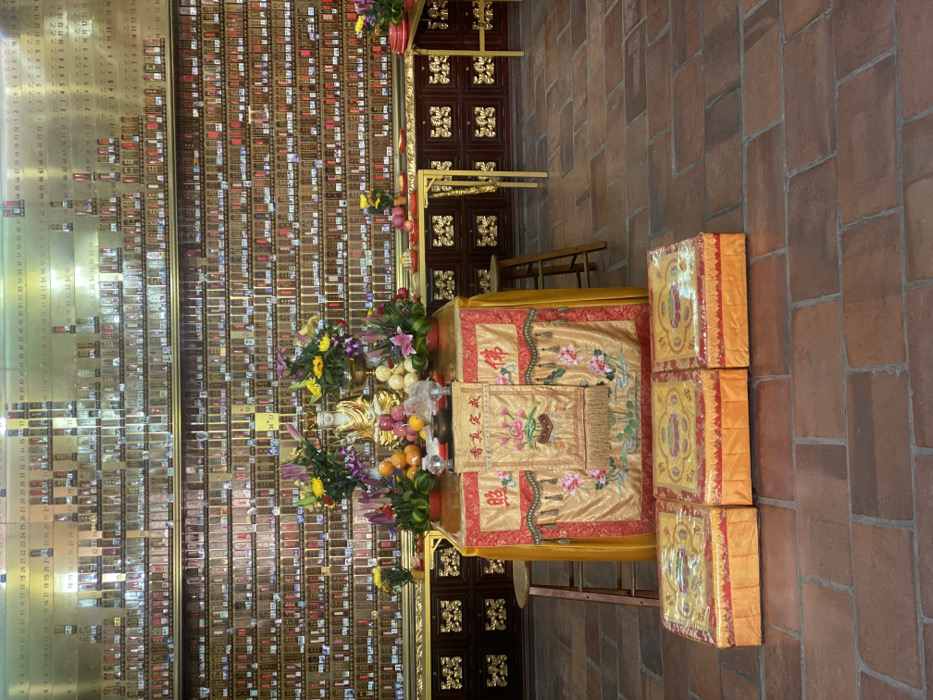
This image captures an interior scene within a temple or shrine, likely in Guang Zhou Shi, China. The setting exudes a sense of reverence and tradition.

The prominent feature on the left is a large wall covered with numerous small, rectangular plaques or cards. These are arranged in neat rows and columns and are individually numbered, with numbers like "1", "2", "3", extending upwards, visible along the far left edge. Each plaque also contains smaller Chinese characters, too indistinct to read fully.

In the center, a golden statue, possibly a Bodhisattva or Buddha, is positioned on an elaborate golden altar table. The statue is surrounded by offerings, including vibrant fresh flowers (yellow, pink, purple) and an assortment of fruits such as apples, oranges, and grapes, presented in bowls. The altar table itself is draped with opulent golden fabric, richly embroidered with colorful floral designs, particularly peonies. Visible Chinese characters embroidered on these cloths include "香火錢" (xiānghuǒ qián, meaning 'incense money' or offerings for temple maintenance), "福" (fú, meaning 'blessing' or 'good fortune'), and parts of what appears to be "招財進寶" (zhāocái jìnbǎo, meaning 'ushering in wealth and treasures').

To the right of the altar, three rectangular packages, wrapped in golden fabric adorned with red patterns, are neatly stacked on the floor. The floor is covered with reddish-brown rectangular tiles. In the background, behind the altar, there's a dark wooden structure featuring intricate golden embellishments, along with a simple wooden bench. The overall scene depicts a devotional space where offerings are made, characteristic of East Asian religious practices.
F
FM-CaIMM2

Dec 19, 2024, 7:12 AM

Guang Zhou Shi, China

Stake attention in this memory

This image captures an interior scene within a temple or shrine, likely in Guang Zhou Shi, China. The setting exudes a sense of reverence and tradition. The prominent feature on the left is a large wall covered with numerous small, rectangular plaques or cards. These are arranged in neat rows and columns and are individually numbered, with numbers like "1", "2", "3", extending upwards, visible along the far left edge. Each plaque also contains smaller Chinese characters, too indistinct to read fully. In the center, a golden statue, possibly a Bodhisattva or Buddha, is positioned on an elaborate golden altar table. The statue is surrounded by offerings, including vibrant fresh flowers (yellow, pink, purple) and an assortment of fruits such as apples, oranges, and grapes, presented in bowls. The altar table itself is draped with opulent golden fabric, richly embroidered with colorful floral designs, particularly peonies. Visible Chinese characters embroidered on these cloths include "香火錢" (xiānghuǒ qián, meaning 'incense money' or offerings for temple maintenance), "福" (fú, meaning 'blessing' or 'good fortune'), and parts of what appears to be "招財進寶" (zhāocái jìnbǎo, meaning 'ushering in wealth and treasures'). To the right of the altar, three rectangular packages, wrapped in golden fabric adorned with red patterns, are neatly stacked on the floor. The floor is covered with reddish-brown rectangular tiles. In the background, behind the altar, there's a dark wooden structure featuring intricate golden embellishments, along with a simple wooden bench. The overall scene depicts a devotional space where offerings are made, characteristic of East Asian religious practices.

Loading AttnAds…

transactions
revenues
stakers
Earliest
Latest
Highest stake

No transactions found

More from this user

More from Guang Zhou Shi

FFM-CaIMM2

Dec 19, 2024, 7:12 AM

Guang Zhou Shi, China

Licensed under Creative Commons Attribution 4.0 International License. You are free to share and adapt this content with proper attribution.