
Sign in
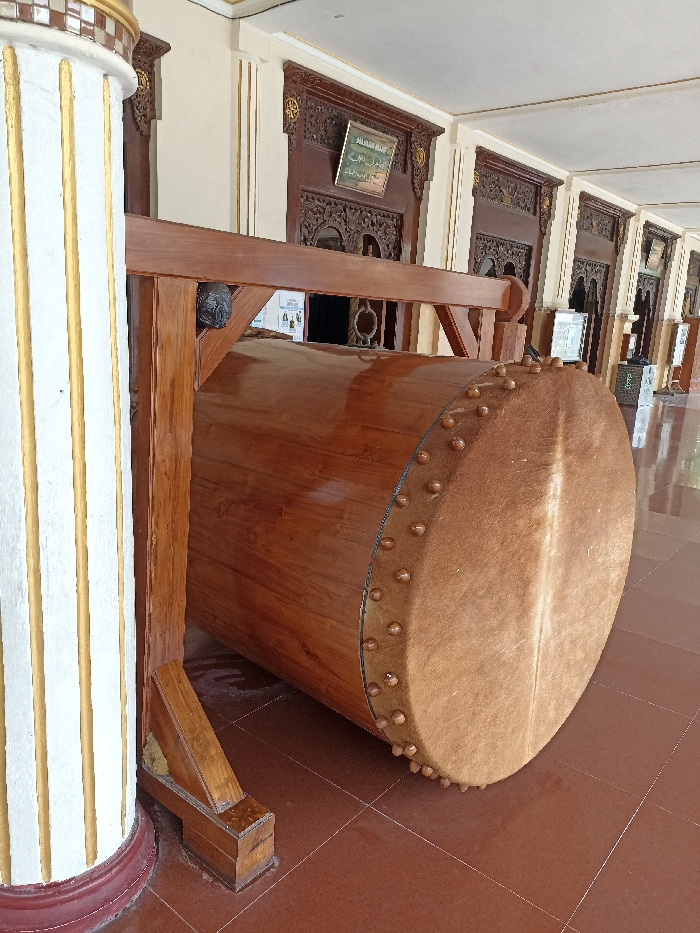
This image captures a large, traditional Indonesian drum, known as a bedug, prominently positioned within what appears to be a mosque or Islamic prayer hall in Kecamatan Pare, Indonesia. The bedug is made of polished light-brown wood, revealing its natural grain, and has a tan or light brown animal hide stretched over its visible end, secured by numerous rounded pegs or rivets. It is supported horizontally by a robust, polished wooden frame.

To the left of the bedug, a white architectural column with vertical gold stripes stands, indicating structural and decorative elements of the building. In the background, a series of intricately carved wooden doors or archways line a corridor, suggesting traditional craftsmanship and design. Above one of these doors, a green sign with Arabic script is visible, clearly showing "صَلَاةِ الْعَصْرِ" (Salat al-Asr), which translates to "Afternoon Prayer," reinforcing the religious context of the setting. The floor is covered with reddish-brown tiles.

The natural, bright illumination suggests it is daytime. No individuals are present, and no active event is taking place; the scene is static, highlighting the cultural and religious artifact and its architectural surroundings. The bedug traditionally serves to announce prayer times in Indonesian mosques.
FM-DWNFF3

Jan 25, 2025, 4:51 AM

Kecamatan Pare, Indonesia

Stake attention in this memory

This image captures a large, traditional Indonesian drum, known as a bedug, prominently positioned within what appears to be a mosque or Islamic prayer hall in Kecamatan Pare, Indonesia. The bedug is made of polished light-brown wood, revealing its natural grain, and has a tan or light brown animal hide stretched over its visible end, secured by numerous rounded pegs or rivets. It is supported horizontally by a robust, polished wooden frame. To the left of the bedug, a white architectural column with vertical gold stripes stands, indicating structural and decorative elements of the building. In the background, a series of intricately carved wooden doors or archways line a corridor, suggesting traditional craftsmanship and design. Above one of these doors, a green sign with Arabic script is visible, clearly showing "صَلَاةِ الْعَصْرِ" (Salat al-Asr), which translates to "Afternoon Prayer," reinforcing the religious context of the setting. The floor is covered with reddish-brown tiles. The natural, bright illumination suggests it is daytime. No individuals are present, and no active event is taking place; the scene is static, highlighting the cultural and religious artifact and its architectural surroundings. The bedug traditionally serves to announce prayer times in Indonesian mosques.

Loading AttnAds…

transactions
revenues
stakers
Earliest
Latest
Highest stake

No transactions found

More from this user

More from Kecamatan Pare

FM-DWNFF3

Jan 25, 2025, 4:51 AM

Kecamatan Pare, Indonesia

Licensed under Creative Commons Attribution 4.0 International License. You are free to share and adapt this content with proper attribution.