
Sign in
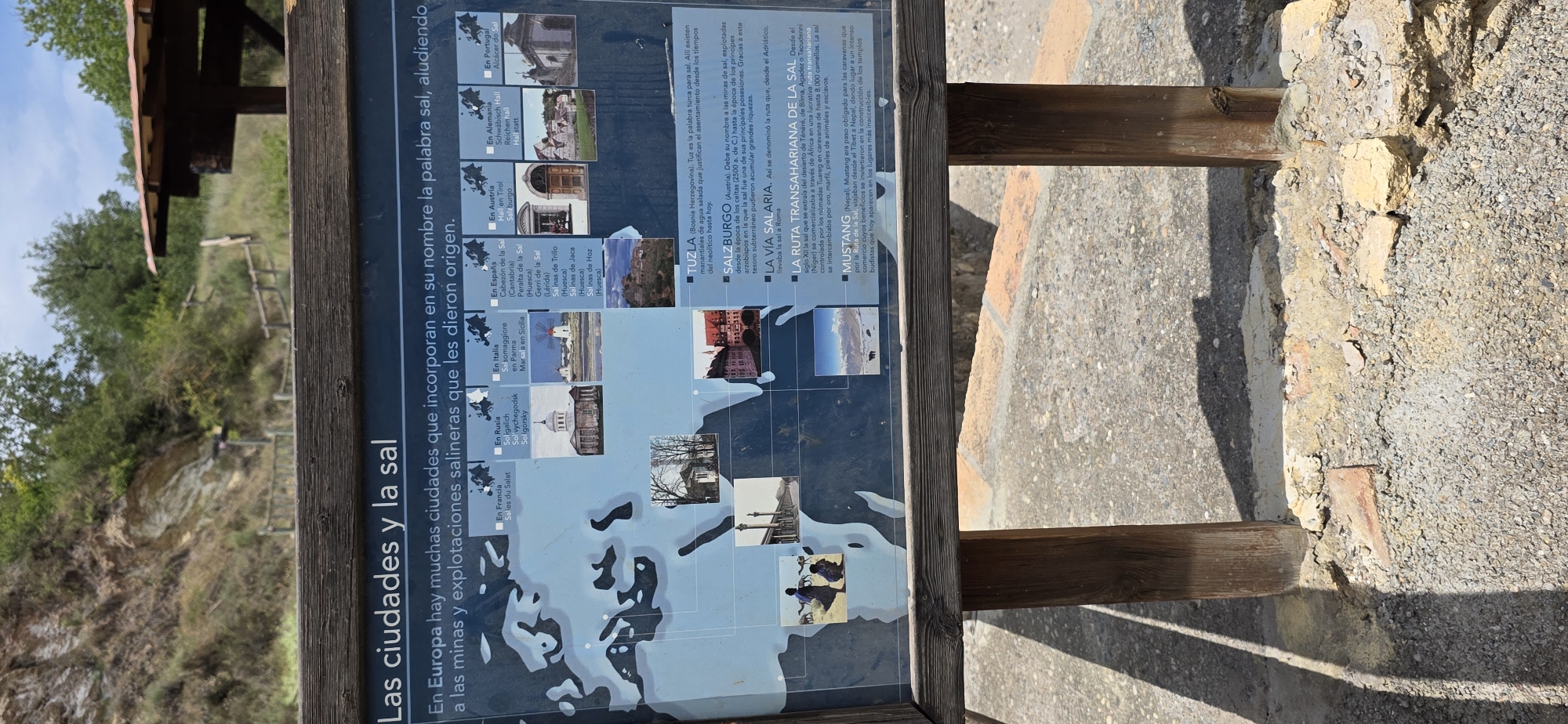
This is a photograph of an informational display about cities and salt, situated outdoors in Naval, Spain. The display is mounted on a wooden frame, with two vertical wooden posts supporting it. The background shows a dry, rocky hillside with sparse vegetation and a small wooden structure with a roof.

The display itself features a map of Europe overlaid with various images and text. The title "Las ciudades y la sal" (Cities and Salt) is prominently displayed at the top. Below the title, a paragraph in Spanish explains that many European cities incorporate the word "sal" (salt) into their names, alluding to the salt mines and salt exploitations that gave them their origin.

The map is divided into sections, each highlighting a different country with associated images and locations. These include:

*   **En Francia (In France):** Sol (Salt) sales du Dulat
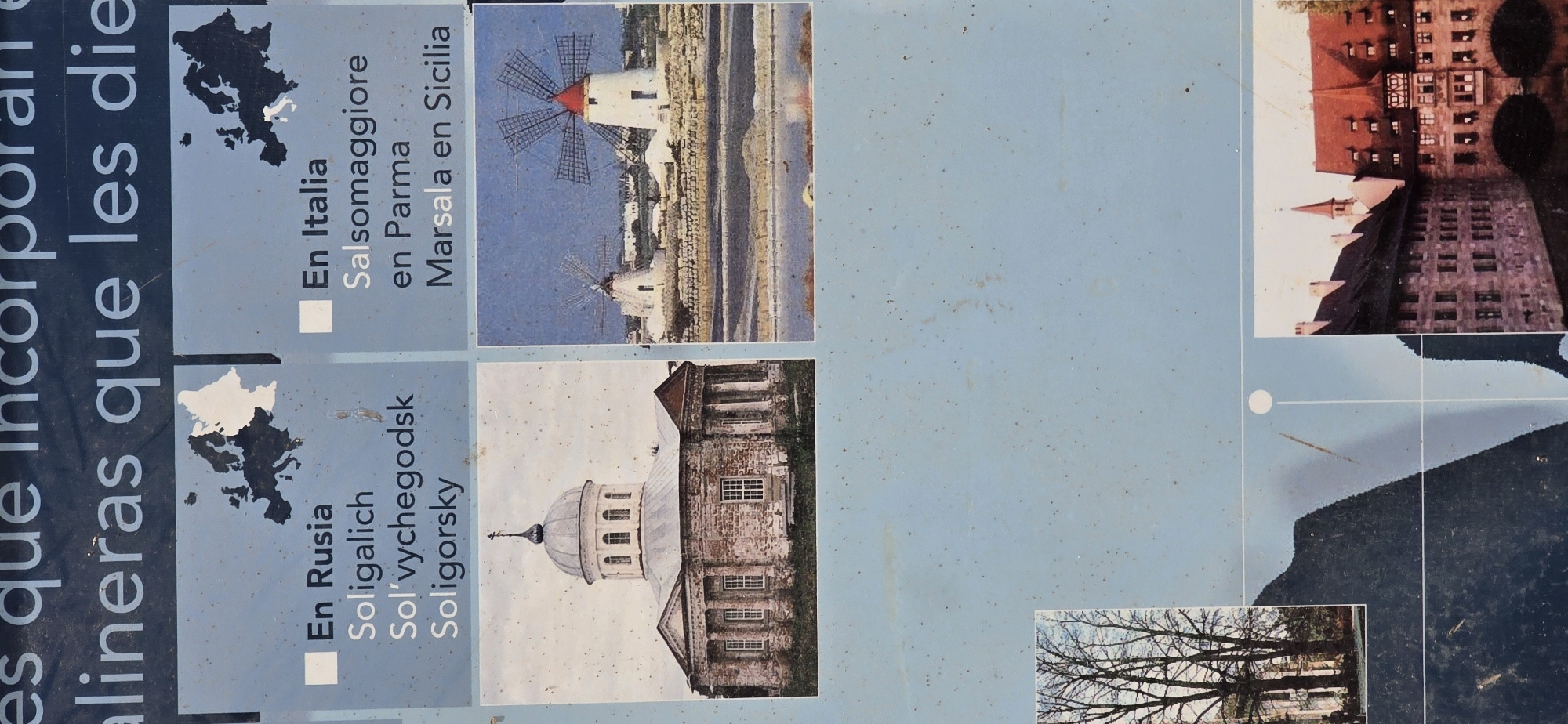
*   **En Italia (In Italy):** Salsomaggiore en Parma, Maca a en Sicilia
*   **En Rusia (In Russia):** Soligalich, Sol'vychegodsk, Sol'gorsky
*   **En España (In Spain):** Cabezón de la Sal (Cantabria), Poza de la Sal (Huesca), Gerri de la Sal (Lérida), Salinas de Trillo (Huesca), Salinas de Jaca (Huesca), Salinas de Hoz (Huesca)
*   **En Austria (In Austria):** Hall en Tirol, Sal'burgo
*   **En Alemania (In Germany):** Schwäbisch Hall, Reicher Hall, Hallstatt
*   **En Portugal (In Portugal):** Alcácer do Sal

Below the map, there are descriptions of specific locations:

*   **TUZLA (Bosnia Herzegovina):** Mentioned as having a name related to salt and ancient salt springs.
*   **SALZBURGO (Austria):** Described as having a name derived from salt mines, with historical connections to salt exploitation and wealth.
*   **LA VÍA SALARIA (The Salt Road):** Stated as being a road that led from the Adriatic to Rome.
*   **LA RUTA TRANSAHARIANA DE LA SAL (The Trans-Saharan Salt Route):** Discussed as a trade route from the Sahara Desert to Bilma, Agadez, and Taoudenni, controlled by Tuareg caravans and involving the exchange of goods like gold, ambergris, animal hides, and slaves.
*   **MUSTANG (Nepal):** Described as a former salt route to Tibet and Nepal, which later became a trade route for Buddhist temples.

The overall scene depicts an outdoor educational exhibit in a somewhat rustic setting, likely part of a historical or cultural attraction in Naval, Spain.
Mari

Jun 28, 2026

Naval, Spain

Stake attention in this memory

informative
historical
educational
cultural
geographical

This is a photograph of an informational display about cities and salt, situated outdoors in Naval, Spain. The display is mounted on a wooden frame, with two vertical wooden posts supporting it. The background shows a dry, rocky hillside with sparse vegetation and a small wooden structure with a roof. The display itself features a map of Europe overlaid with various images and text. The title "Las ciudades y la sal" (Cities and Salt) is prominently displayed at the top. Below the title, a paragraph in Spanish explains that many European cities incorporate the word "sal" (salt) into their names, alluding to the salt mines and salt exploitations that gave them their origin. The map is divided into sections, each highlighting a different country with associated images and locations. These include: * **En Francia (In France):** Sol (Salt) sales du Dulat * **En Italia (In Italy):** Salsomaggiore en Parma, Maca a en Sicilia * **En Rusia (In Russia):** Soligalich, Sol'vychegodsk, Sol'gorsky * **En España (In Spain):** Cabezón de la Sal (Cantabria), Poza de la Sal (Huesca), Gerri de la Sal (Lérida), Salinas de Trillo (Huesca), Salinas de Jaca (Huesca), Salinas de Hoz (Huesca) * **En Austria (In Austria):** Hall en Tirol, Sal'burgo * **En Alemania (In Germany):** Schwäbisch Hall, Reicher Hall, Hallstatt * **En Portugal (In Portugal):** Alcácer do Sal Below the map, there are descriptions of specific locations: * **TUZLA (Bosnia Herzegovina):** Mentioned as having a name related to salt and ancient salt springs. * **SALZBURGO (Austria):** Described as having a name derived from salt mines, with historical connections to salt exploitation and wealth. * **LA VÍA SALARIA (The Salt Road):** Stated as being a road that led from the Adriatic to Rome. * **LA RUTA TRANSAHARIANA DE LA SAL (The Trans-Saharan Salt Route):** Discussed as a trade route from the Sahara Desert to Bilma, Agadez, and Taoudenni, controlled by Tuareg caravans and involving the exchange of goods like gold, ambergris, animal hides, and slaves. * **MUSTANG (Nepal):** Described as a former salt route to Tibet and Nepal, which later became a trade route for Buddhist temples. The overall scene depicts an outdoor educational exhibit in a somewhat rustic setting, likely part of a historical or cultural attraction in Naval, Spain.

transactions
revenues
stakers
Earliest
Latest
Highest stake

No transactions found

More from this user

More from Naval

Mari

Jun 28, 2026

Naval, Spain

Licensed under Creative Commons Attribution 4.0 International License. You are free to share and adapt this content with proper attribution.