
Sign in
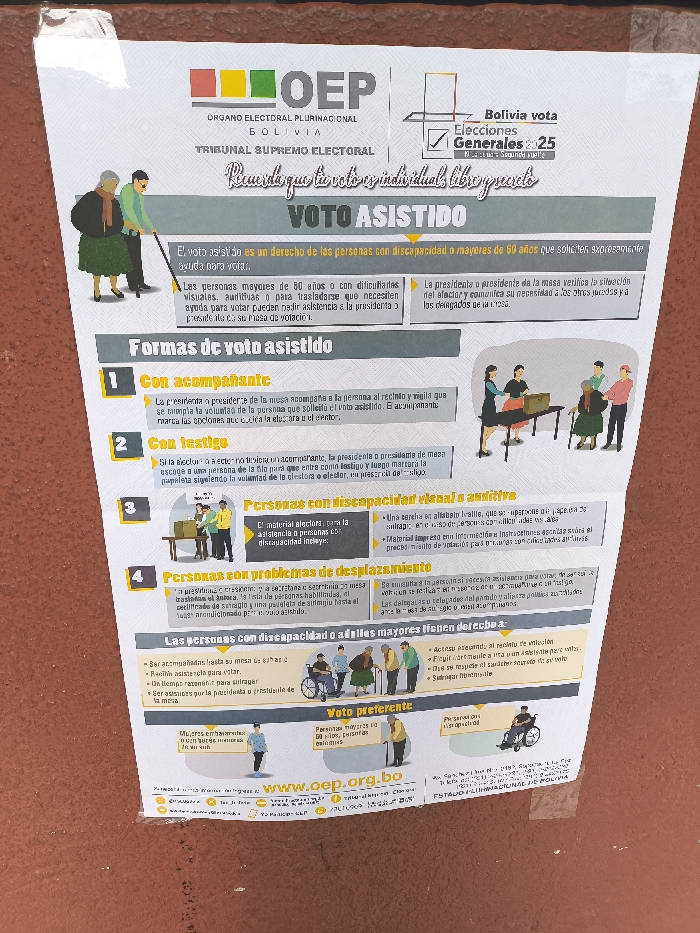
The image displays a vertical rectangular poster, predominantly white with multi-colored graphics and black and colored text, affixed to a reddish-brown, textured wall. The top-left corner of the poster is partially obscured by a piece of white adhesive tape. The specific location in La Paz, Bolivia, cannot be determined from the image; however, the poster's content indicates an official Bolivian electoral context.

The poster is titled "VOTO ASISTIDO" (Assisted Voting) and features the header "OEP ÓRGANO ELECTORAL PLURINACIONAL BOLIVIA TRIBUNAL SUPREMO ELECTORAL" (Plurinational Electoral Body Bolivia, Supreme Electoral Tribunal) with an associated logo consisting of yellow, green, and red blocks. A smaller banner reads "Bolivia vota Elecciones Generales '25" with a checkbox graphic, followed by the slogan "Recuerda que tu voto es individual, libre y secreto."

The poster outlines assisted voting as a right for individuals with disabilities or those over 60 years old. An initial graphic illustrates an elderly woman using a walking stick being assisted by a younger man. The document then details four "Formas de voto asistido":
1.  **Con acompañante (With a companion):** Textually described, accompanied by an illustration depicting several people at a polling station table with ballot boxes, one person being assisted by another.
2.  **Con testigo (With a witness):** Described textually.
3.  **Personas con discapacidad visual o auditiva (People with visual or auditory disability):** Textually described, including details about assistive materials like Braille stencils and audio instructions. An illustration shows a person using a Braille stencil and another wearing headphones.
4.  **Personas con problemas de desplazamiento (People with mobility problems):** Textually described, with an illustration of a person in a wheelchair and another elderly individual using a cane being assisted.

A subsequent section lists rights for people with disabilities and older adults. A "Voto preferente" (Preferential vote) section identifies specific groups: "Mujeres embarazadas con más de seis meses" (pregnant women over six months), "Personas mayores de 60 años, personas con enfermedades" (people over 60, people with illnesses), and "Personas con discapacidad" (people with disabilities), each depicted with a corresponding small illustration.

The bottom of the poster displays the website "www.oep.org.bo" and contains additional fine print. The poster appears clean and free of graffiti, aside from the aforementioned adhesive tape.
crisszz

Oct 19, 2025, 8:05 PM

La Paz, Bolivia

Stake attention in this memory

Empowerment
Accessibility
Support
Civic Duty
Inclusion

The image displays a vertical rectangular poster, predominantly white with multi-colored graphics and black and colored text, affixed to a reddish-brown, textured wall. The top-left corner of the poster is partially obscured by a piece of white adhesive tape. The specific location in La Paz, Bolivia, cannot be determined from the image; however, the poster's content indicates an official Bolivian electoral context. The poster is titled "VOTO ASISTIDO" (Assisted Voting) and features the header "OEP ÓRGANO ELECTORAL PLURINACIONAL BOLIVIA TRIBUNAL SUPREMO ELECTORAL" (Plurinational Electoral Body Bolivia, Supreme Electoral Tribunal) with an associated logo consisting of yellow, green, and red blocks. A smaller banner reads "Bolivia vota Elecciones Generales '25" with a checkbox graphic, followed by the slogan "Recuerda que tu voto es individual, libre y secreto." The poster outlines assisted voting as a right for individuals with disabilities or those over 60 years old. An initial graphic illustrates an elderly woman using a walking stick being assisted by a younger man. The document then details four "Formas de voto asistido": 1. **Con acompañante (With a companion):** Textually described, accompanied by an illustration depicting several people at a polling station table with ballot boxes, one person being assisted by another. 2. **Con testigo (With a witness):** Described textually. 3. **Personas con discapacidad visual o auditiva (People with visual or auditory disability):** Textually described, including details about assistive materials like Braille stencils and audio instructions. An illustration shows a person using a Braille stencil and another wearing headphones. 4. **Personas con problemas de desplazamiento (People with mobility problems):** Textually described, with an illustration of a person in a wheelchair and another elderly individual using a cane being assisted. A subsequent section lists rights for people with disabilities and older adults. A "Voto preferente" (Preferential vote) section identifies specific groups: "Mujeres embarazadas con más de seis meses" (pregnant women over six months), "Personas mayores de 60 años, personas con enfermedades" (people over 60, people with illnesses), and "Personas con discapacidad" (people with disabilities), each depicted with a corresponding small illustration. The bottom of the poster displays the website "www.oep.org.bo" and contains additional fine print. The poster appears clean and free of graffiti, aside from the aforementioned adhesive tape.

Loading AttnAds…

transactions
revenues
stakers
Earliest
Latest
Highest stake

No transactions found

More from this user

More from La Paz

crisszz

Oct 19, 2025, 8:05 PM

La Paz, Bolivia

Licensed under Creative Commons Attribution 4.0 International License. You are free to share and adapt this content with proper attribution.