Stake attention in this memory
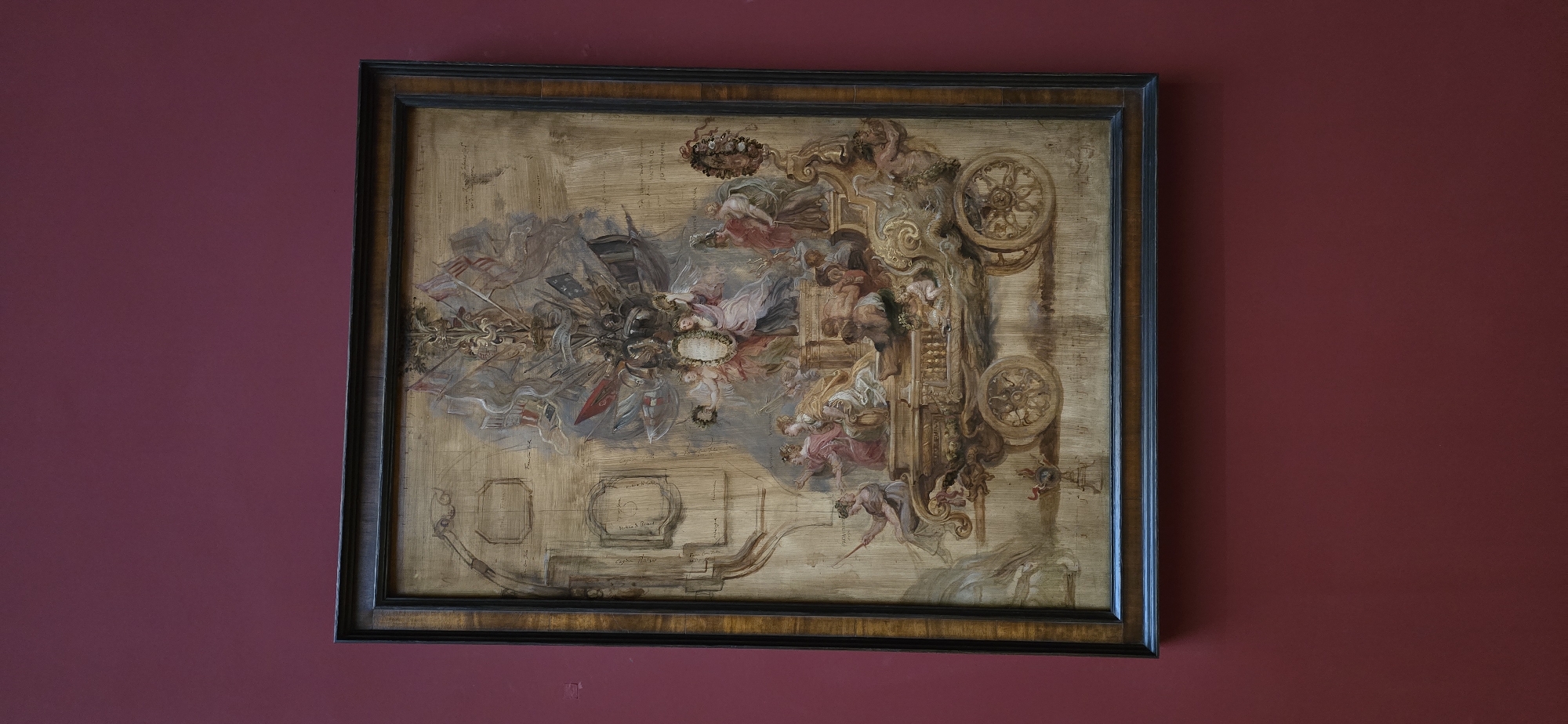
The image is a painting depicting a triumphal chariot scene, framed by a dark wooden border against a plain, deep red wall. The painting itself has a somewhat aged and textured appearance, with a light, parchment-like background. The central focus is a large, ornate chariot, elaborately decorated and carrying multiple figures. The chariot is pulled by figures and appears to be in motion, though the overall composition suggests a ceremonial or allegorical event rather than a literal journey. There are numerous figures rendered in various states of dress, some appearing to be allegorical personifications with flowing drapery and crowns, while others are depicted as soldiers or attendants. The chariot itself is highly decorative, featuring intricate carvings, golden elements, and what appear to be floral or vine motifs. Above the chariot, a complex arrangement of flags, banners, and possibly weaponry creates a dynamic, upward-reaching element. This section is rich in detail and suggests a theme of victory or commemoration. Below the chariot, more figures are depicted, some seemingly supporting or accompanying the main procession. To the left of the central scene, there are faint architectural sketches or diagrams rendered on the background, hinting at an underdrawing or preparatory stage of the artwork. These sketches are abstract and do not detract from the main painted subject. The painting is hanging on a solid, unadorned wall, which is a consistent deep red color. The lighting appears to be from above and to the right, casting subtle shadows within the painting and highlighting the textured surface of the artwork. The overall impression is one of a historical or allegorical artwork, likely a study or a completed piece of significant artistic merit. Without further information or context within the image, it is not possible to definitively locate this painting in Antwerp, Belgium, or to identify the specific subject matter. However, the style of painting and the subject of a triumphal procession are common in Baroque art, which flourished in Antwerp during the 17th century with artists like Peter Paul Rubens. Such paintings often commemorated significant historical events, military victories, or royal processions.
Loading AttnAds…
No transactions found