Sign in
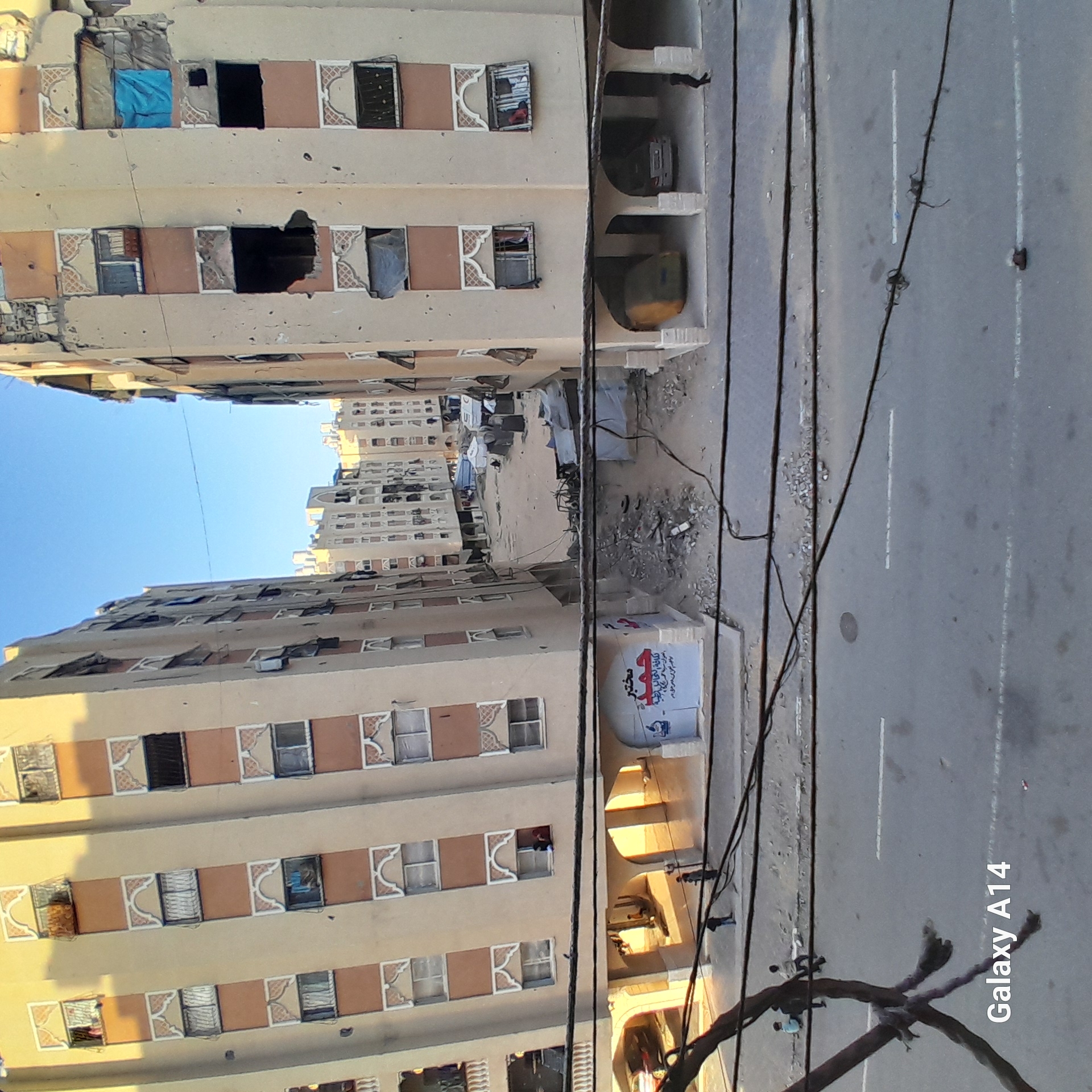
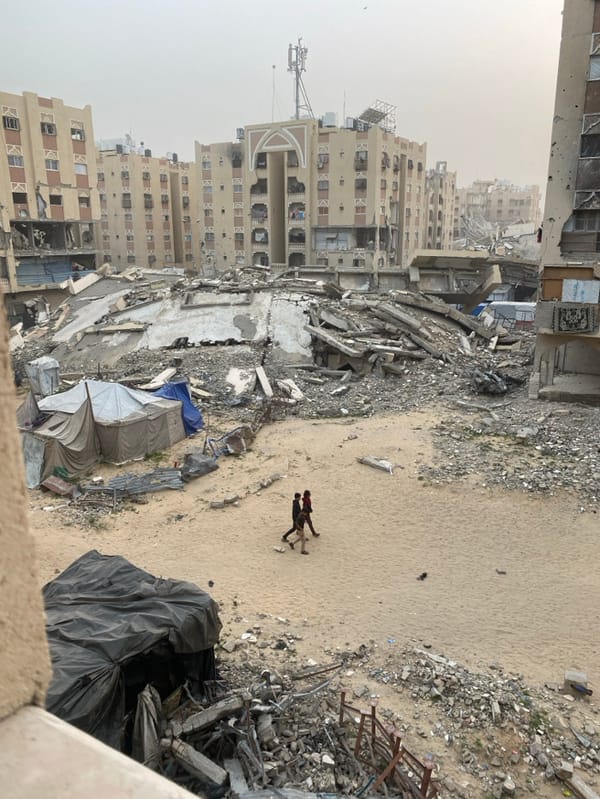
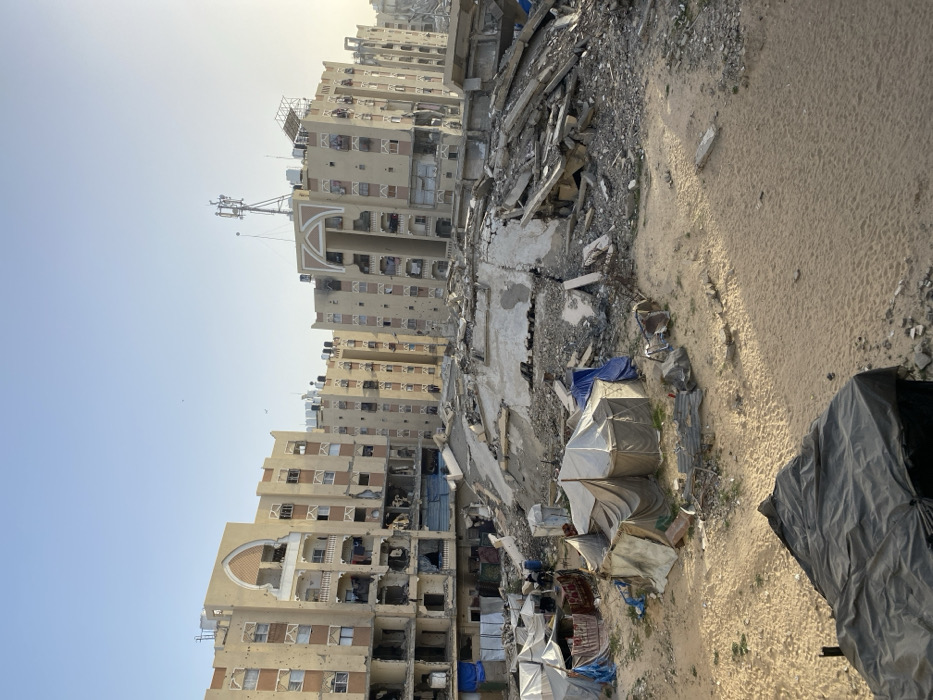
The image displays a wide view of a severely damaged urban environment, likely following a conflict or disaster. The scene is dominated by a row of multi-story residential buildings on the left side, which appear heavily impacted. Many of these buildings show significant structural damage, including shattered windows, large holes in their facades, and exposed interiors, suggesting direct hits or extensive decay. Some have water tanks visible on their rooftops, and one building in the middle distance features a communication antenna or cell tower.

In the mid-ground, between the damaged buildings and the foreground, lies a vast expanse of rubble and debris. This area is a chaotic mix of broken concrete, twisted metal, and other construction materials, indicating collapsed structures or foundations.

The right side and foreground of the image consist of open, sandy or dusty ground. On this ground, several makeshift shelters or tents are visible. These shelters are constructed from various materials, including tarpaulins (some blue, some grey, some lighter) and possibly corrugated metal sheets, huddled together. A dark, tarp-like material partially covers the lower right corner of the foreground.

The sky is clear and light blue, suggesting daytime conditions. The bright natural light illuminates the scene, casting subtle shadows that indicate the sun is fairly high, possibly late morning or early afternoon. No people are visibly present in the image, contributing to the stark and desolate atmosphere. The overall impression is one of widespread devastation and displacement, with temporary dwellings set up amidst the ruins of a once-populated area. No text is visible in the image.
NERMEEN SALEH

Feb 17, 2026, 2:34 PM

Khan Yunis, Palestinian Territory

Stake attention in this memory

destroyed building
rubble
tents
aftermath
urban landscape

The image displays a wide view of a severely damaged urban environment, likely following a conflict or disaster. The scene is dominated by a row of multi-story residential buildings on the left side, which appear heavily impacted. Many of these buildings show significant structural damage, including shattered windows, large holes in their facades, and exposed interiors, suggesting direct hits or extensive decay. Some have water tanks visible on their rooftops, and one building in the middle distance features a communication antenna or cell tower. In the mid-ground, between the damaged buildings and the foreground, lies a vast expanse of rubble and debris. This area is a chaotic mix of broken concrete, twisted metal, and other construction materials, indicating collapsed structures or foundations. The right side and foreground of the image consist of open, sandy or dusty ground. On this ground, several makeshift shelters or tents are visible. These shelters are constructed from various materials, including tarpaulins (some blue, some grey, some lighter) and possibly corrugated metal sheets, huddled together. A dark, tarp-like material partially covers the lower right corner of the foreground. The sky is clear and light blue, suggesting daytime conditions. The bright natural light illuminates the scene, casting subtle shadows that indicate the sun is fairly high, possibly late morning or early afternoon. No people are visibly present in the image, contributing to the stark and desolate atmosphere. The overall impression is one of widespread devastation and displacement, with temporary dwellings set up amidst the ruins of a once-populated area. No text is visible in the image.

Loading AttnAds…

transactions
revenues
stakers
Earliest
Latest
Highest stake

No transactions found

More from this user

More from Khan Yunis

NERMEEN SALEH

Feb 17, 2026, 2:34 PM

Khan Yunis, Palestinian Territory

Licensed under Creative Commons Attribution 4.0 International License. You are free to share and adapt this content with proper attribution.