
Stake attention in this memory
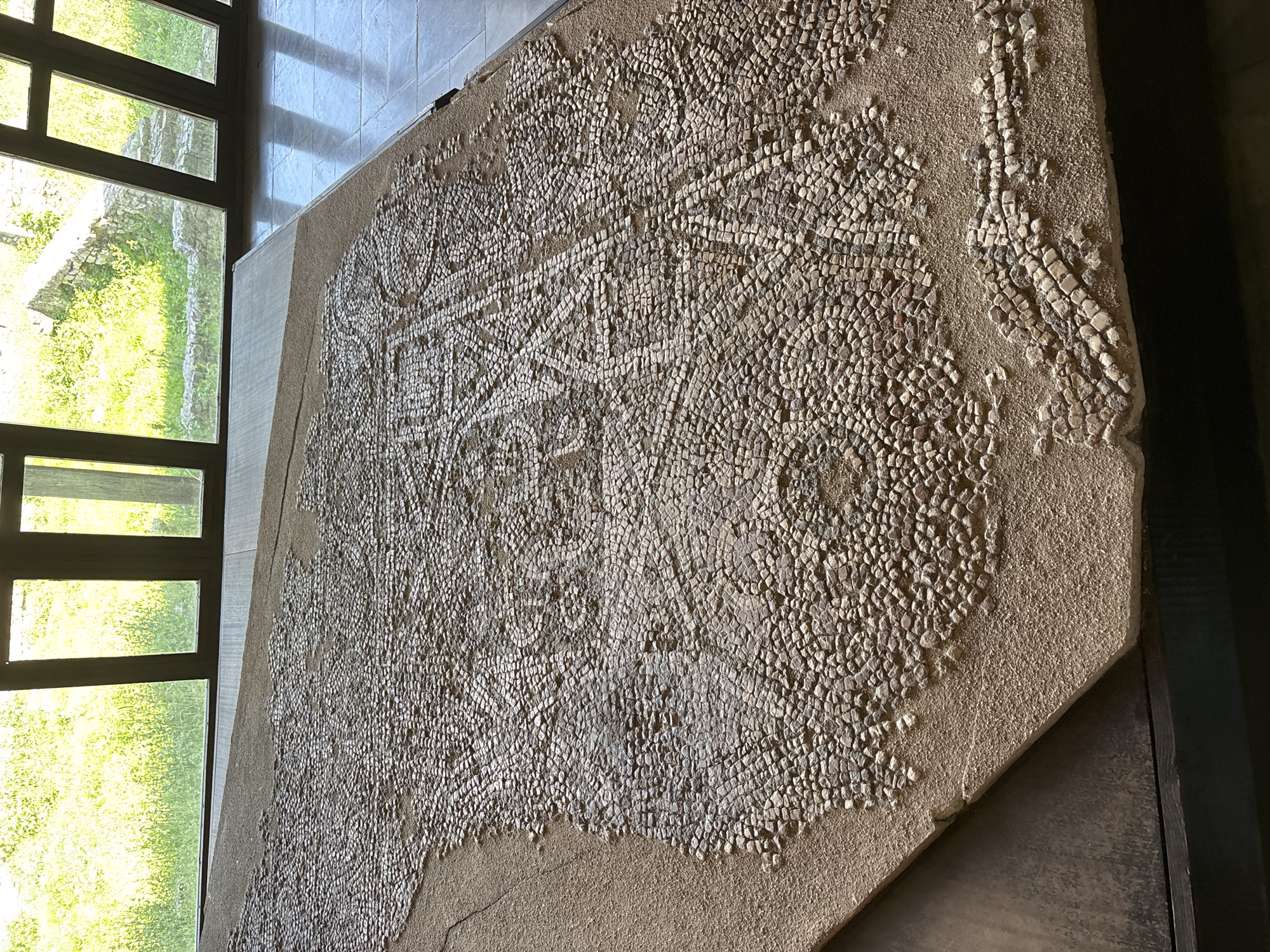
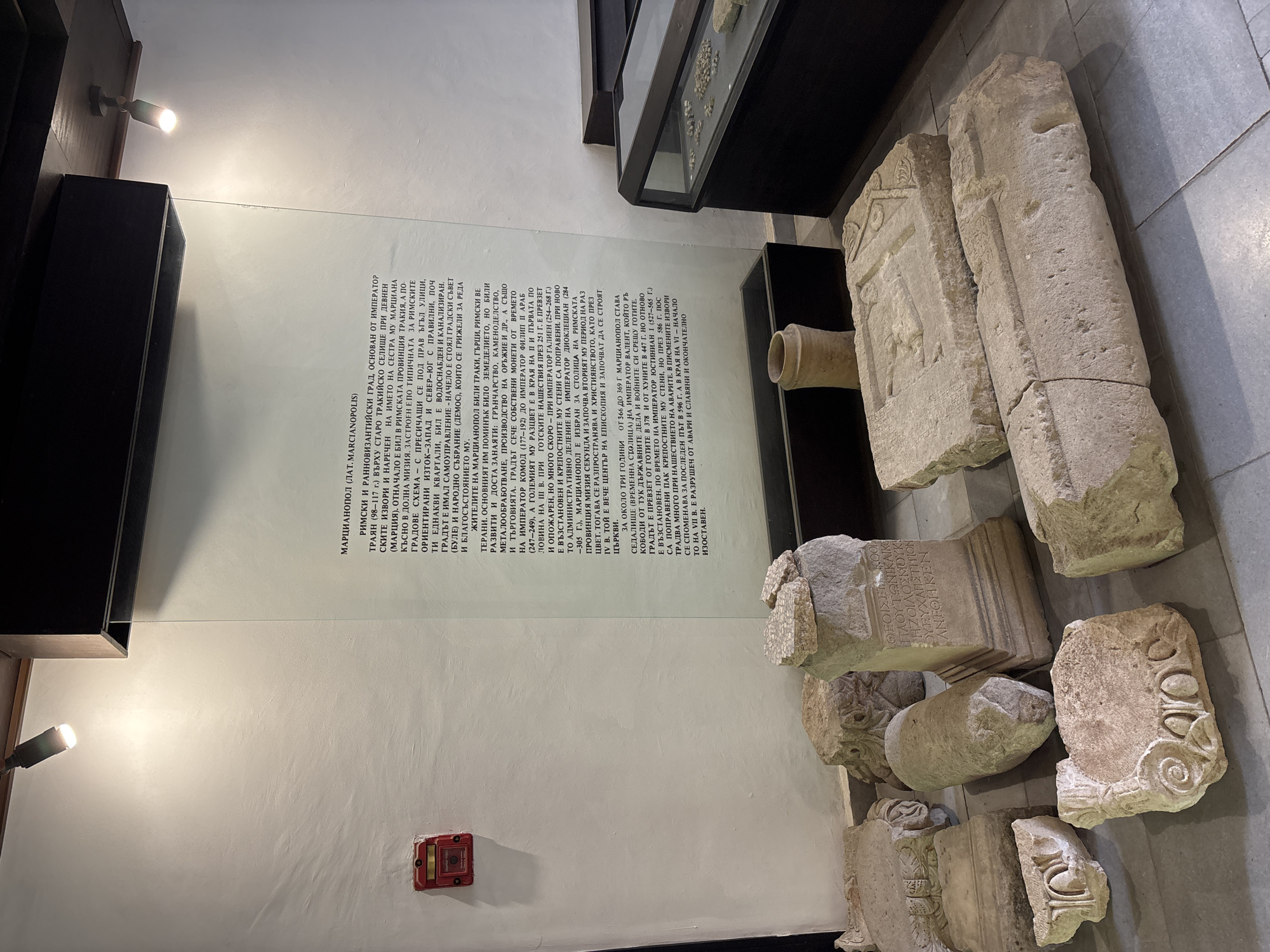
The image depicts an indoor museum exhibit featuring ancient stone artifacts and an informational display. The setting has white walls and a light-colored floor, illuminated by artificial spotlights. A red fire alarm is mounted on the wall. The primary subjects are numerous ancient stone fragments, including stelae, architectural elements, and possibly parts of sculptures, arranged on the floor to the right. One prominent rectangular stone block features a carved relief and clearly visible Greek inscriptions. The text, partially deciphered, includes phrases like "ΘΕΟΙΣΕΤKOO ΠΛΟΥΤΩΝΙΚΑΙΚΟ" and "ΕΥΧΑΡΙΣΤΗΡΙΟΝ ΑΝΕΘΗΚΕ KEN," suggesting a dedication, possibly to underworld deities, by an individual named Zoilus. Next to this, another large, rough-hewn stone block and various smaller, broken pieces are displayed, some with decorative carvings. A small, light-colored ceramic pot or urn is also visible among the artifacts. A large, transparent panel with text printed on it serves as an information board, providing historical context. The Bulgarian text describes "MARCIANOPOL (LAT. MARCIANOPOLIS)" as a Roman and Early Byzantine city founded by Emperor Trajan (98-117 AD) near Devnya, named after his sister Marciana. It details the city's typical Roman grid plan, advanced infrastructure (water supply, sewage), self-governance (city council, people's assembly), diverse population (Thracians, Greeks, Roman veterans), and economy (agriculture, crafts like pottery, stone masonry, metalworking). The text highlights its peak in the late 2nd and early 3rd centuries, its destruction by Goths in 251 AD, subsequent restoration, its role as the capital of Moesia Secunda under Diocletian, and the rise of Christianity. Marcianopolis temporarily served as Emperor Valens' capital (366-369 AD). It suffered further devastation by Goths (378 AD) and Huns (447 AD), was restored under Justinian I, but was ultimately abandoned after destruction by Avars and Slavs in the late 6th/early 7th century. Two dark display cases or plinths are visible, one partially on the far left and another in the background on the right, potentially holding smaller artifacts. No people are present in the image. The scene offers a view of an archaeological exhibit focusing on the ancient city of Marcianopolis in Devnya, Bulgaria.
Loading AttnAds…
No transactions found