
Stake attention in this memory
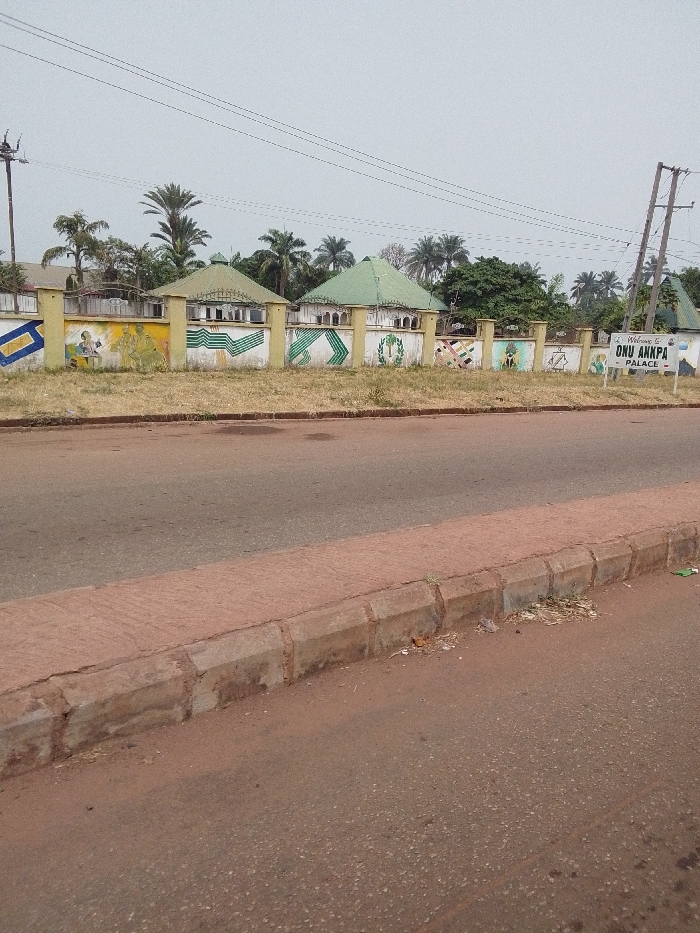
The image presents an outdoor scene featuring a road, a decorative wall, and structures behind it, under an overcast sky. In the foreground, a paved road with a reddish-brown hue occupies the lower half of the frame. To the right, a concrete curb separates the road from a narrow strip of dry, light brown grass or dirt, where some scattered litter and debris are visible. Beyond the grassy strip is a long, low wall that runs horizontally across the midground. The wall has a yellow base and top, with a white band in the middle. This white band is extensively decorated with various murals and painted patterns. These decorations include geometric designs in blue and yellow, figurative depictions of people or traditional scenes in yellow and brown, and prominent green and white patterns resembling ribbons or abstract shapes that repeat along sections of the wall. The wall is punctuated by several short, square pillars. Two of these pillars are more elaborate, topped with distinctive green pyramidal roofs, suggesting they might be entry points or watchtowers. Beneath these green roofs, the structures feature ornate white arched windows or decorative openings. The green roofs appear to be made of corrugated metal. In the background, behind the wall and structures, numerous trees are visible, including several tall palm trees with their characteristic fronds. The foliage is generally dense and green. To the far right, a wooden utility pole with multiple power lines extends upwards against the sky. The sky is a uniform light gray, indicating an overcast day or significant atmospheric haze, as there is no direct sunlight and shadows are soft or absent. To the far right of the wall, a white sign with black text is clearly visible. The legible text on the sign reads: "Welcome to ONU ANKPA PALACE" Below "PALACE," there may be additional text, but it is too small to discern. The scene suggests the entrance or boundary of a significant local establishment, likely a palace or traditional seat, located in an area named Ankpa. The murals and architectural details hint at cultural significance.
Loading AttnAds…
No transactions found