Sign in
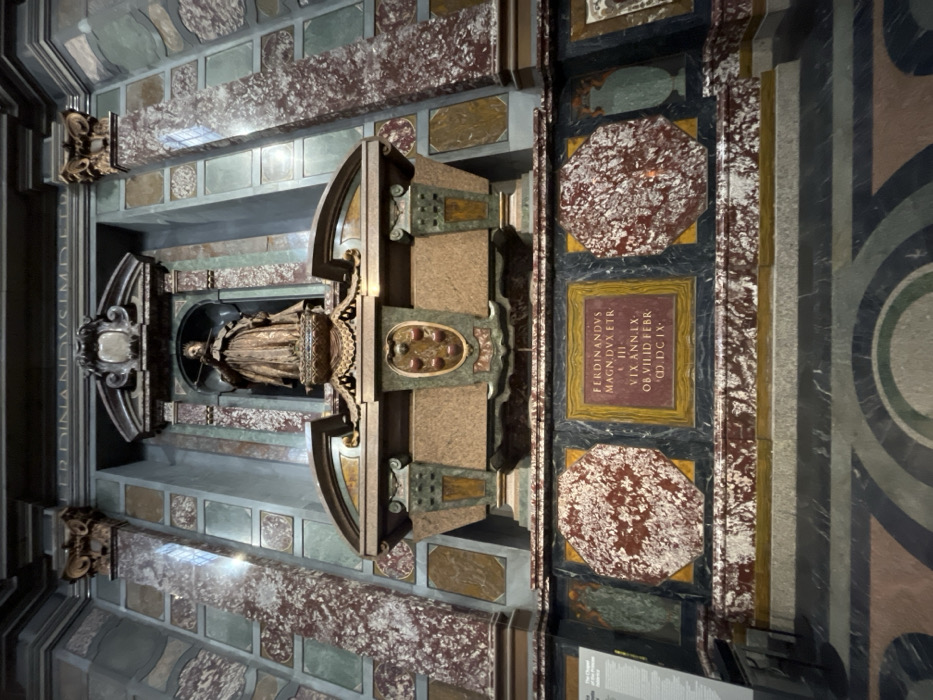
The image displays the opulent interior of what appears to be a funerary chapel or mausoleum, characterized by extensive use of rich marble. At the center, a highly elaborate tomb is set into a wall, featuring a reclining effigy of a historical figure. The effigy, likely crafted from bronze or gilded material, depicts a male in regal attire, complete with a crown and holding a staff or scepter. It rests within an arched niche, which is intricately carved and framed by decorative pilasters and topped with an ornate crest.

The tomb and the surrounding wall panels are made from various types of polished marble, predominantly rich reddish-brown with white veining, mottled white, dark green, and grey. Gold accents highlight the details of the effigy and other architectural embellishments, adding to the monument's grandeur. The wall features a mosaic-like arrangement of different marble panels, including octagonal and rectangular inserts with a distinct brecciated red and white pattern.

To the right of the central effigy, a prominent rectangular plaque bears a Latin inscription. The text reads: "FERDINANDVS MAGN.DVX.ETR. III. VIX ANN.LX. OB.VIIID.FEBR. MDCIX." This translates to "Ferdinand I, Grand Duke of Tuscany, lived 60 years, died on the 8th Ides of February 1609," identifying the entombed figure as Ferdinand I de' Medici. This detail strongly indicates the location is the Medici Chapels in Florence, Italy, specifically the Chapel of the Princes.

The floor, partially visible on the right side of the frame, continues the luxurious aesthetic with geometric patterns crafted from dark and lighter grey marble. The scene conveys a sense of historical reverence and solemnity, reflecting the significance of the entombed individual. No activity or specific event is taking place; the scene is a static depiction of a grand monument.
FM-oNt2k1

Feb 9, 2025

Firenze, Italy

Stake attention in this memory

The image displays the opulent interior of what appears to be a funerary chapel or mausoleum, characterized by extensive use of rich marble. At the center, a highly elaborate tomb is set into a wall, featuring a reclining effigy of a historical figure. The effigy, likely crafted from bronze or gilded material, depicts a male in regal attire, complete with a crown and holding a staff or scepter. It rests within an arched niche, which is intricately carved and framed by decorative pilasters and topped with an ornate crest. The tomb and the surrounding wall panels are made from various types of polished marble, predominantly rich reddish-brown with white veining, mottled white, dark green, and grey. Gold accents highlight the details of the effigy and other architectural embellishments, adding to the monument's grandeur. The wall features a mosaic-like arrangement of different marble panels, including octagonal and rectangular inserts with a distinct brecciated red and white pattern. To the right of the central effigy, a prominent rectangular plaque bears a Latin inscription. The text reads: "FERDINANDVS MAGN.DVX.ETR. III. VIX ANN.LX. OB.VIIID.FEBR. MDCIX." This translates to "Ferdinand I, Grand Duke of Tuscany, lived 60 years, died on the 8th Ides of February 1609," identifying the entombed figure as Ferdinand I de' Medici. This detail strongly indicates the location is the Medici Chapels in Florence, Italy, specifically the Chapel of the Princes. The floor, partially visible on the right side of the frame, continues the luxurious aesthetic with geometric patterns crafted from dark and lighter grey marble. The scene conveys a sense of historical reverence and solemnity, reflecting the significance of the entombed individual. No activity or specific event is taking place; the scene is a static depiction of a grand monument.

transactions
revenues
stakers
Earliest
Latest
Highest stake

No transactions found

More from this user

More from Firenze

FM-oNt2k1

Feb 9, 2025

Firenze, Italy

Licensed under Creative Commons Attribution 4.0 International License. You are free to share and adapt this content with proper attribution.