Sign in
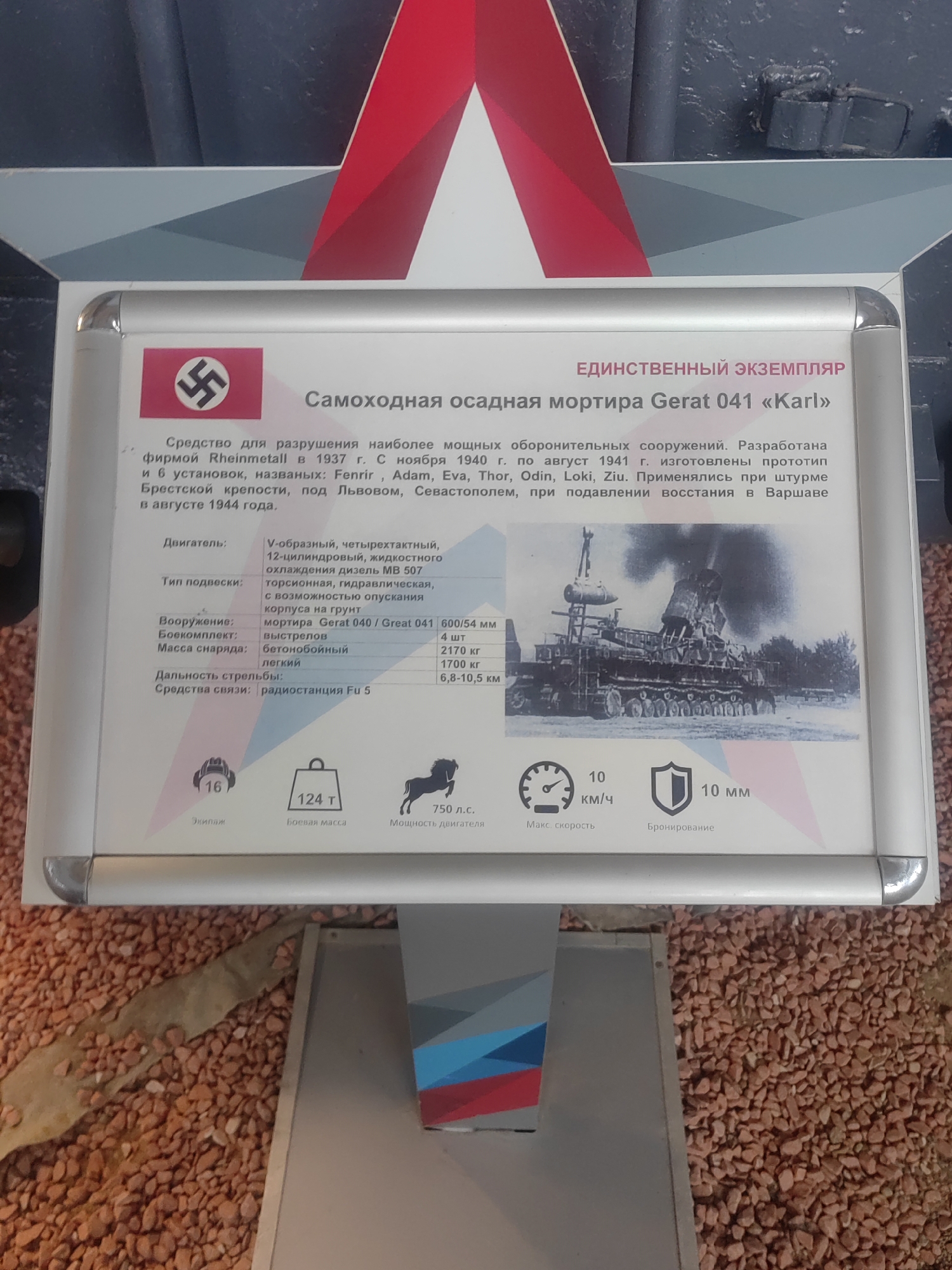
This is a photograph of a historical exhibit, likely in a museum. The central subject is a plaque describing a massive German self-propelled siege mortar, the "Gerat 041 «Karl»". The plaque is detailed, featuring text in Russian and a black and white photograph of the mortar in action, emitting smoke.

The text on the plaque provides specifications for the mortar, including its engine type (V-shaped, four-stroke, 12-cylinder liquid-cooled diesel MB 507), suspension, armament (Gerat 040/041 mortar with 600/54 mm caliber), ammunition weight (2170 kg for armor-piercing, 1700 kg for light rounds), range (6.8-10.5 km), and communication equipment (radio Fu 5). It also states the mortar was developed by Rheinmetall in 1937, with prototypes and six units produced between November 1940 and August 1941, named after Norse gods and mythological figures. The plaque mentions its use in battles like the storming of Brest Fortress, near Lviv, Sevastopol, and the suppression of the Warsaw Uprising in August 1944.

Below the descriptive text, there are icons and text indicating key performance metrics: an icon for "Crew" showing "16", an icon of a weight for "Combat Mass" showing "124 t", a speedometer icon for "Max Speed" showing "10 km/h", a horse icon for "Engine Power" showing "750 hp", and a shield icon for "Armor" showing "10 mm".

The background of the exhibit suggests a museum setting, with gravel on the floor and a portion of a display structure visible. A Nazi swastika symbol is prominently displayed on a flag within the plaque, signifying the origin and era of the weapon. The overall tone is informative and historical, aimed at educating visitors about this significant piece of military engineering. The lighting appears to be artificial museum lighting.
TroYJanX

Jun 17, 2026

Kubinka, Russia

Stake attention in this memory

historical
military
powerful
intimidating
engineering

This is a photograph of a historical exhibit, likely in a museum. The central subject is a plaque describing a massive German self-propelled siege mortar, the "Gerat 041 «Karl»". The plaque is detailed, featuring text in Russian and a black and white photograph of the mortar in action, emitting smoke. The text on the plaque provides specifications for the mortar, including its engine type (V-shaped, four-stroke, 12-cylinder liquid-cooled diesel MB 507), suspension, armament (Gerat 040/041 mortar with 600/54 mm caliber), ammunition weight (2170 kg for armor-piercing, 1700 kg for light rounds), range (6.8-10.5 km), and communication equipment (radio Fu 5). It also states the mortar was developed by Rheinmetall in 1937, with prototypes and six units produced between November 1940 and August 1941, named after Norse gods and mythological figures. The plaque mentions its use in battles like the storming of Brest Fortress, near Lviv, Sevastopol, and the suppression of the Warsaw Uprising in August 1944. Below the descriptive text, there are icons and text indicating key performance metrics: an icon for "Crew" showing "16", an icon of a weight for "Combat Mass" showing "124 t", a speedometer icon for "Max Speed" showing "10 km/h", a horse icon for "Engine Power" showing "750 hp", and a shield icon for "Armor" showing "10 mm". The background of the exhibit suggests a museum setting, with gravel on the floor and a portion of a display structure visible. A Nazi swastika symbol is prominently displayed on a flag within the plaque, signifying the origin and era of the weapon. The overall tone is informative and historical, aimed at educating visitors about this significant piece of military engineering. The lighting appears to be artificial museum lighting.

transactions
revenues
stakers
Earliest
Latest
Highest stake

No transactions found

More from this user

More from Kubinka

TroYJanX

Jun 17, 2026

Kubinka, Russia

Licensed under Creative Commons Attribution 4.0 International License. You are free to share and adapt this content with proper attribution.